Department of Clinical Sciences, Swedish University of Agricultural Sciences, SE Uppsala, Sweden.
Nestlé Purina Research, One Checkerboard Square, Saint Louis, MO, United States of America.
PLoS One. 2018 Mar 23;13(3):e0193507. doi: 10.1371/journal.pone.0193507. eCollection 2018.
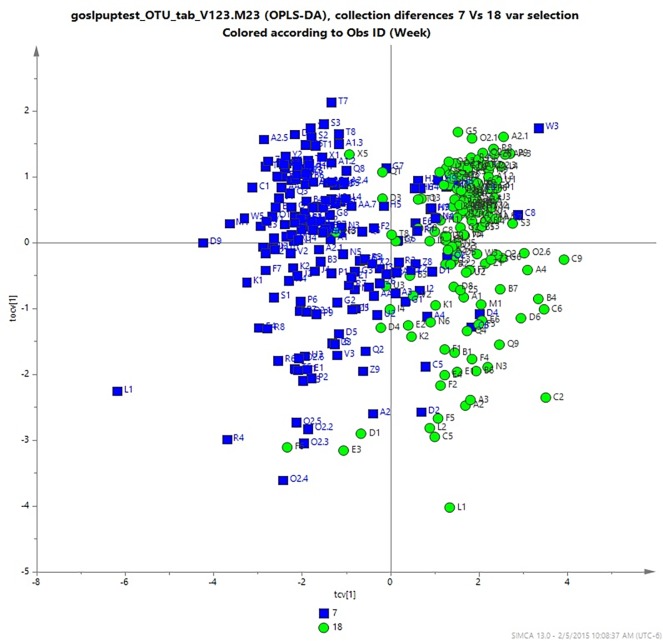
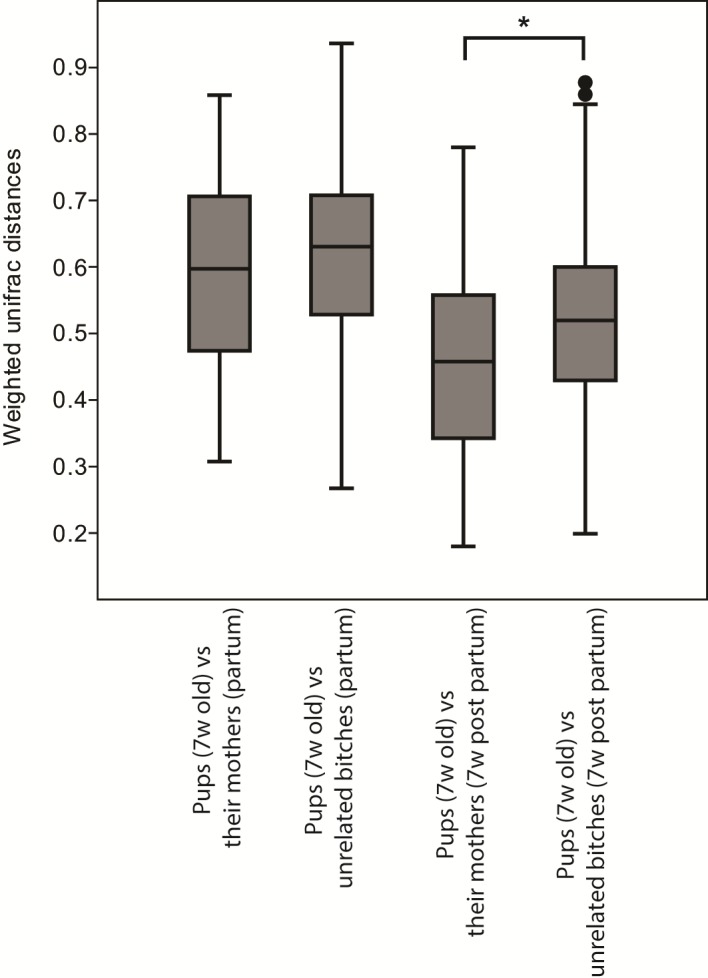
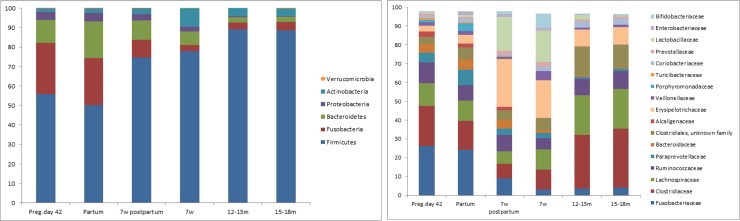
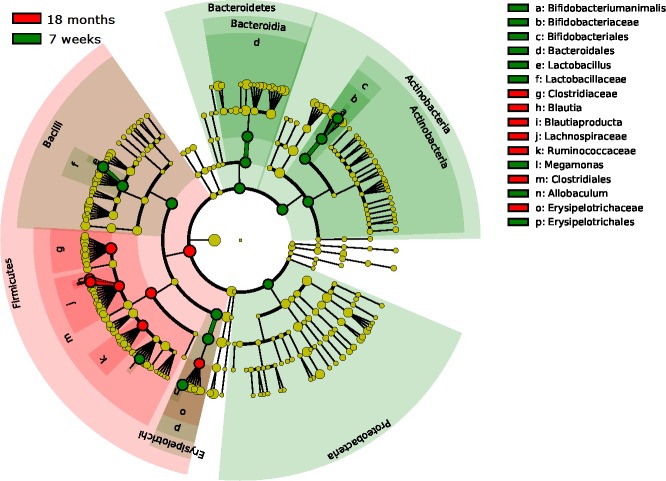
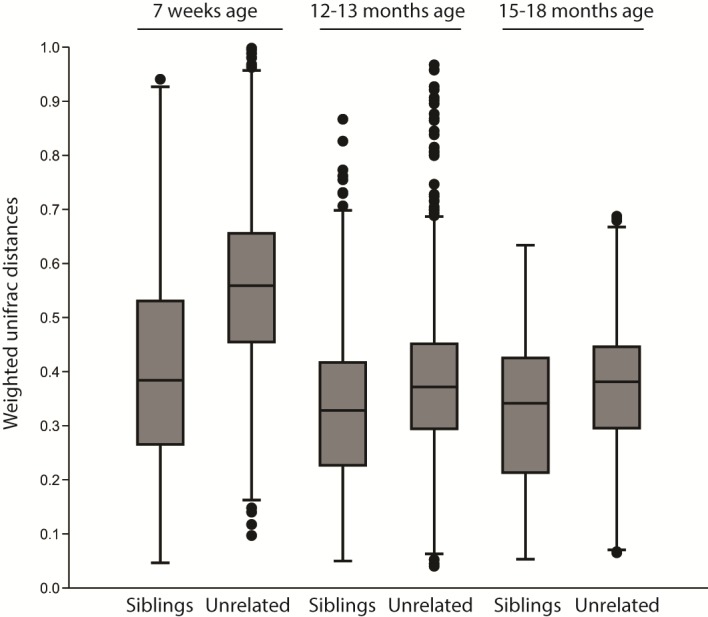
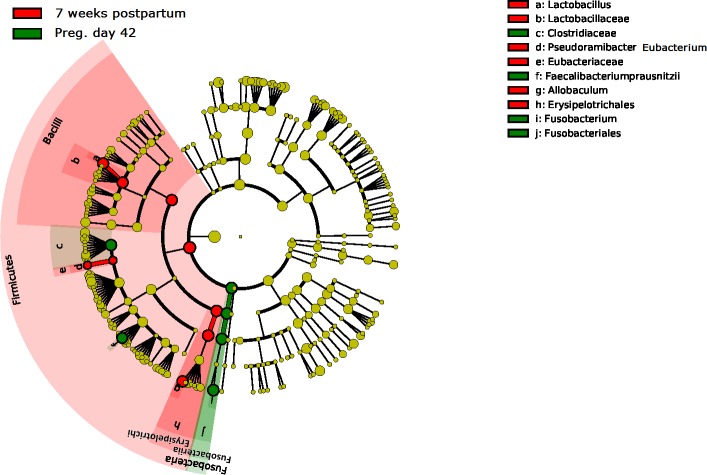
The aim of this study was to explore the development of the gut microbiota in 168 German Shepherd dogs (30 litters) from 7 weeks to 18 months of age and furthermore, to study the effect of relatedness, maternal microbiota composition and living environment in a large and well-defined population of dogs. Using 454 pyrosequencing, we assessed the effects of pre- and postnatal probiotic supplementation (Lactobacillus johnsonii NCC533 (La1)) and analysed whether administration of the probiotic strain influenced fecal microbiota composition in a placebo controlled double-blinded study. The bitches were treated with probiotics or placebo during last trimester of pregnancy and until their puppies were 8 weeks old, the puppies received the same treatment as their mothers between 3-12 weeks of age. Samples from bitches were collected at pregnancy day 42, partum, 4 weeks postpartum and 7 weeks postpartum and from puppies at the age 4 weeks, 7 weeks, 12-13 months and 15-18 months. Serum IgA, total serum IgE, fecal IgA and IgG antibody responses against canine distemper virus were analysed by ELISA in order to detect any immune stimulating effects of the probiotic strain. Analysis of the fecal microbiota composition showed that the predominant phyla were the same in 7 weeks old puppies as in pregnant and lactating bitches (Firmicutes, Fusobacteria, Bacteroidetes). Proportions among different bacteria as well as diversity varied from 7 weeks old puppies up to 15-18 months of age. Litter mates had a more similar fecal microbiota compared to unrelated dogs and 7 weeks old puppies were more similar to their mothers than to unrelated bitches at 7 weeks postpartum but not at partum. We observed a change in the relative abundance of different bacteria during lactation, and an increase in diversity from pregnancy to end of lactation. The microbial diversity was affected by living area where dogs living in big cities had higher diversity compared to dogs living at the countryside. However, we were not able to demonstrate an effect by pre and postnatal exposure to Lactobacillus johnsonii NCC533 (La1) upon the diversity or composition of the microbiota or the levels of serum IgA, total serum IgE, fecal IgA or vaccine response. Our findings provide a better understanding of the canine fecal microbiota in growing dogs as well as in pregnant and lactating bitches. This information forms a basis for further research on the connection between early gut colonization and immune function later in life.
本研究旨在探讨 168 只德国牧羊犬(30 窝)从 7 周龄到 18 月龄期间肠道微生物群的发育情况,并进一步研究亲缘关系、母体微生物群组成和生活环境对大量明确犬种的影响。使用 454 焦磷酸测序技术,我们评估了产前和产后益生菌补充(Lactobacillus johnsonii NCC533(La1))的效果,并分析了益生菌菌株的给药是否会影响安慰剂对照双盲研究中粪便微生物群的组成。在妊娠最后三个月和幼犬 8 周龄之前,母犬接受益生菌或安慰剂治疗,幼犬在 3-12 周龄之间接受与母亲相同的治疗。在妊娠第 42 天、分娩时、产后 4 周和产后 7 周采集母犬样本,在 4 周龄、7 周龄、12-13 月龄和 15-18 月龄采集幼犬样本。通过 ELISA 分析血清 IgA、总血清 IgE、粪便 IgA 和针对犬瘟热病毒的 IgG 抗体反应,以检测益生菌菌株的任何免疫刺激作用。粪便微生物群组成分析表明,7 周龄幼犬的优势菌群与妊娠和哺乳期母犬相同(Firmicutes、Fusobacteria、Bacteroidetes)。不同细菌之间的比例以及多样性从 7 周龄幼犬到 15-18 月龄不等。同窝幼犬比无亲缘关系的犬更相似,7 周龄幼犬与无亲缘关系的母犬在产后 7 周时比母犬更相似,但在分娩时则不然。我们观察到哺乳期内不同细菌的相对丰度发生变化,从妊娠到哺乳期结束时多样性增加。微生物多样性受生活区域的影响,城市犬的多样性高于农村犬。然而,我们未能证明产前和产后暴露于 Lactobacillus johnsonii NCC533(La1)对微生物群的多样性或组成或血清 IgA、总血清 IgE、粪便 IgA 或疫苗反应水平有影响。我们的研究结果提供了对生长犬以及妊娠和哺乳期母犬粪便微生物群的更好理解。这些信息为进一步研究早期肠道定植与生命后期免疫功能之间的联系奠定了基础。