Department of Microbiology and Biochemistry of Dairy Products, Instituto de Productos Lácteos de Asturias. Consejo Superior de Investigaciones Científicas (IPLA-CSIC), Ctra. Infiesto s/n, 33300, Villaviciosa, Asturias, Spain.
Pediatrics Service, Hospital Universitario Central de Asturias, SESPA, Oviedo, Asturias, Spain.
Microbiome. 2017 Aug 8;5(1):93. doi: 10.1186/s40168-017-0313-3.
Disturbances in the early establishment of the intestinal microbiota may produce important implications for the infant's health and for the risk of disease later on. Different perinatal conditions may be affecting the development of the gut microbiota. Some of them, such as delivery mode or feeding habits, have been extensively assessed whereas others remain to be studied, being critical to identify their impact on the microbiota and, if any, to minimize it. Antibiotics are among the drugs most frequently used in early life, the use of intrapartum antimicrobial prophylaxis (IAP), present in over 30% of deliveries, being the most frequent source of exposure. However, our knowledge on the effects of IAP on the microbiota establishment is still limited. The aim of the present work was to evaluate the impact of IAP investigating a cohort of 40 full-term vaginally delivered infants born after an uncomplicated pregnancy, 18 of which were born from mothers receiving IAP.
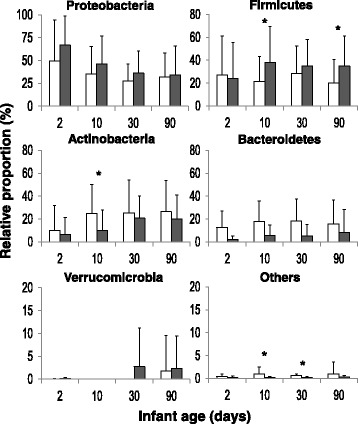
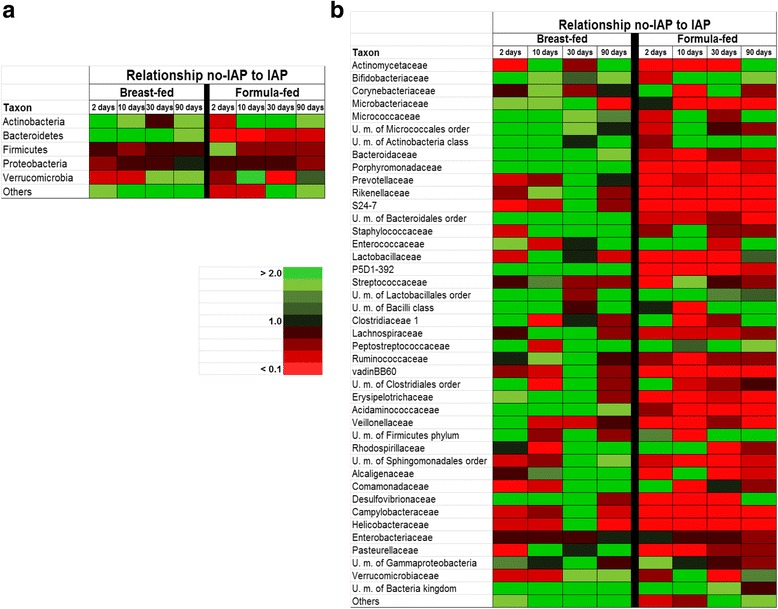
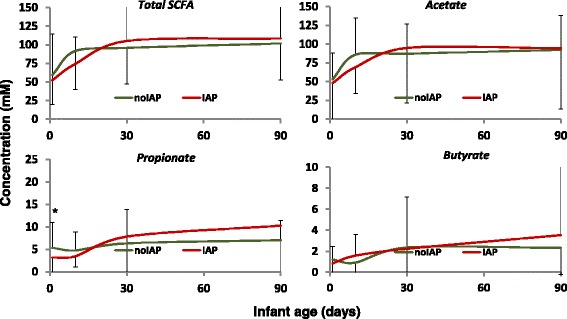
Fecal samples were collected at 2, 10, 30, and 90 days of age. We analyzed the composition of the fecal microbiota during the first 3 months of life by 16S rRNA gene sequencing and quantified fecal short chain fatty acids by gas chromatography. The presence of genes for resistance to antibiotics was determined by PCR in the samples from 1-month-old infants. Our results showed an altered pattern of intestinal microbiota establishment in IAP infants during the first weeks of life, with lower relative proportions of Actinobacteria and Bacteroidetes and increased of Preoteobacteria and Firmicutes. A delay in the increase on the levels of acetate was observed in IAP infants. The analyses of specific antibiotic resistance genes showed a higher occurrence of some β-lactamase coding genes in infants whose mothers received IAP.
Our results indicate an effect of IAP on the establishing early microbiota during the first months of life, which represent a key moment for the development of the microbiota-induced host homeostasis. Understanding the impact of IAP in the gut microbiota development is essential for developing treatments to minimize it, favoring a proper gut microbiota development in IAP-exposed neonates.
肠道微生物群的早期建立受到干扰可能会对婴儿的健康和以后患病的风险产生重要影响。不同的围产期情况可能会影响肠道微生物群的发育。其中一些情况,如分娩方式或喂养习惯,已经得到了广泛的评估,而其他情况仍有待研究,确定它们对微生物群的影响至关重要,如果有任何影响,则尽量减少影响。抗生素是婴儿早期最常使用的药物之一,在超过 30%的分娩中使用的产时抗菌预防(IAP)是最常见的暴露源。然而,我们对 IAP 对微生物群建立的影响的认识仍然有限。本研究的目的是通过调查一组 40 名足月经阴道分娩的婴儿来评估 IAP 的影响,这些婴儿均来自未合并症的妊娠,其中 18 名母亲接受了 IAP。
在 2、10、30 和 90 天龄时收集粪便样本。我们通过 16S rRNA 基因测序分析了婴儿生命前 3 个月的粪便微生物群组成,并通过气相色谱法定量了粪便短链脂肪酸。通过聚合酶链反应(PCR)在 1 个月大婴儿的样本中检测到抗生素耐药基因。我们的研究结果表明,在生命的最初几周内,IAP 婴儿的肠道微生物群建立模式发生了改变,厚壁菌门和拟杆菌门的相对比例较低,变形菌门和Firmicutes 门的比例增加。IAP 婴儿的乙酸水平增加出现延迟。对抗生素特定耐药基因的分析表明,接受 IAP 的母亲的婴儿中某些β-内酰胺酶编码基因的发生率更高。
我们的研究结果表明,IAP 对生命最初几个月的早期微生物群建立有影响,这是微生物群诱导宿主内稳态发展的关键时期。了解 IAP 对肠道微生物群发育的影响对于开发治疗方法以最小化其影响至关重要,这有利于 IAP 暴露的新生儿适当的肠道微生物群发育。