Alluwimi Muhammed S, Swanson William H, Malinovsky Victor E, King Brett J
Indiana University School of Optometry, Bloomington, IN, USA.
Qassim University Department of Optometry, College of Applied Medical Sciences, Qassim, Saudi Arabia.
Transl Vis Sci Technol. 2018 Mar 15;7(2):5. doi: 10.1167/tvst.7.2.5. eCollection 2018 Mar.
Prior studies suggested the use of customized perimetric locations in glaucoma; these studies were limited by imaging only the superficial depths of the retinal nerve fiber layer (RNFL) and by prolonged perimetric testing. We aimed to develop a rapid perimetric test guided by high-resolution images of RNFL bundles.
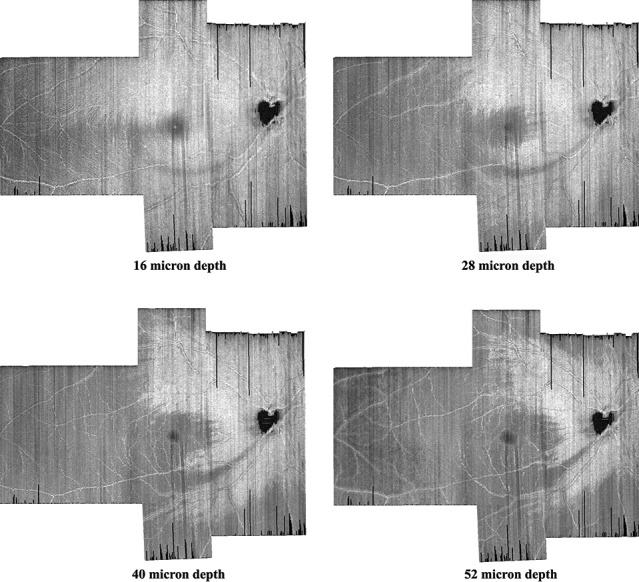
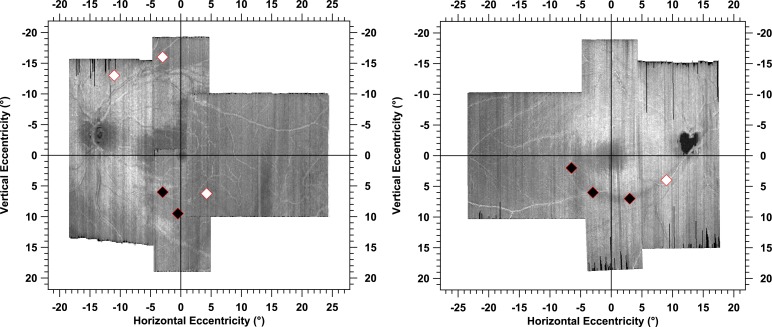
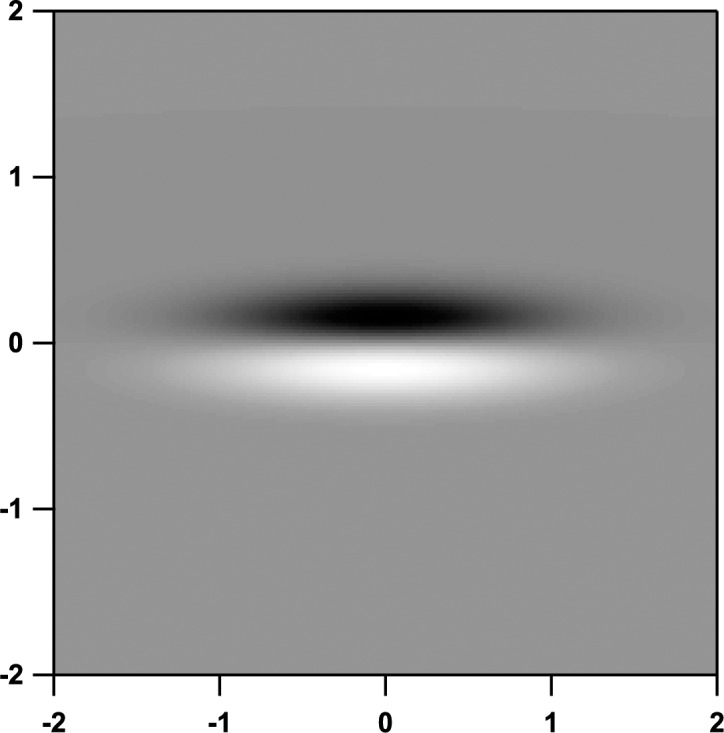
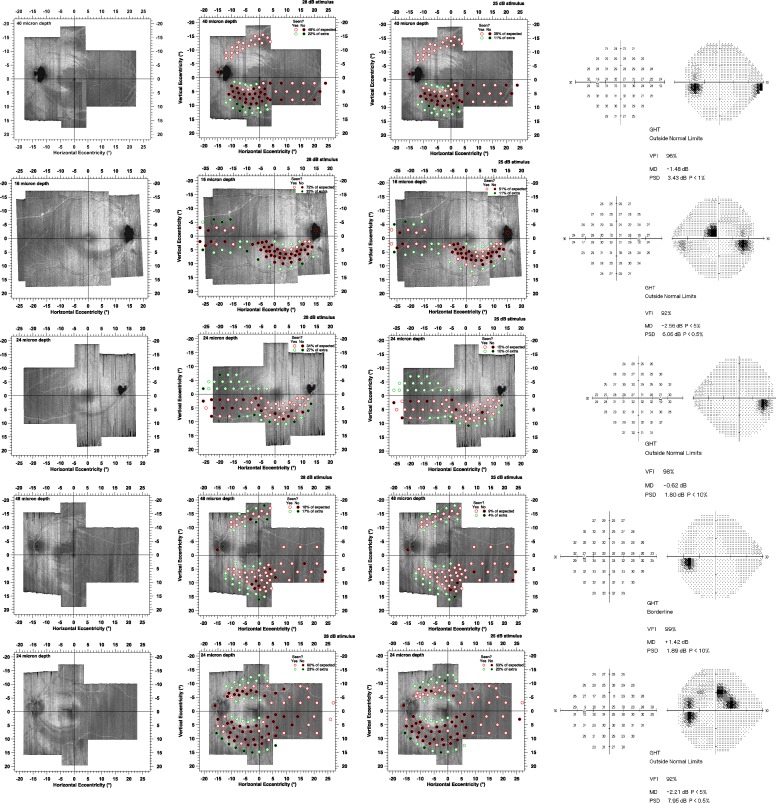
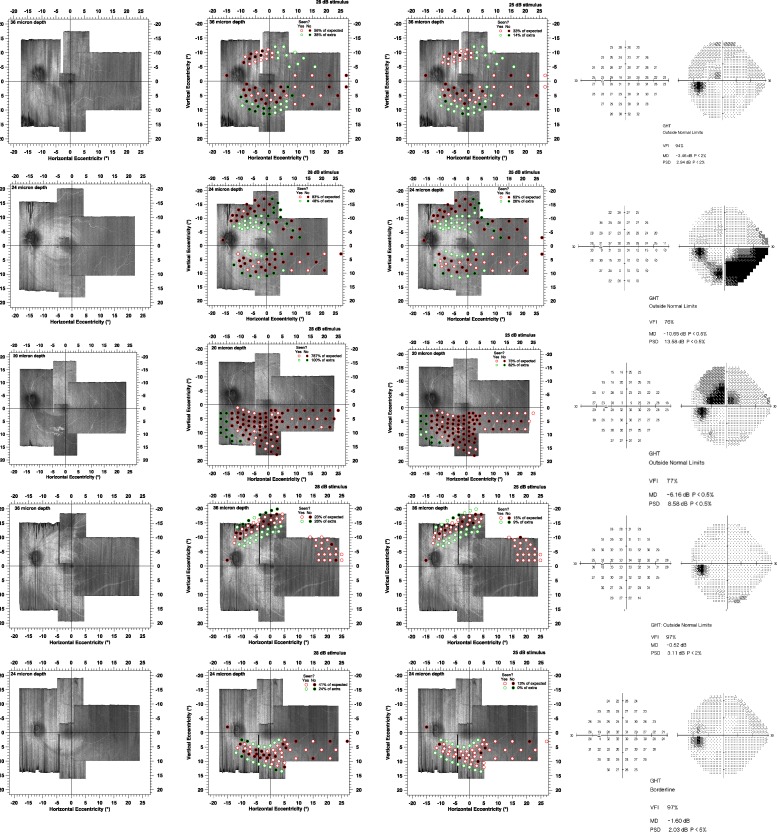
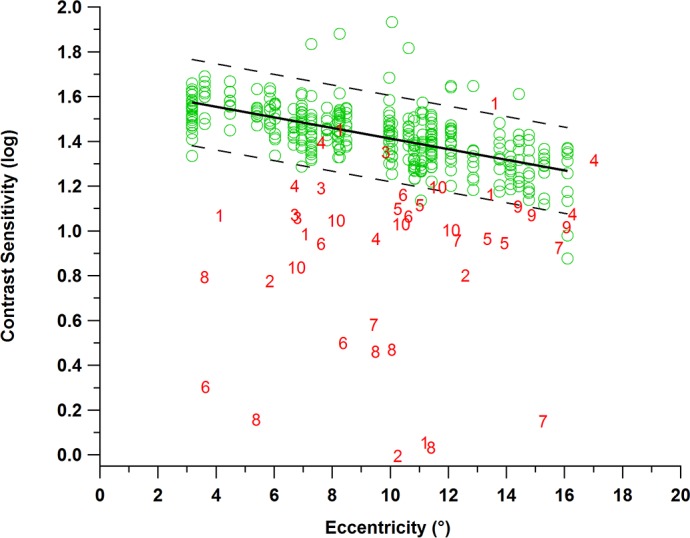
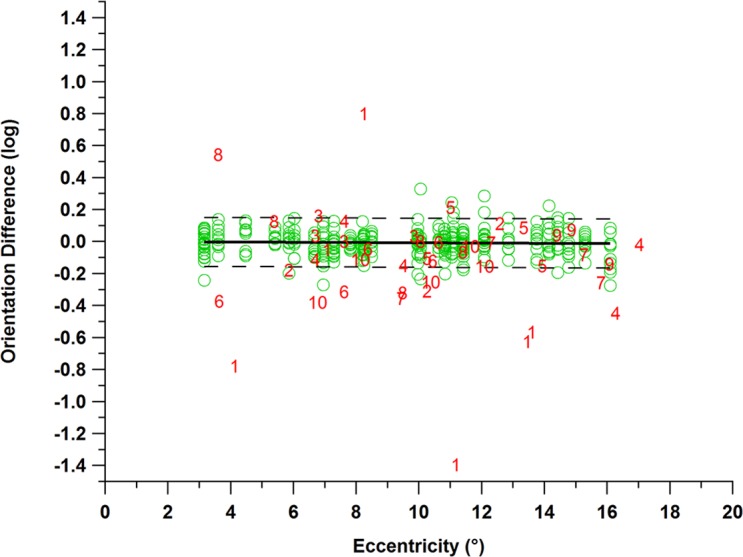
We recruited 10 patients with glaucoma, ages 56 to 80 years, median 68 years, and 10 controls, ages 55 to 77 years, median 68 years. The patients were selected based on discrepancies between locations of glaucomatous damage for perimetric and structural measures. Montaging was used to produce optical coherence tomography en face images of the RNFL covering much of the 24-2 grid locations. In experiment 1, we presented the Goldmann size III stimulus at preselected retinal locations of glaucomatous damage, using just two contrasts. In experiment 2, we developed an elongated sinusoidal stimulus, aligned within the defect, to measure contrast sensitivities; abnormalities were defined based on lower 95% reference limits derived from the controls.
The percentage of predicted locations where size III was not seen at 28 dB ranged from 16% to 80%, with a median of 48%. Contrast sensitivity for the sinusoidal stimulus was below the 95% reference range for 37 of 44 stimuli aligned within the defects.
We developed methods for rapid perimetric testing guided by en face images of the RNFL bundles in patients with glaucoma. Results indicated ganglion cell damage under all of the visible RNFL defects.
Customized perimetric locations have potential to improve clinical assessment of glaucoma.
先前的研究表明在青光眼患者中可使用定制的视野检查位置;这些研究存在局限性,仅对视网膜神经纤维层(RNFL)的浅表深度进行成像,且视野检查时间较长。我们旨在开发一种由RNFL束的高分辨率图像引导的快速视野检查方法。
我们招募了10例青光眼患者,年龄在56至80岁之间,中位数为68岁,以及10名对照者,年龄在55至77岁之间,中位数为68岁。根据视野检查和结构测量中青光眼损伤位置的差异选择患者。采用拼接技术生成覆盖24-2网格位置大部分区域的RNFL正面光学相干断层扫描图像。在实验1中,我们仅使用两种对比度,在预先选定的青光眼损伤视网膜位置呈现戈德曼III号视标。在实验2中,我们开发了一种在缺损内对齐的细长正弦波视标,以测量对比度敏感度;根据对照组得出的较低95%参考限值来定义异常情况。
在28 dB时未看到III号视标的预测位置百分比范围为16%至80%,中位数为48%。在缺损内对齐的44个视标中,有37个正弦波视标的对比度敏感度低于95%参考范围。
我们开发了由青光眼患者RNFL束正面图像引导的快速视野检查方法。结果表明在所有可见的RNFL缺损下方均存在神经节细胞损伤。
定制的视野检查位置有可能改善青光眼的临床评估。