Departamento de Ciências da Vida, Faculdade de Ciências e Tecnologia, UCIBIO, Universidade Nova de Lisboa, Caparica, Portugal.
Departamento de Química, Faculdade de Ciências e Tecnologia, UCIBIO, Universidade NOVA de Lisboa, Caparica, Portugal.
Microbiologyopen. 2019 Jan;8(1):e00623. doi: 10.1002/mbo3.623. Epub 2018 Mar 25.
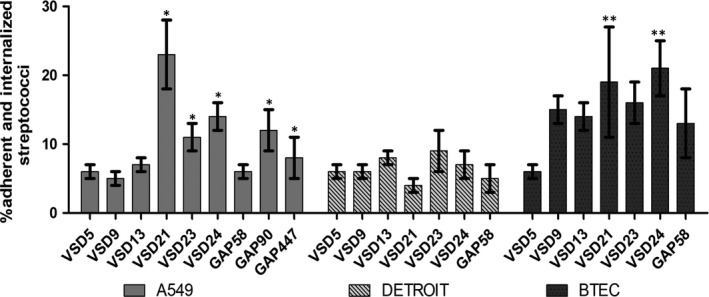
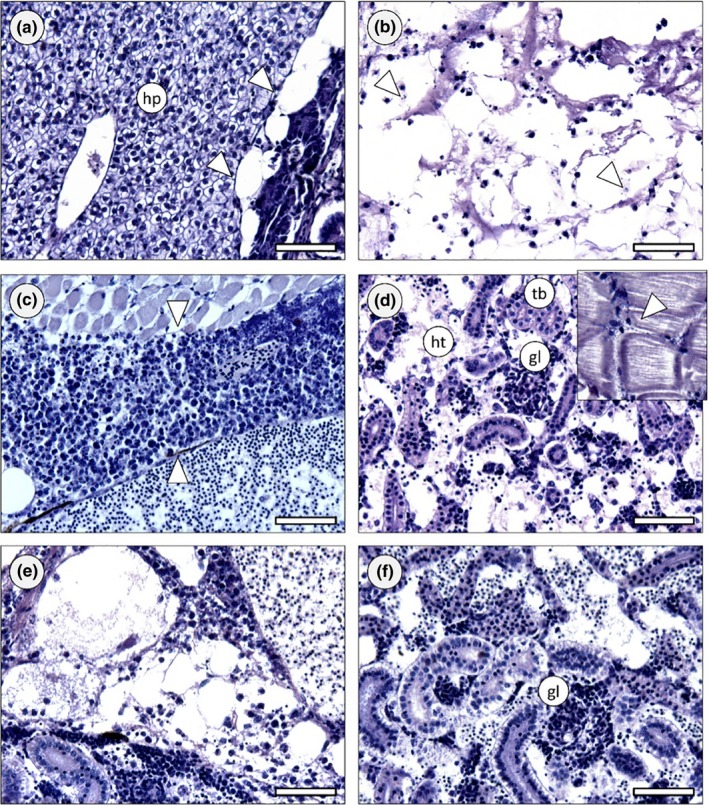
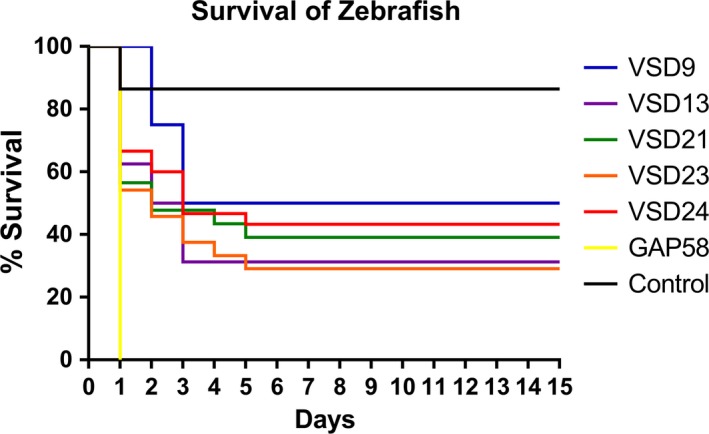
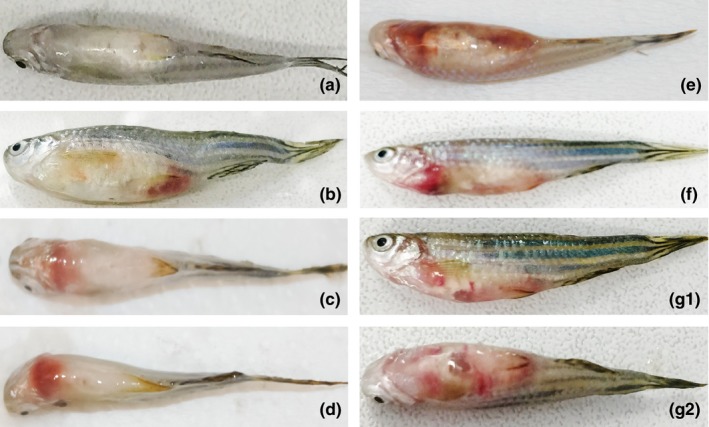
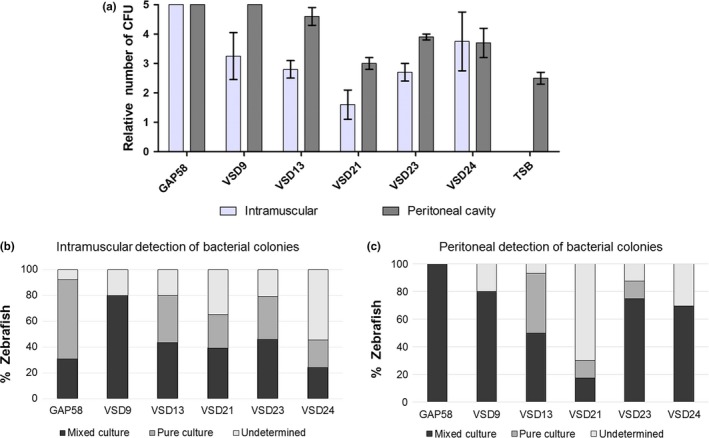
Streptococcus dysgalactiae subsp. dysgalactiae (SDSD) is a major cause of bovine mastitis and has been regarded as an animal-restricted pathogen, although rare infections have been described in humans. Previous studies revealed the presence of virulence genes encoded by phages of the human pathogen Group A Streptococcus pyogenes (GAS) in SDSD isolated from the milk of bovine udder with mastitis. The isolates SDSD VSD5 and VSD13 could adhere and internalize human primary keratinocyte cells, suggesting a possible human infection potential of bovine isolates. In this work, the in vitro and in vivo potential of SDSD to internalize/adhere human cells of the respiratory track and zebrafish as biological models was evaluated. Our results showed that, in vitro, bovine SDSD strains could interact and internalize human respiratory cell lines and that this internalization was dependent on an active transport mechanism and that, in vivo, SDSD are able to cause invasive infections producing zebrafish morbidity and mortality. The infectious potential of these isolates showed to be isolate-specific and appeared to be independent of the presence or absence of GAS phage-encoded virulence genes. Although the infection ability of the bovine SDSD strains was not as strong as the human pathogenic S. pyogenes in the zebrafish model, results suggested that these SDSD isolates are able to interact with human cells and infect zebrafish, a vertebrate infectious model, emerging as pathogens with zoonotic capability.
无乳链球菌(Streptococcus dysgalactiae subsp. dysgalactiae,SDSD)是牛乳腺炎的主要病原体,被认为是一种动物源性致病菌,尽管也有人类感染的罕见病例报道。先前的研究表明,在乳腺炎奶牛乳中分离出的 SDSD 中存在人类病原体 A 组链球菌(Group A Streptococcus pyogenes,GAS)噬菌体编码的毒力基因。分离株 SDSD VSD5 和 VSD13 可以黏附和内化人原代角质形成细胞,这表明牛分离株可能具有潜在的人类感染能力。在这项工作中,评估了 SDSD 在体外和体内通过呼吸道人类细胞和斑马鱼作为生物模型内化/黏附的潜在能力。我们的结果表明,在体外,牛 SDSD 菌株可以与人类呼吸道细胞系相互作用并内化,这种内化依赖于主动转运机制,并且在体内,SDSD 能够引起侵袭性感染,导致斑马鱼发病和死亡。这些分离株的感染潜力表现出分离株特异性,似乎与 GAS 噬菌体编码的毒力基因的存在与否无关。尽管这些牛 SDSD 菌株在斑马鱼模型中的感染能力不如人类致病性 S. pyogenes 强,但结果表明这些 SDSD 分离株能够与人类细胞相互作用并感染斑马鱼,这是一种脊椎动物感染模型,它们作为具有人畜共患能力的病原体出现。