Behroozeh Aras, Mazloumi Tabrizi Maral, Kazemi S Maryam, Choupani Edris, Kabiri Nahid, Ilbeigi Davod, Heidari Nasab Amir, Akbarzadeh Khiyavi Azim, Seif Kurdi Aliakbar
Department of Chemical Engineering, Science and Research Brach, Islamic Azad University, Tehran, Iran. Email:
Asian Pac J Cancer Prev. 2018 Mar 27;19(3):645-648. doi: 10.22034/APJCP.2018.19.3.645.
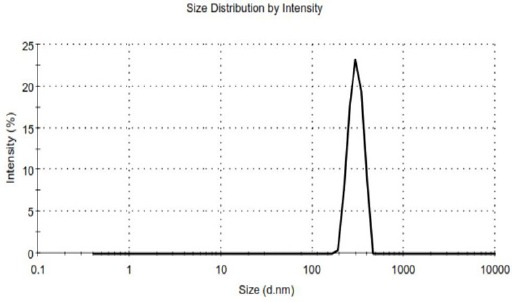
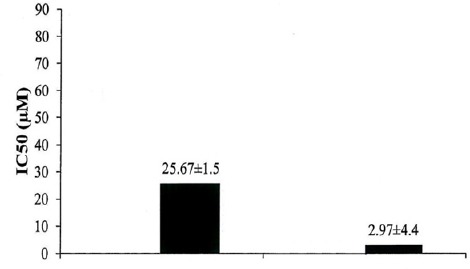
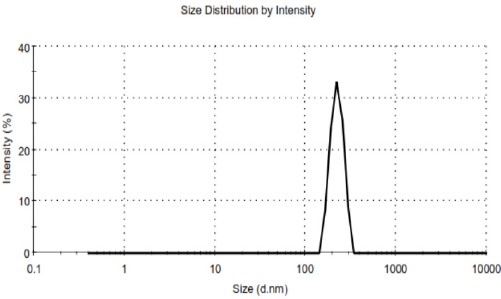
Background: Cancer is a significant problem in modern medicine, also is the most common cause of death after cardiovascular diseases, and in need of targeted drug release. Although, chemotherapy is an important candidate in cancer treatment, but it has many side effects on healthy tissues of the body. Therefore, Nano technology is used for specific function, by the least side effects and damage to normal cells. Materials and method: In this study, the pharmacological properties of PEGylated Nano-niosomal Gingerol was examined. Noisome were prepared using reverse phase evaporation method, which contains specific proportion of cholesterol, span60 and polyethylene glycol. Then, PEGylated the prepared formulation by PEG6600. The amount of release and encapsulation of the drug was investigated. The percentage of remains of cancer cell line T47D treated with PEGylated niosomal Gingerol. Results: The average diameter of the nanoparticles, size distribution and zeta potential were reported for PEGylated niosomal sample 35.65 nm, 0.17 and 21 mv, and for PEGylated niosomal drug sample 256.9 nm, 0.23 and 28 mv, respectively. The amount of OD for encapsulated drug was 0.198, also the amount of concentration of the drug which is not encapsulated, was 0.77947 μl of the drug per ml. This value of encapsulated drug was 76.38 percent. Conclusion: The results showed that IC50 of the formulation of PEGylated nanoniosomal Gingerol is less than the standard drug. It seems, the cause of this phenomenon is due to the effect of Polyethylene glycol, in more stability and slower drug release, in the formulation of PEGylated niosome. Also, Polyethylene glycol makes increase in the drug dealing and its greater influence with the target cell. In this study, more than 76% of the Gingerol drug in PEGylated nanoniosomal formulation were enclose. Also, we could reduce the amount of drug release, as much as possible.
癌症是现代医学中的一个重大问题,也是心血管疾病之后最常见的死亡原因,并且需要靶向药物释放。尽管化疗是癌症治疗中的重要手段,但它对身体的健康组织有许多副作用。因此,纳米技术被用于实现特定功能,以使对正常细胞的副作用和损伤最小。材料与方法:在本研究中,对聚乙二醇化纳米脂质体姜辣素的药理特性进行了研究。采用反相蒸发法制备脂质体,其含有特定比例的胆固醇、司盘60和聚乙二醇。然后,用聚乙二醇6600对制备的制剂进行聚乙二醇化。研究了药物的释放量和包封率。用聚乙二醇化纳米脂质体姜辣素处理癌细胞系T47D后的残留百分比。结果:聚乙二醇化纳米脂质体样品的纳米颗粒平均直径、尺寸分布和zeta电位分别为35.65 nm、0.17和21 mv,聚乙二醇化纳米脂质体药物样品分别为256.9 nm、0.23和28 mv。包封药物的光密度值为0.198,未包封药物的浓度为每毫升0.77947微升。该包封药物的值为76.38%。结论:结果表明,聚乙二醇化纳米脂质体姜辣素制剂的半数抑制浓度低于标准药物。似乎造成这种现象的原因是聚乙二醇的作用,它使聚乙二醇化纳米脂质体制剂更稳定且药物释放更慢。此外,聚乙二醇增加了药物的作用并使其对靶细胞的影响更大。在本研究中,聚乙二醇化纳米脂质体制剂中超过76%的姜辣素药物被包封。而且,我们尽可能地减少了药物释放量。