Integrated Ecological Research, 924 Innes St., Nelson, BC V1L 5T2, Canada.
Department of Renewable Resources, University of Alberta, 751 General Services Building, Edmonton, AB T6G 2H1, Canada.
Sci Rep. 2018 Mar 26;8(1):5204. doi: 10.1038/s41598-018-23502-3.
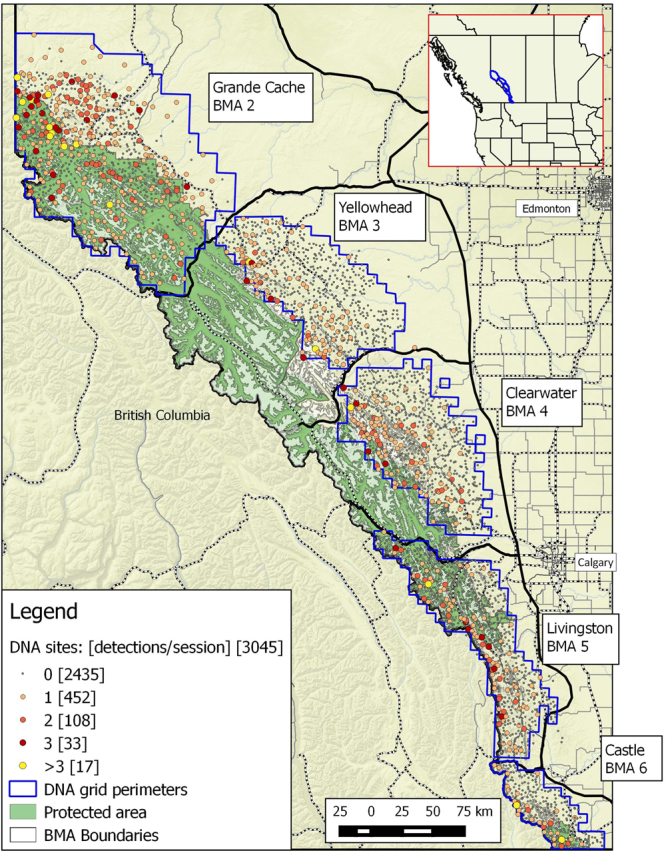
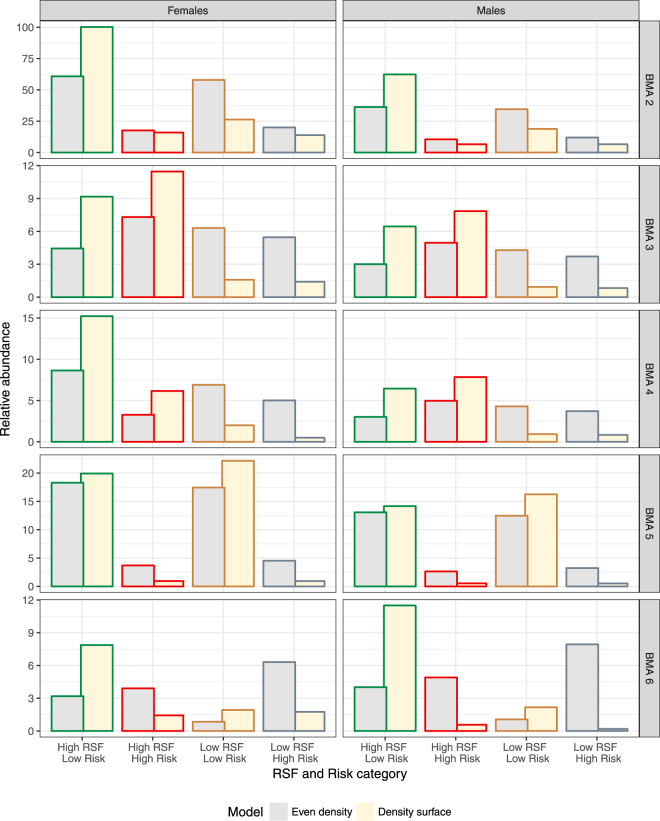
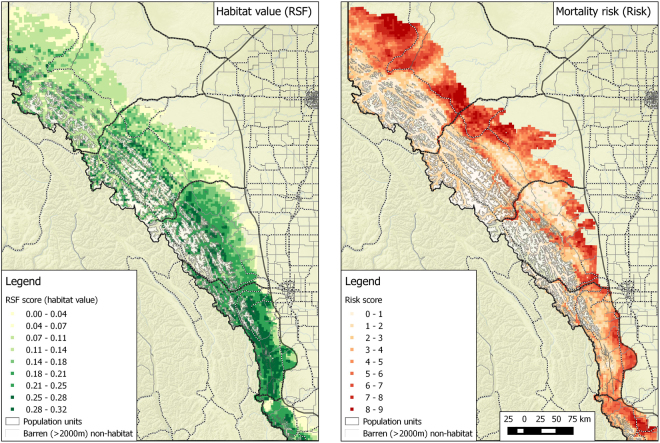
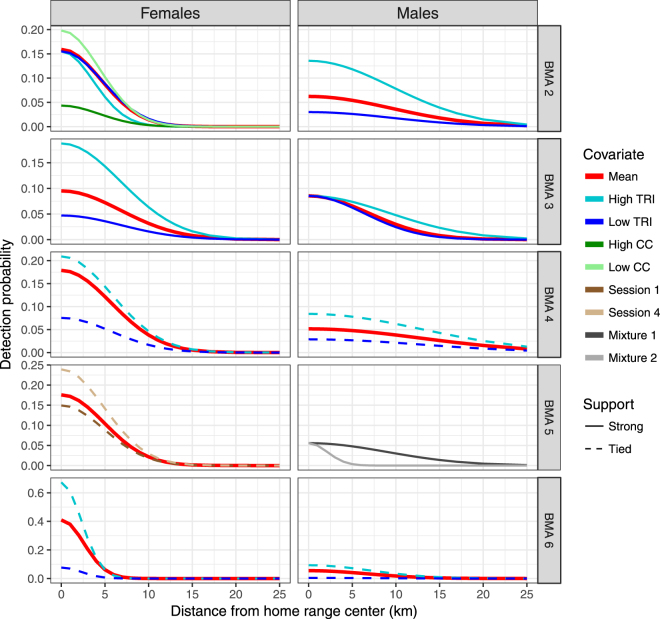
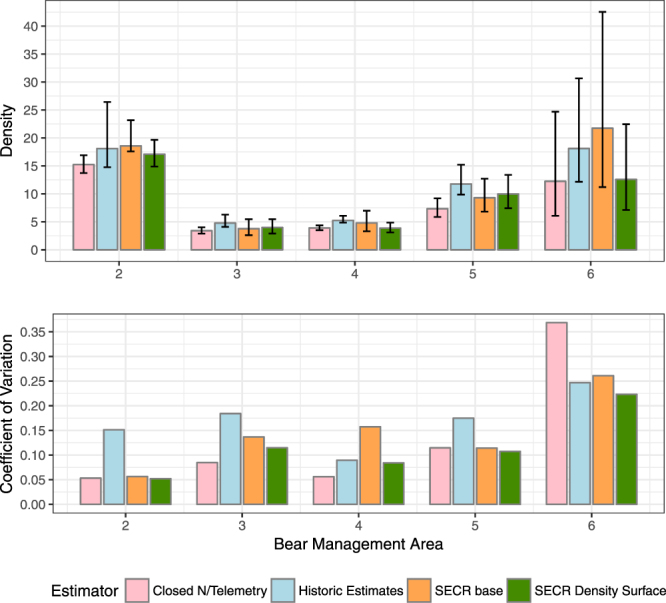
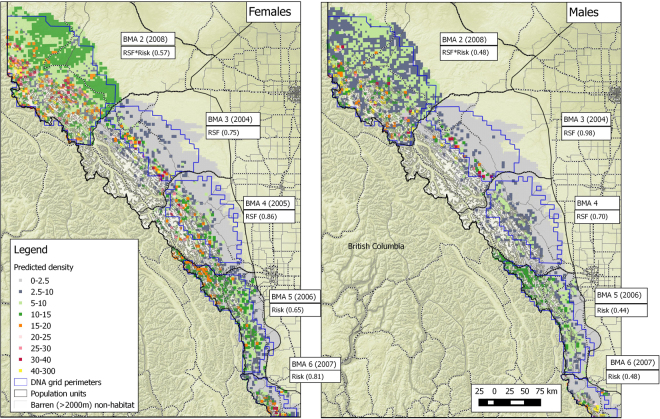
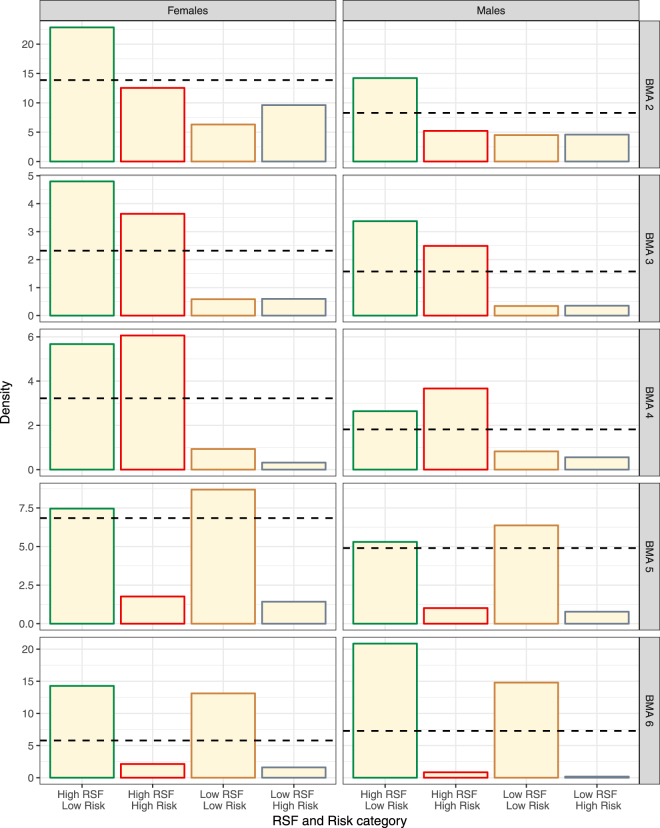
One of the challenges in conservation is determining patterns and responses in population density and distribution as it relates to habitat and changes in anthropogenic activities. We applied spatially explicit capture recapture (SECR) methods, combined with density surface modelling from five grizzly bear (Ursus arctos) management areas (BMAs) in Alberta, Canada, to assess SECR methods and to explore factors influencing bear distribution. Here we used models of grizzly bear habitat and mortality risk to test local density associations using density surface modelling. Results demonstrated BMA-specific factors influenced density, as well as the effects of habitat and topography on detections and movements of bears. Estimates from SECR were similar to those from closed population models and telemetry data, but with similar or higher levels of precision. Habitat was most associated with areas of higher bear density in the north, whereas mortality risk was most associated (negatively) with density of bears in the south. Comparisons of the distribution of mortality risk and habitat revealed differences by BMA that in turn influenced local abundance of bears. Combining SECR methods with density surface modelling increases the resolution of mark-recapture methods by directly inferring the effect of spatial factors on regulating local densities of animals.
保护面临的挑战之一是确定与栖息地和人为活动变化有关的种群密度和分布模式及反应。我们在加拿大艾伯塔省的五个灰熊(Ursus arctos)管理区(BMA)应用了空间明确捕获再捕获(SECR)方法,并结合密度表面建模,以评估 SECR 方法并探讨影响熊分布的因素。在这里,我们使用灰熊栖息地和死亡率风险模型来测试使用密度表面建模的局部密度关联。结果表明,BMA 特定因素会影响密度,以及栖息地和地形对熊的检测和运动的影响。SECR 的估计值与封闭种群模型和遥测数据相似,但具有相似或更高水平的精度。在北部,栖息地与更高的熊密度区域最相关,而死亡率风险与南部熊的密度最相关(呈负相关)。对死亡率风险和栖息地分布的比较显示出各 BMA 之间的差异,进而影响了当地熊的数量。通过直接推断空间因素对调节动物局部密度的影响,将 SECR 方法与密度表面建模相结合,提高了标记重捕方法的分辨率。