Department of Medicine, Washington University School of Medicine, St. Louis, MO, 63110, USA.
Department of Surgery, Washington University School of Medicine, St. Louis, MO, 63110, USA.
Nat Commun. 2018 Mar 28;9(1):1250. doi: 10.1038/s41467-018-03600-6.
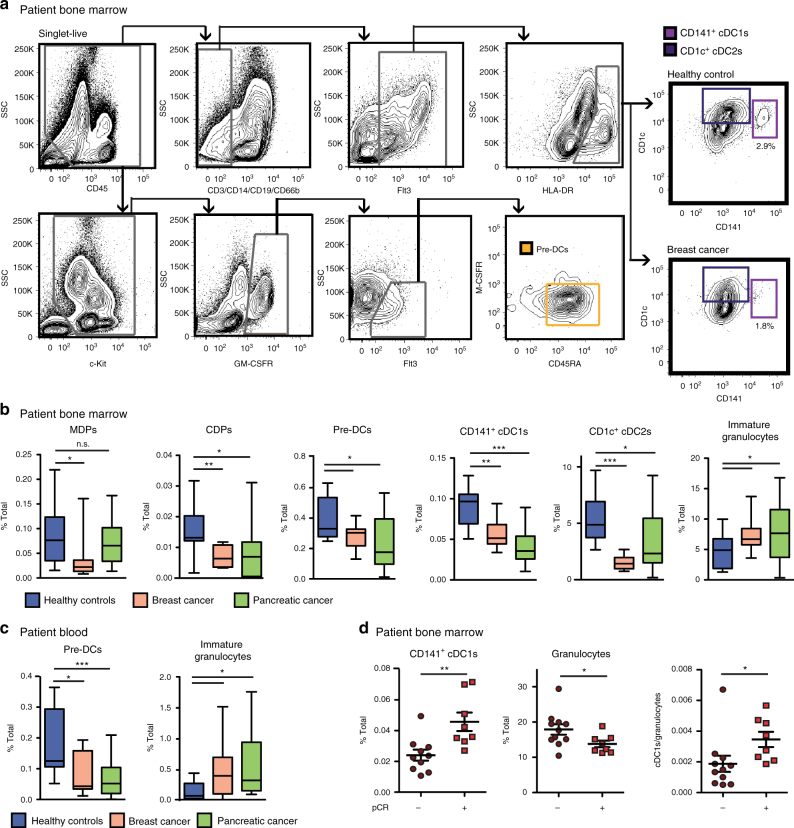
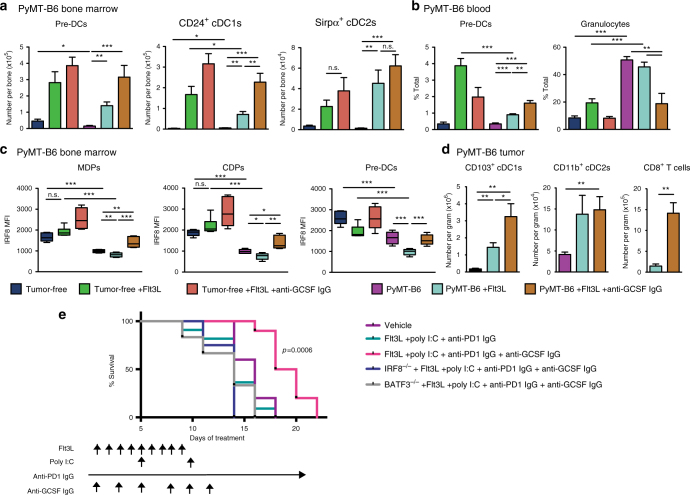
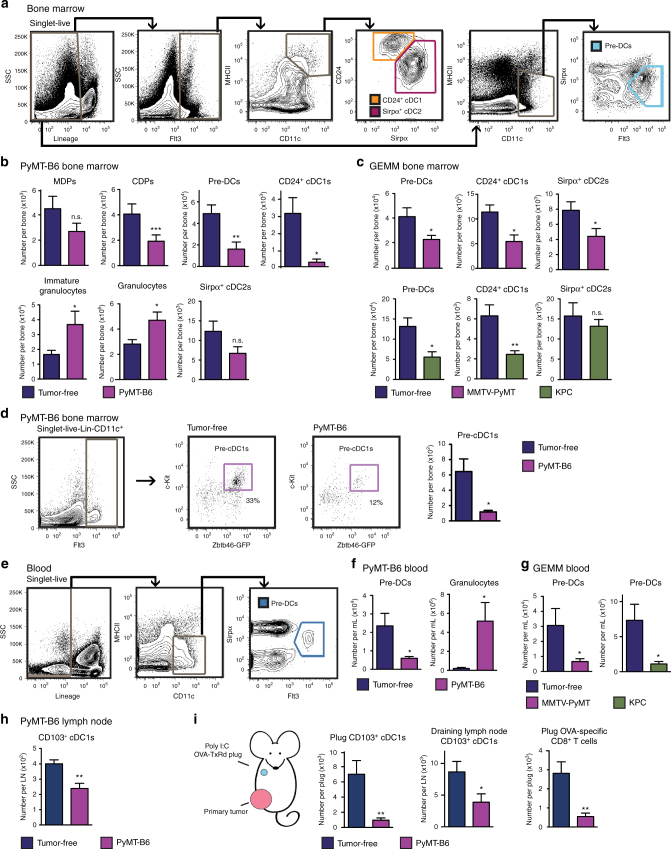
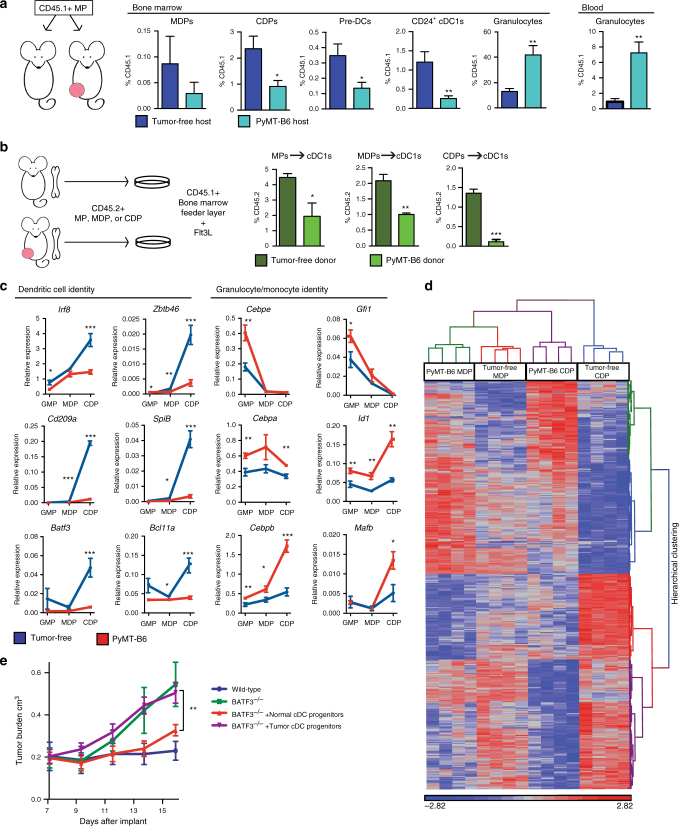
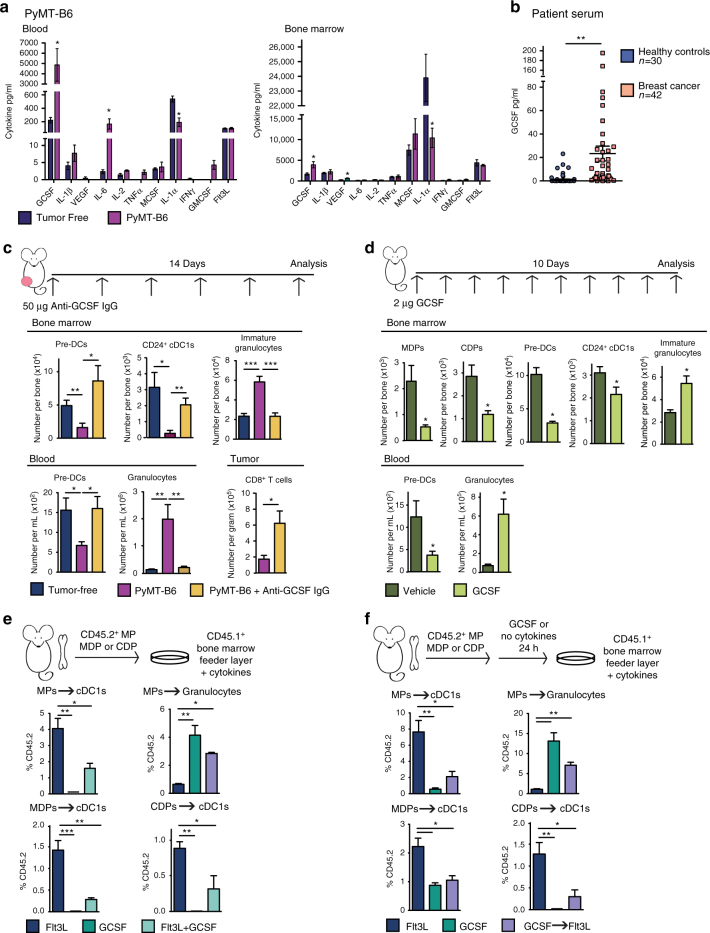
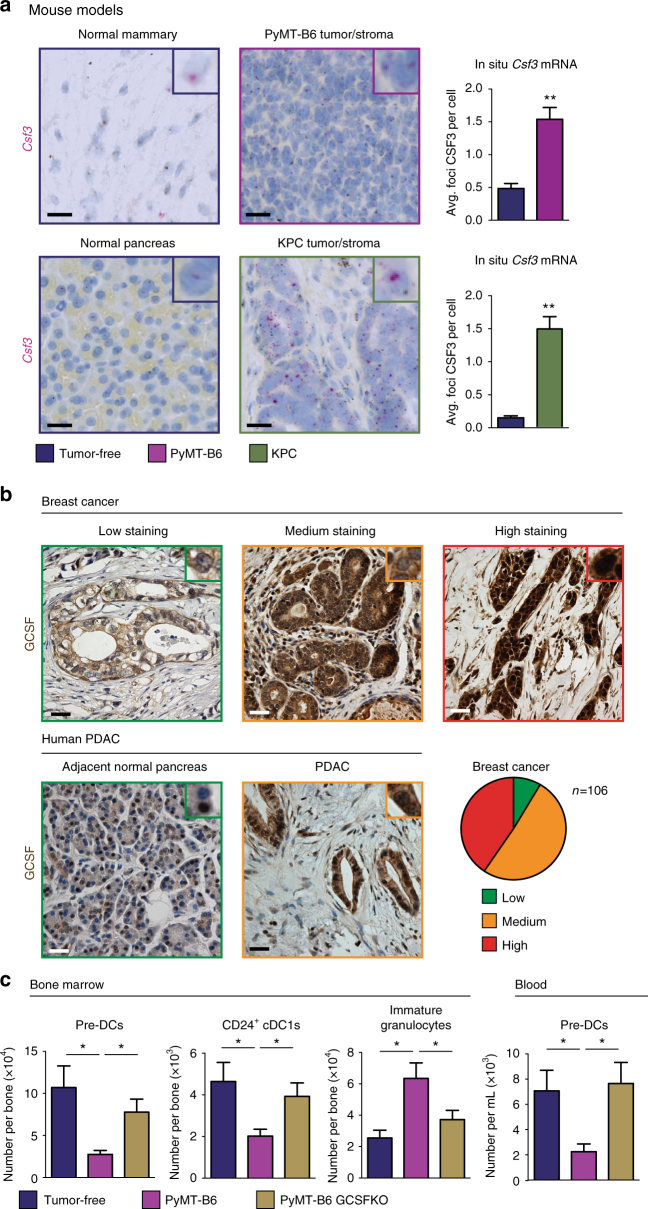
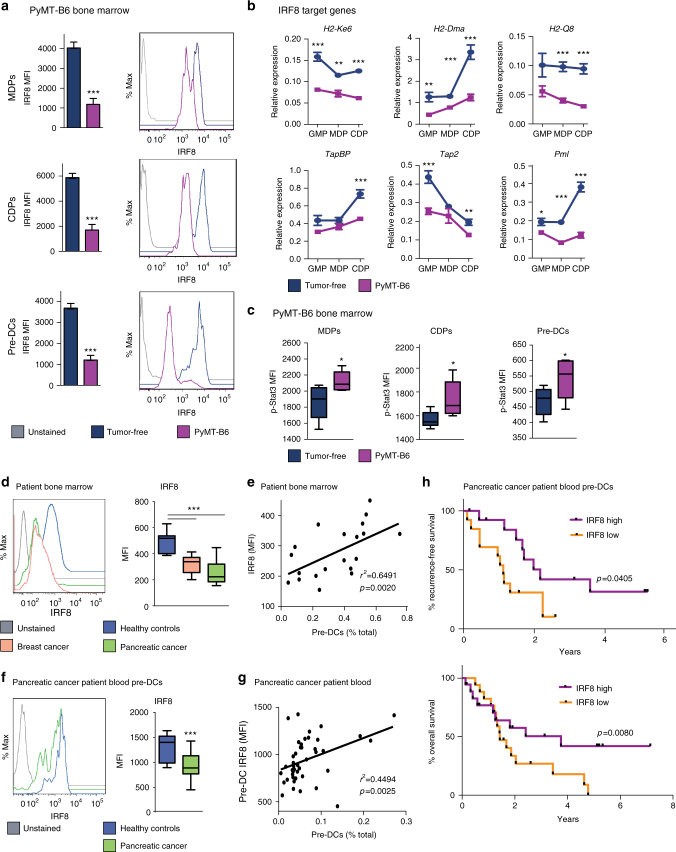
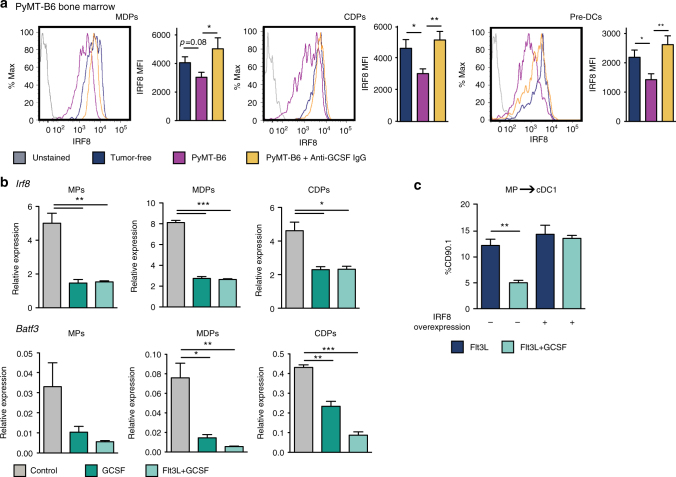
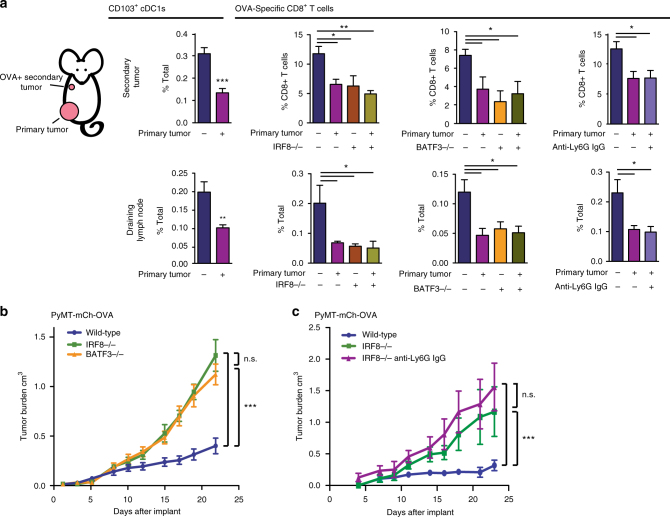
Tumors employ multiple mechanisms to evade immune surveillance. One mechanism is tumor-induced myelopoiesis, whereby the expansion of immunosuppressive myeloid cells can impair tumor immunity. As myeloid cells and conventional dendritic cells (cDCs) are derived from the same progenitors, we postulated that myelopoiesis might impact cDC development. The cDC subset, cDC1, which includes human CD141 DCs and mouse CD103 DCs, supports anti-tumor immunity by stimulating CD8 T-cell responses. Here, to understand how cDC1 development changes during tumor progression, we investigated cDC bone marrow progenitors. We found localized breast and pancreatic cancers induce systemic decreases in cDC1s and their progenitors. Mechanistically, tumor-produced granulocyte-stimulating factor downregulates interferon regulatory factor-8 in cDC progenitors, and thus results in reduced cDC1 development. Tumor-induced reductions in cDC1 development impair anti-tumor CD8 T-cell responses and correlate with poor patient outcomes. These data suggest immune surveillance can be impaired by tumor-induced alterations in cDC development.
肿瘤采用多种机制来逃避免疫监视。一种机制是肿瘤诱导的髓样细胞生成,其中免疫抑制性髓样细胞的扩增会损害肿瘤免疫。由于髓样细胞和传统树突状细胞 (cDC) 来自相同的祖细胞,我们假设髓样细胞生成可能会影响 cDC 的发育。cDC 亚群 cDC1 包括人类 CD141 DC 和小鼠 CD103 DC,通过刺激 CD8 T 细胞反应来支持抗肿瘤免疫。在这里,为了了解 cDC1 发育在肿瘤进展过程中如何变化,我们研究了 cDC 骨髓祖细胞。我们发现局部性乳腺癌和胰腺癌会导致全身性 cDC1 和其前体细胞的减少。从机制上讲,肿瘤产生的粒细胞集落刺激因子下调 cDC 前体细胞中的干扰素调节因子-8,从而导致 cDC1 发育减少。肿瘤诱导的 cDC1 发育减少会损害抗肿瘤 CD8 T 细胞反应,并与患者预后不良相关。这些数据表明,免疫监视可能会因肿瘤诱导的 cDC 发育改变而受损。