Division of Biological and Life Sciences (Formerly Institute of Life Sciences), School of Arts and Sciences, Ahmedabad University, Ahmedabad, Gujarat, India.
Int J Nanomedicine. 2018 Mar 15;13(T-NANO 2014 Abstracts):39-41. doi: 10.2147/IJN.S124996. eCollection 2018.
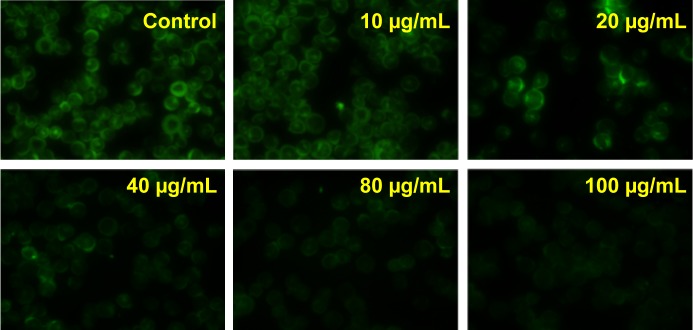
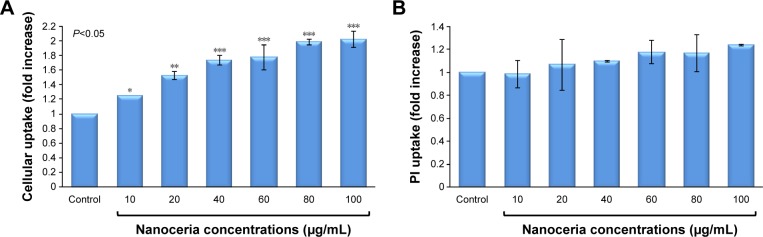
Overproduction of free radicals contributes to oxidative stress and inflammation leading to various disease conditions. Cerium oxide nanoparticles (nanoceria) have been shown to scavenge free radicals and have the potential for being used as a therapeutic agent in disease conditions. Therefore, in the present study, human monocytic leukemia cells (THP-1) were used as a model to evaluate the uptake and free radical scavenging activity of nanoceria. Our data showed a significant (<0.05) increase in the internalization of nanoceria in a concentration-dependent (10-100 µg/mL) manner in THP-1 cells. Although no cytotoxicity was observed at these concentrations, nanoceria significantly (<0.05) reduced the amount of reactive oxygen species. This was evident by a significant (<0.05) decrease in the 2,7-dichlorofluorescein diacetate fluorescence observed in flow cytometry and fluorescence microscopy. The present study shows that nanoceria have therapeutic potential in diseases such as cancer.
自由基的过度产生会导致氧化应激和炎症,从而引发各种疾病。氧化铈纳米粒子(纳米 CeO2)已被证明可清除自由基,并有可能在疾病状态下用作治疗剂。因此,在本研究中,人单核白血病细胞(THP-1)被用作模型来评估纳米 CeO2 的摄取和自由基清除活性。我们的数据显示,THP-1 细胞中纳米 CeO2 的内化呈浓度依赖性(10-100μg/ml)显著增加(<0.05)。尽管在这些浓度下没有观察到细胞毒性,但纳米 CeO2 显著减少了活性氧的数量(<0.05)。这一点可以通过流式细胞术和荧光显微镜观察到的 2,7-二氯荧光素二乙酸酯荧光明显减少(<0.05)来证明。本研究表明,纳米 CeO2 在癌症等疾病中具有治疗潜力。