Department of Medicine, University of Illinois Medical Center, Chicago, Illinois, United States of America.
Department of Medicine, Jesse Brown VA Medical Center, Chicago, Illinois, United States of America.
PLoS One. 2018 Mar 29;13(3):e0194171. doi: 10.1371/journal.pone.0194171. eCollection 2018.
The gut microbiota is known to be related to type 2 diabetes (T2D), psychiatric conditions, and opioid use. In this study, we tested the hypothesis that variability in gut microbiota in T2D is associated with psycho-metabolic health.
A cross-sectional study was conducted among African American men (AAM) (n = 99) that were outpatients at a Chicago VA Medical Center. The main outcome measures included fecal microbiota ecology (by 16S rRNA gene sequencing), psychiatric disorders including opioid use, and circulating leptin and oxytocin as representative hormone biomarkers for obesity and psychological pro-social behavior.
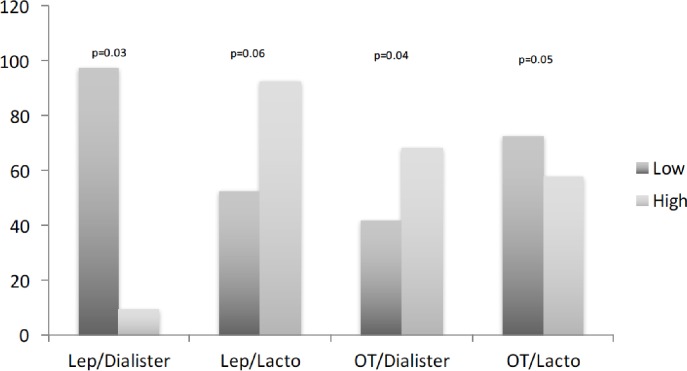
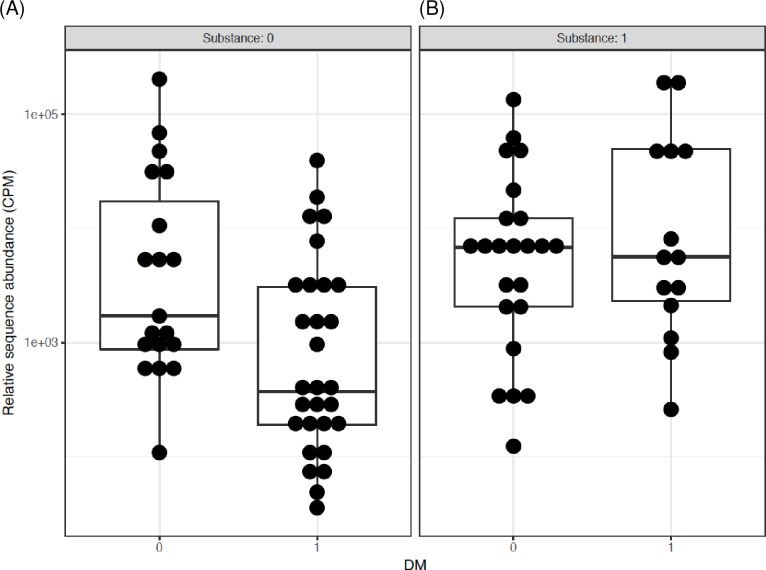
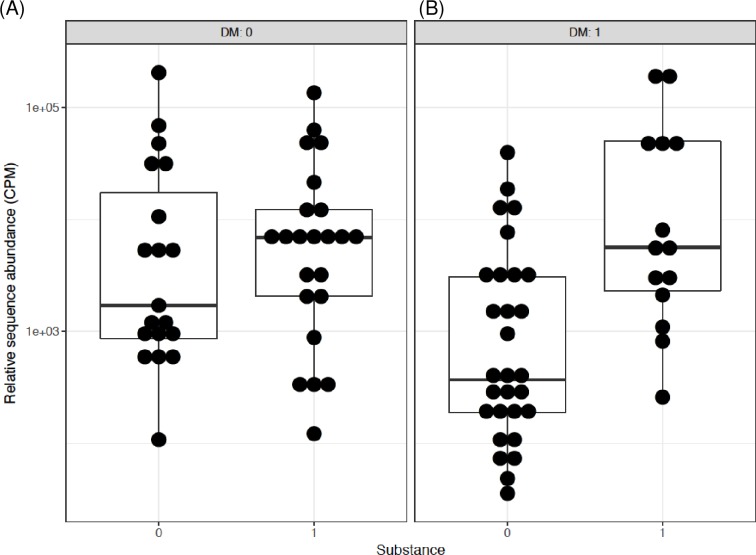
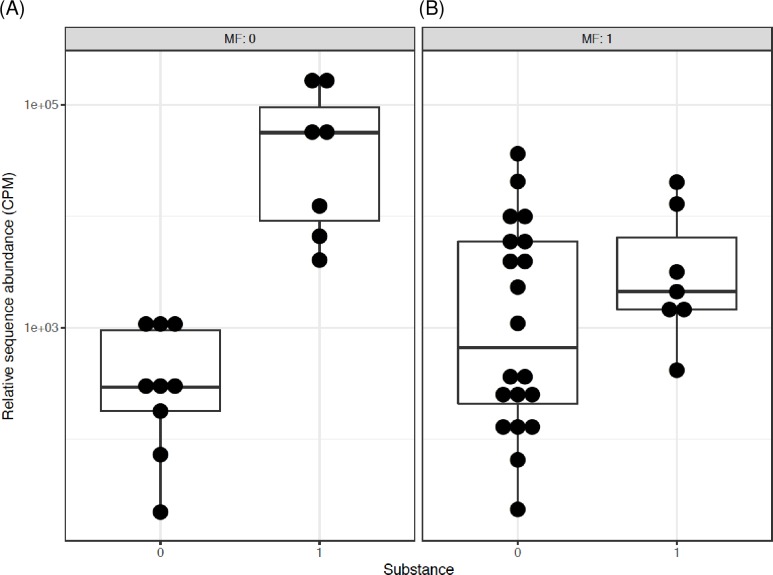
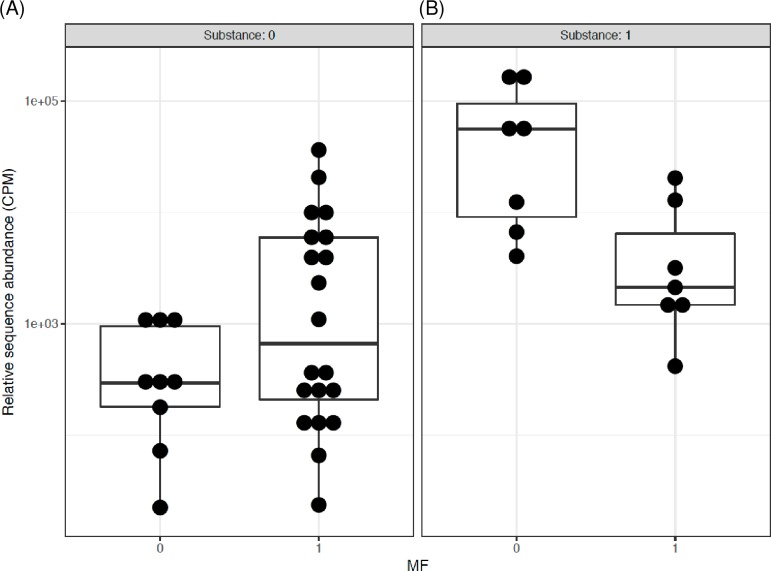
The study subjects had prevalent overweight/obesity (78%), T2D (50%) and co-morbid psychiatric (65%) and opioid use (45%) disorders. In the analysis of microbiota, the data showed interactions of opioids, T2D and metformin with Bifidobacterium and Prevotella genera. The differential analysis of Bifidobacterium stratified by opioids, T2D and metformin, showed significant interactions among these factors indicating that the effect of one factor was changed by the other (FDR-adjusted p [q] < 0.01). In addition, the pair-wise comparison showed that participants with T2D not taking metformin had a significant 6.74 log2 fold increase in Bifidobacterium in opioid users as compared to non-users (q = 2.2 x 10⁻⁸). Since metformin was not included in this pair-wise comparison, the significant 'q' suggested association of opioid use with Bifidobacterium abundance. The differences in Bifidobacterium abundance could possibly be explained by opioids acting as organic cation transporter 1 (OCT1) inhibitors. Analysis stratified by lower and higher leptin and oxytocin (divided by the 50th percentile) in the subgroup without T2D showed lower Dialister in High-Leptin vs. Low-Leptin (p = 0.03). Contrary, the opposite was shown for oxytocin, higher Dialister in High-Oxytocin vs. Low-Oxytocin (p = 0.04).
The study demonstrated for the first time that Bifidobacterium and Prevotella abundance was affected by interactions of T2D, metformin and opioid use. Also, in subjects without T2D Dialister abundance varied according to circulating leptin and oxytocin.
已知肠道微生物群与 2 型糖尿病(T2D)、精神疾病和阿片类药物的使用有关。在这项研究中,我们检验了这样一个假设,即 T2D 中肠道微生物群的变异性与心理代谢健康有关。
在芝加哥退伍军人事务医疗中心的门诊就诊的非裔美国男性(AAM)(n=99)中进行了一项横断面研究。主要的观察指标包括粪便微生物群生态(通过 16S rRNA 基因测序)、包括阿片类药物使用在内的精神疾病,以及循环瘦素和催产素作为肥胖和心理亲社会行为的代表性激素生物标志物。
研究对象中普遍存在超重/肥胖(78%)、T2D(50%)和合并的精神疾病(65%)和阿片类药物使用(45%)障碍。在微生物组分析中,数据显示阿片类药物、T2D 和二甲双胍与双歧杆菌属和普雷沃氏菌属之间存在相互作用。根据阿片类药物、T2D 和二甲双胍对双歧杆菌的差异分析表明,这些因素之间存在显著的相互作用,表明一个因素的影响被另一个因素改变(经 FDR 调整的 p[q]<0.01)。此外,两两比较显示,与非使用者相比,不服用二甲双胍的 T2D 患者在阿片类药物使用者中的双歧杆菌数量显著增加了 6.74 倍对数(q=2.2×10⁻⁸)。由于二甲双胍未包含在这对比较中,显著的“q”表明阿片类药物的使用与双歧杆菌丰度有关。双歧杆菌丰度的差异可能是由于阿片类药物作为有机阳离子转运蛋白 1(OCT1)抑制剂而起作用。在无 T2D 的亚组中,根据瘦素和催产素(以第 50 百分位数划分)的高低进行分层分析显示,高瘦素组的 Dialister 减少(p=0.03)。相反,在催产素中则相反,高催产素组的 Dialister 增加(p=0.04)。
该研究首次表明,双歧杆菌和普雷沃氏菌的丰度受 T2D、二甲双胍和阿片类药物使用的相互作用的影响。此外,在无 T2D 的患者中,Dialister 的丰度根据循环瘦素和催产素而变化。