Graduate School of Pharmaceutical Sciences, Chiba University, 1-8-1 Inohana, Chuo-ku, Chiba, 260-8675, Japan.
Temko Corporation, Tokyo, Japan.
Sci Rep. 2018 Mar 29;8(1):5376. doi: 10.1038/s41598-018-23698-4.
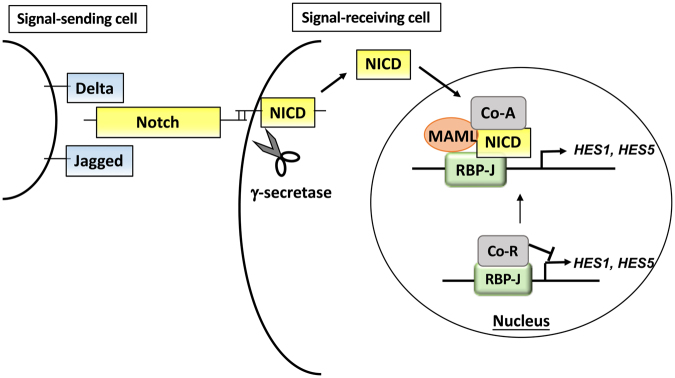
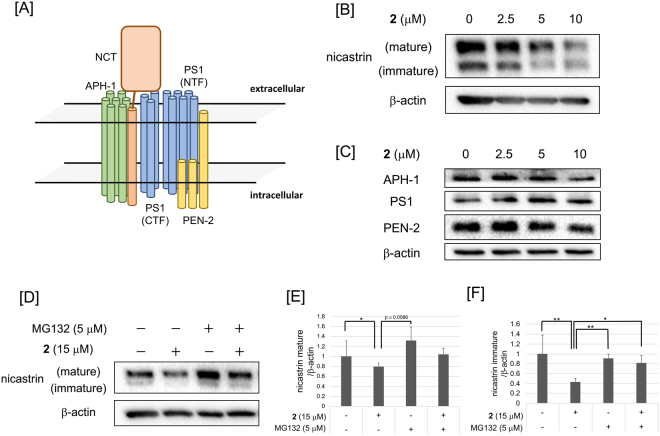
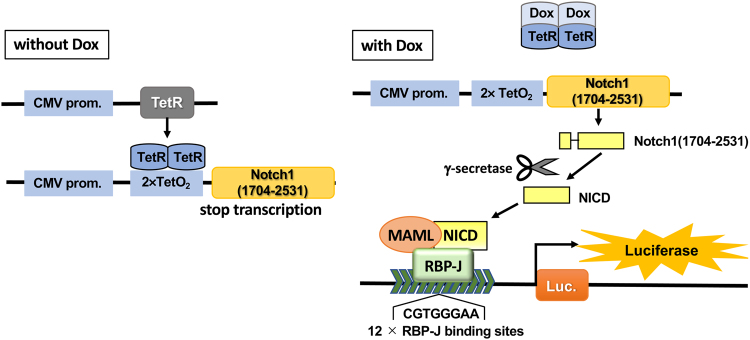
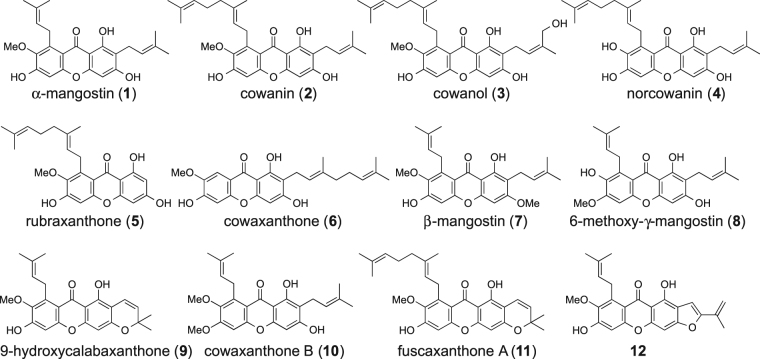
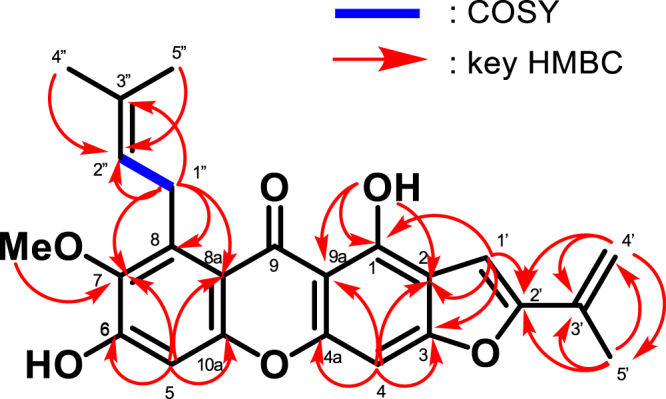
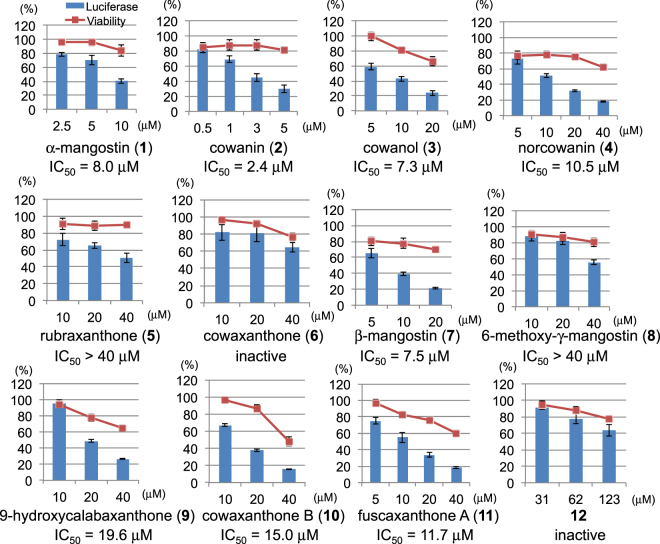
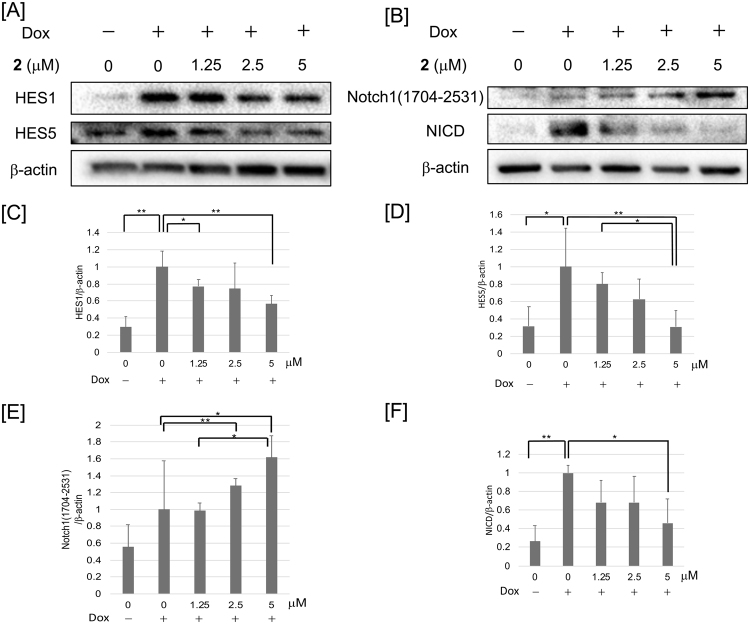
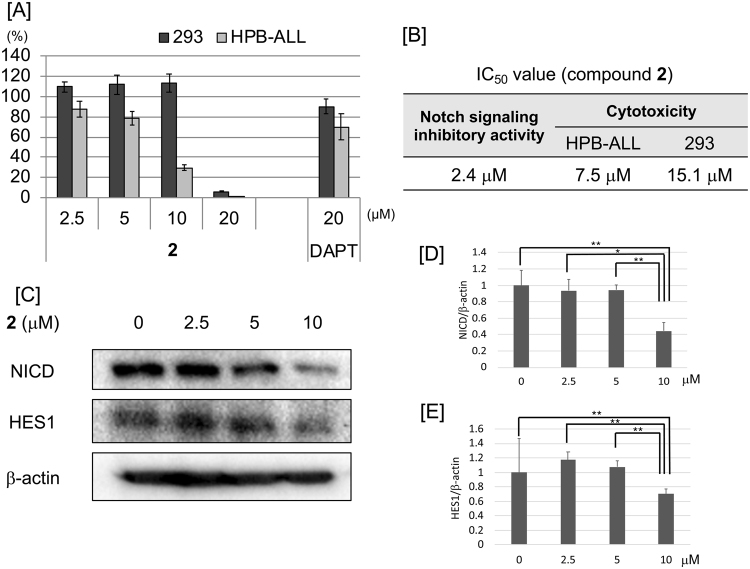
Aberrant activation of Notch signaling contributes to the pathogenesis of several different types of cancer, and Notch pathway inhibitors may have significant therapeutic potential. Using a unique cell-based assay system, we isolated twelve compounds, including one new natural product from Garcinia speciosa, that inhibit the Notch signaling pathway. HES1 and HES5 are target genes of the Notch cascade, and compound 2, referred to as cowanin, decreased the protein levels of HES1 and HES5 in assay cells. Furthermore, cowanin (2) showed potent cytotoxicity against human leukemic HPB-ALL cells. The Notch signaling inhibitory activity of cowanin (2) is linked to the increased degradation of nicastrin, which is one of the components of the γ-secretase complex. To the best of our knowledge, this is the first example of a compound with Notch pathway inhibitory activity mediated by nicastrin degradation.
Notch 信号通路的异常激活与多种不同类型癌症的发病机制有关, Notch 通路抑制剂可能具有显著的治疗潜力。我们使用独特的基于细胞的测定系统,从 Garcinia speciosa 中分离出 12 种化合物,包括一种新的天然产物,这些化合物能够抑制 Notch 信号通路。HES1 和 HES5 是 Notch 级联反应的靶基因,化合物 2,称为考瓦宁,可降低测定细胞中 HES1 和 HES5 的蛋白水平。此外,考瓦宁(2)对人白血病 HPB-ALL 细胞表现出很强的细胞毒性。考瓦宁(2)的 Notch 信号通路抑制活性与神经调节素的降解增加有关,神经调节素是 γ-分泌酶复合物的组成部分之一。据我们所知,这是首例由神经调节素降解介导的具有 Notch 通路抑制活性的化合物。