Lam Janice K P, Hui K F, Ning Raymond J, Xu X Q, Chan K H, Chiang Alan K S
Department of Paediatrics and Adolescent Medicine, Li Ka Shing Faculty of Medicine, Queen Mary Hospital, The University of Hong Kong, Pokfulam, Hong Kong.
Department of Microbiology, Li Ka Shing Faculty of Medicine, Queen Mary Hospital, The University of Hong Kong, Pokfulam, Hong Kong.
Front Microbiol. 2018 Mar 7;9:416. doi: 10.3389/fmicb.2018.00416. eCollection 2018.
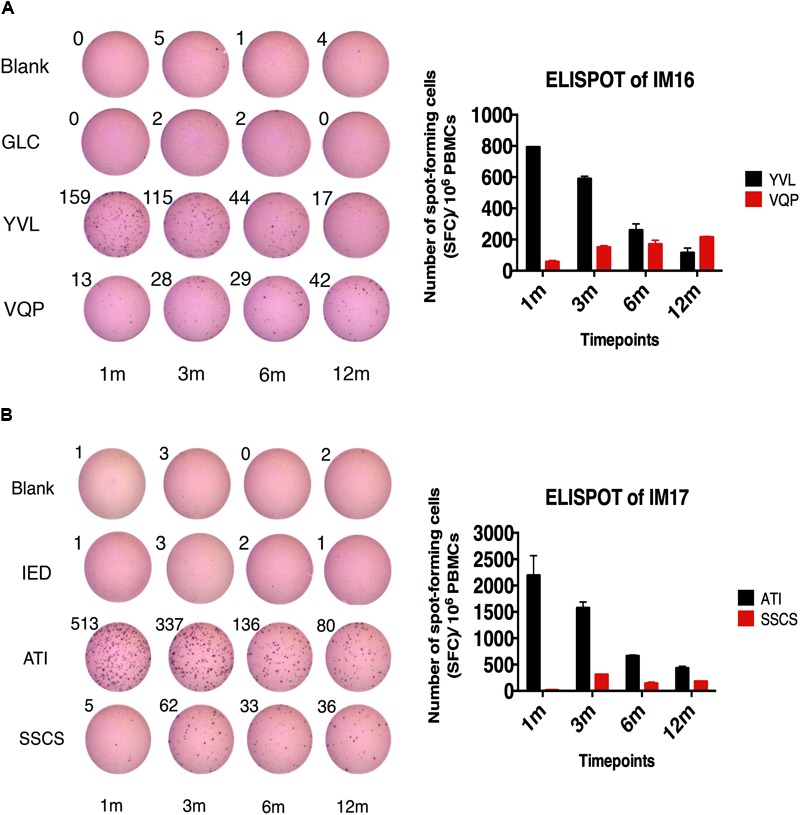
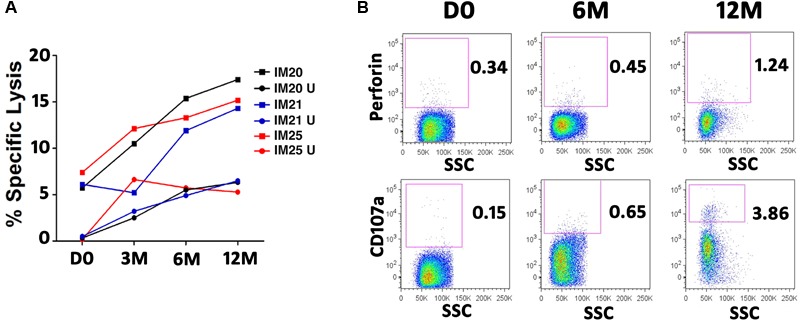
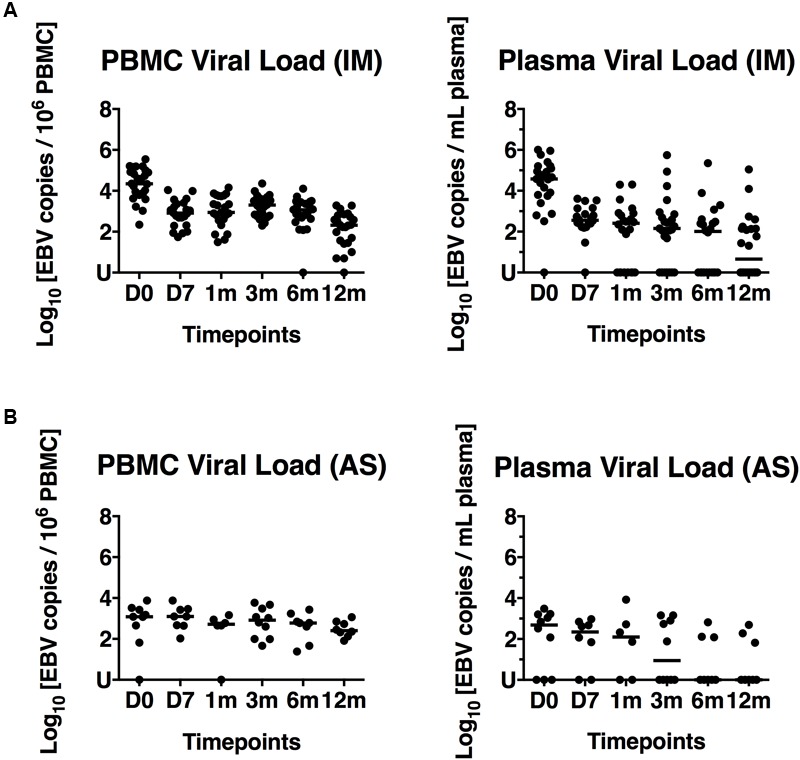
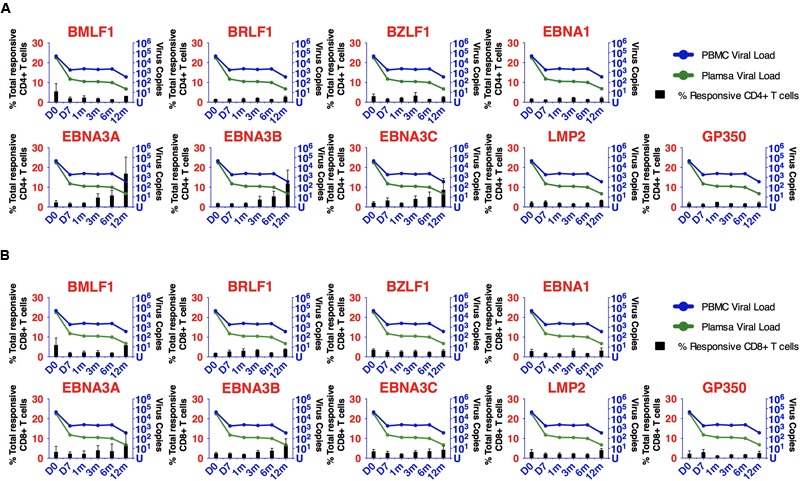
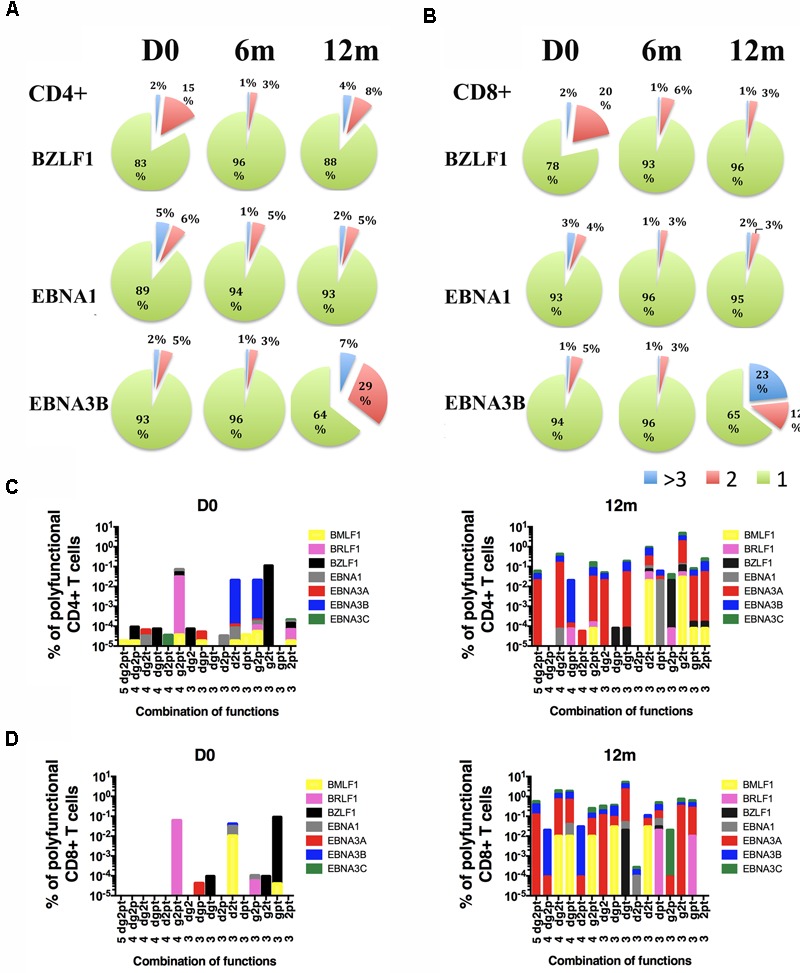
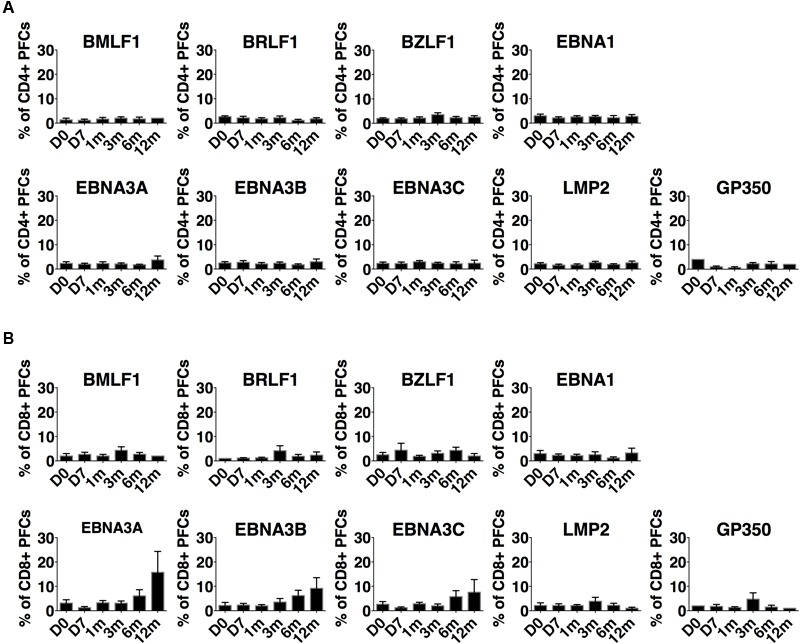
Long term carriers were shown to generate robust polyfunctional T cell (PFC) responses against lytic and latent antigens of Epstein-Barr virus (EBV). However, the time of emergence of PFC responses against EBV antigens, pattern of immunodominance and difference between CD4+ and CD8+ T cell responses during various stages of EBV infection are not clearly understood. A longitudinal study was performed to assess the development of antigen-specific PFC responses in children diagnosed to have primary symptomatic (infectious mononucleosis [IM]) and asymptomatic (AS) EBV infection. Evaluation of IFN-γ secreting CD8+ T cell responses upon stimulation by HLA class I-specific peptides of EBV lytic and latent proteins by ELISPOT assay followed by assessment of CD4+ and CD8+ PFC responses upon stimulation by a panel of overlapping EBV peptides for co-expression of IFN-γ, TNF-α, IL-2, perforin and CD107a by flow cytometry were performed. Cytotoxicity of T cells against autologous lymphoblastoid cell lines (LCLs) as well as EBV loads in PBMC and plasma were also determined. Both IM and AS patients had elevated PBMC and plasma viral loads which declined steadily during a 12-month period from the time of diagnosis whilst decrease in the magnitude of CD8+ T cell responses toward EBV lytic peptides in contrast to increase toward latent peptides was shown with no significant difference between those of IM and AS patients. Both lytic and latent antigen-specific CD4+ and CD8+ T cells demonstrated polyfunctionality (defined as greater or equal to three functions) concurrent with enhanced cytotoxicity against autologous LCLs and steady decrease in plasma and PBMC viral loads over time. Immunodominant peptides derived from BZLF1, BRLF1, BMLF1 and EBNA3A-C proteins induced the highest proportion of CD8+ as well as CD4+ PFC responses. Diverse functional subtypes of both CD4+ and CD8+ PFCs were shown to emerge at 6-12 months. In conclusion, EBV antigen-specific CD4+ and CD8+ PFC responses emerge during the first year of primary EBV infection, with greatest responses toward immunodominant epitopes in both lytic and latent proteins, correlating to steady decline in PBMC and plasma viral loads.
长期携带者被证明能产生针对爱泼斯坦-巴尔病毒(EBV)裂解和潜伏抗原的强大多功能T细胞(PFC)反应。然而,针对EBV抗原的PFC反应出现的时间、免疫显性模式以及在EBV感染各个阶段CD4+和CD8+ T细胞反应之间的差异尚不清楚。进行了一项纵向研究,以评估被诊断为原发性有症状(传染性单核细胞增多症[IM])和无症状(AS)EBV感染的儿童中抗原特异性PFC反应的发展情况。通过ELISPOT测定法评估EBV裂解和潜伏蛋白的HLA I类特异性肽刺激后分泌IFN-γ的CD8+ T细胞反应,随后通过流式细胞术评估一组重叠的EBV肽刺激后CD4+和CD8+ PFC反应中IFN-γ、TNF-α、IL-2、穿孔素和CD107a的共表达情况。还测定了T细胞对自体淋巴母细胞系(LCLs)的细胞毒性以及外周血单核细胞(PBMC)和血浆中的EBV载量。IM和AS患者的PBMC和血浆病毒载量均升高,从诊断时起在12个月期间稳步下降,而CD8+ T细胞对EBV裂解肽的反应幅度下降,与之相反,对潜伏肽的反应增加,IM和AS患者之间无显著差异。裂解和潜伏抗原特异性的CD4+和CD8+ T细胞均表现出多功能性(定义为具有三种或更多功能),同时对自体LCLs的细胞毒性增强,血浆和PBMC病毒载量随时间稳步下降。源自BZLF1、BRLF1、BMLF1和EBNA3A-C蛋白的免疫显性肽诱导了最高比例的CD8+以及CD4+ PFC反应。CD4+和CD8+ PFC的多种功能亚型在6至12个月时出现。总之,EBV抗原特异性的CD4+和CD8+ PFC反应在原发性EBV感染的第一年出现,对裂解和潜伏蛋白中的免疫显性表位反应最强,与PBMC和血浆病毒载量的稳步下降相关。