Phu Jack, Kalloniatis Michael, Khuu Sieu K
Centre for Eye Health, University of New South Wales, Kensington, NSW, Australia.
School of Optometry and Vision Science, University of New South Wales, Kensington, NSW, Australia.
Transl Vis Sci Technol. 2018 Mar 23;7(2):8. doi: 10.1167/tvst.7.2.8. eCollection 2018 Mar.
Current clinical perimetric test paradigms present stimuli randomly to various locations across the visual field (VF), inherently introducing spatial uncertainty, which reduces contrast sensitivity. In the present study, we determined the extent to which spatial uncertainty affects contrast sensitivity in glaucoma patients by minimizing spatial uncertainty through attentional cueing.
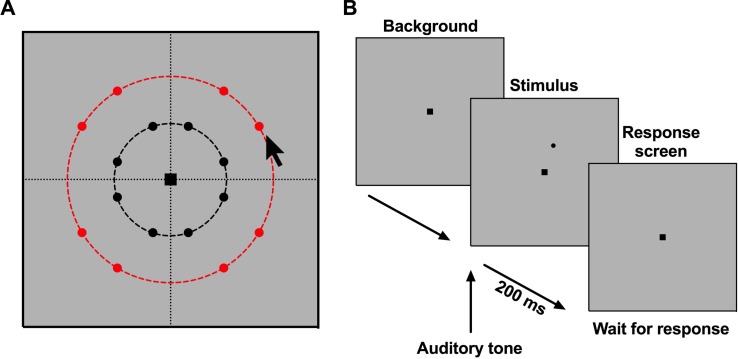
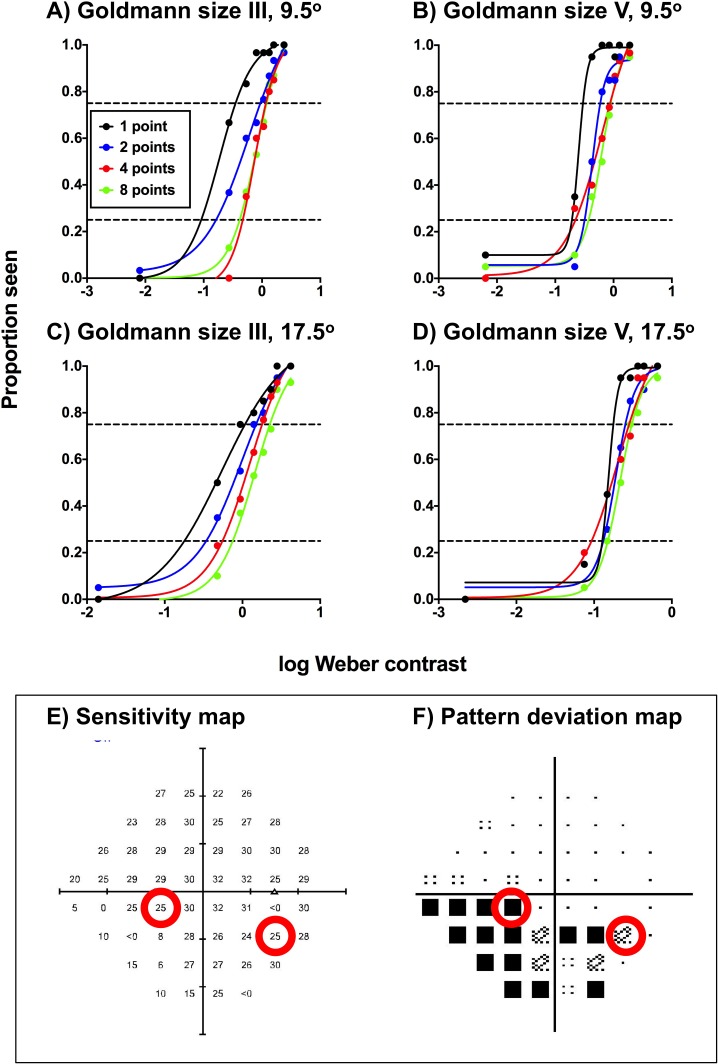
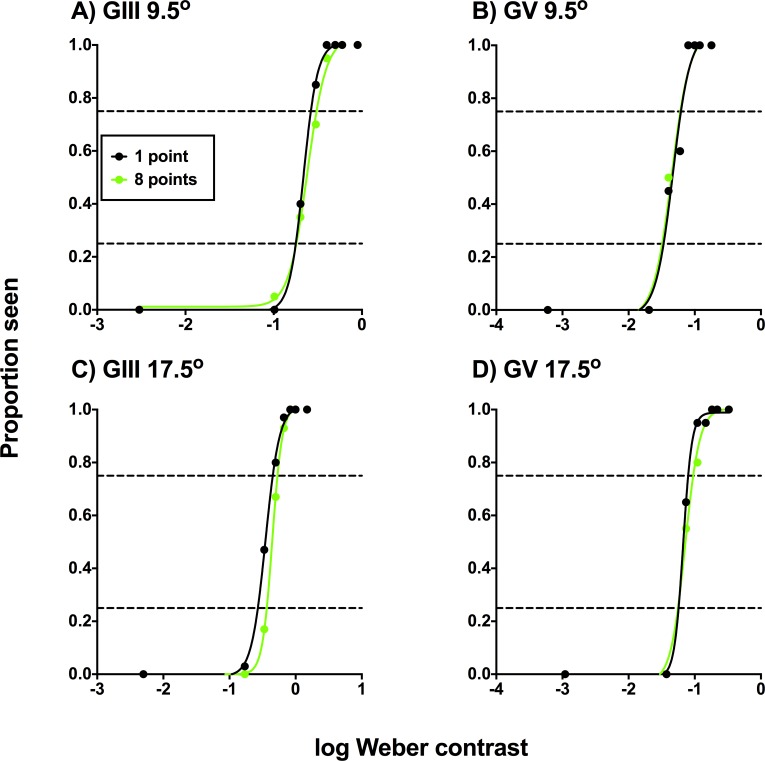
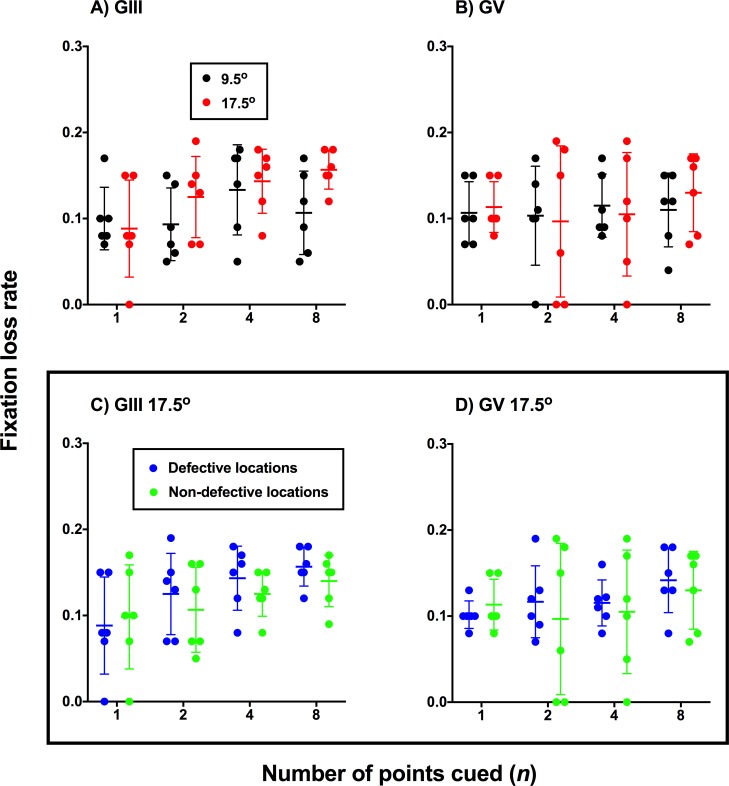
Six patients with open-angle glaucoma and six healthy subjects underwent laboratory-based psychophysical testing to measure contrast sensitivity at preselected locations at two eccentricities (9.5° and 17.5°) with two stimulus sizes (Goldmann sizes III and V) under different cueing conditions: 1, 2, 4, or 8 points verbally cued. Method of Constant Stimuli and a single-interval forced-choice procedure were used to generate frequency of seeing (FOS) curves at locations with and without VF defects.
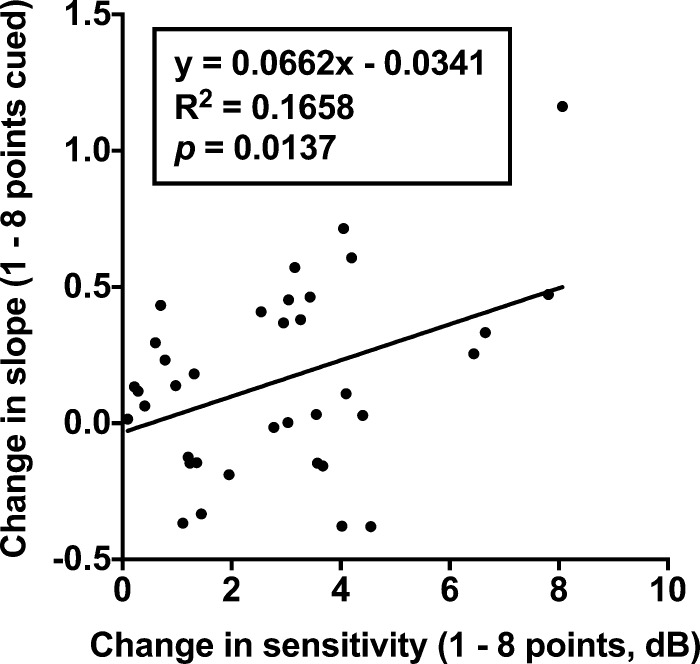
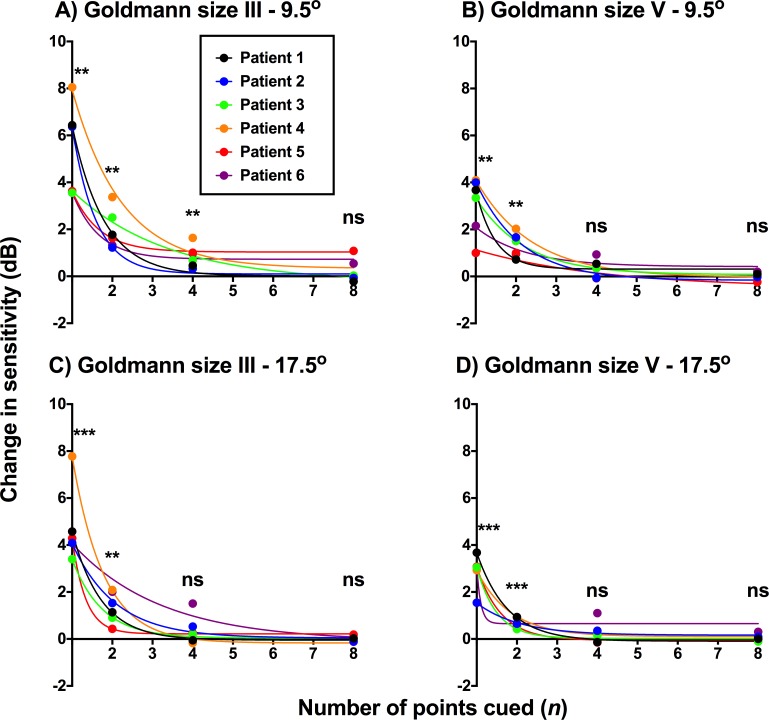
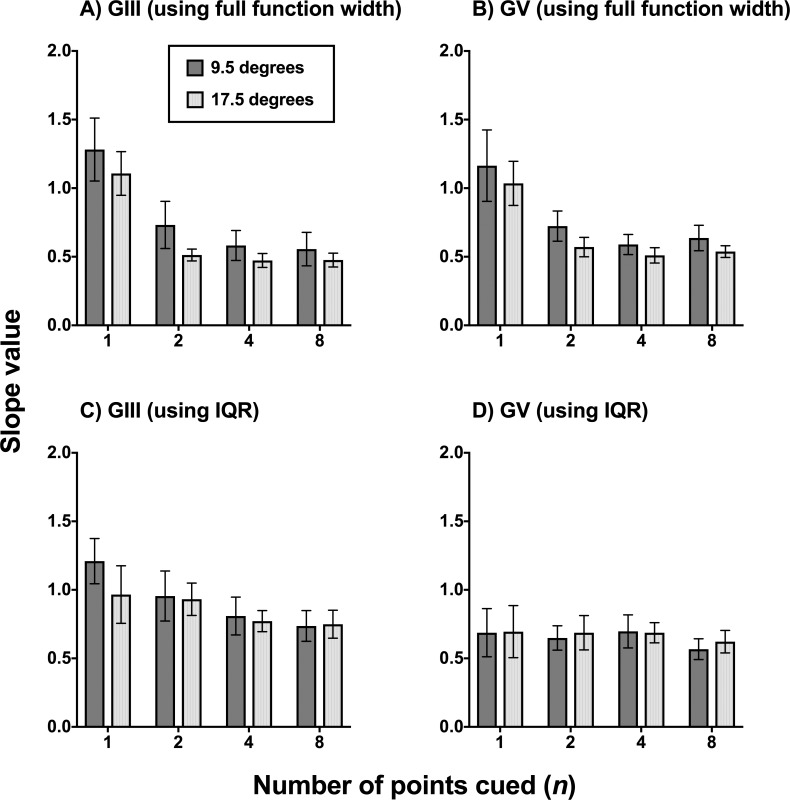
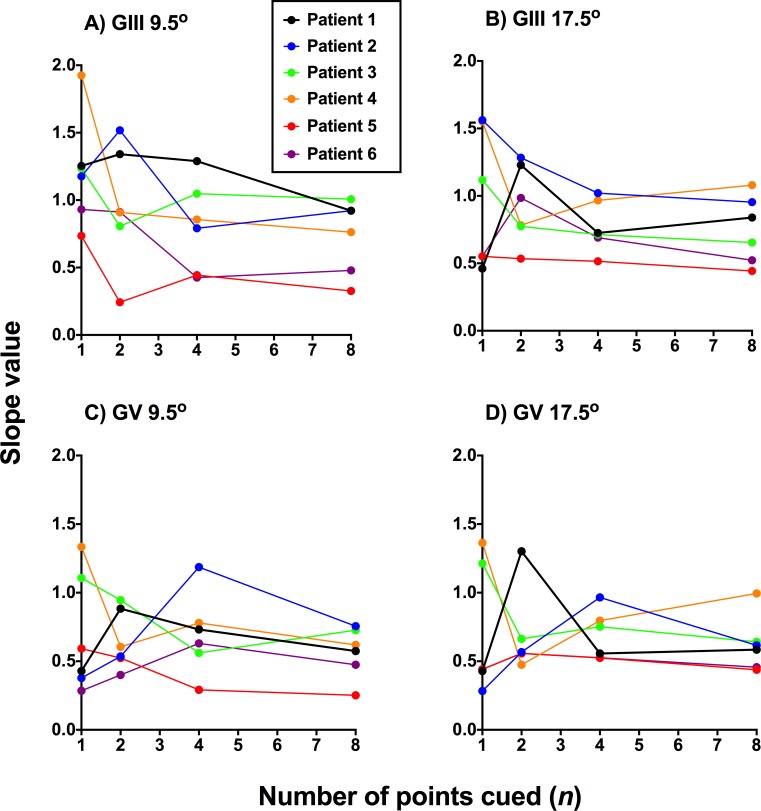
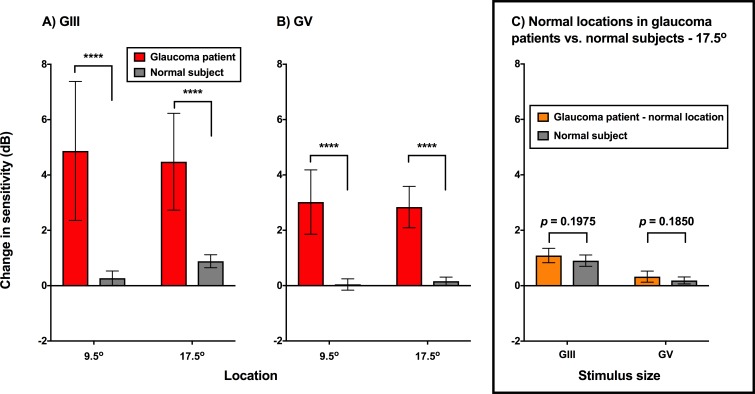
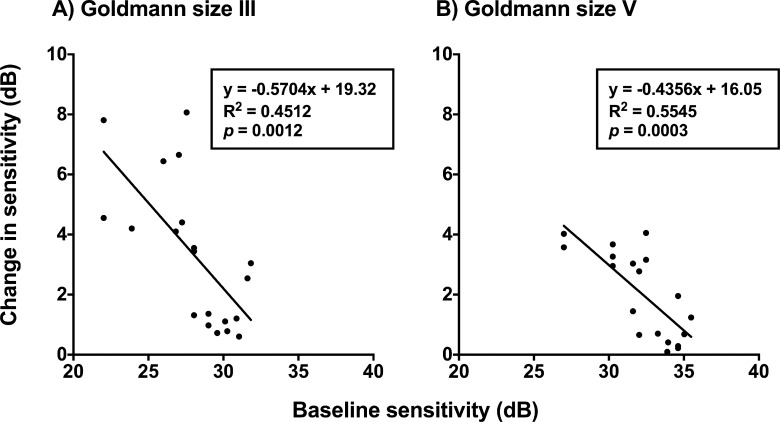
At locations with VF defects, cueing minimizes spatial uncertainty and improves sensitivity under all conditions. The effect of cueing was maximal when one point was cued, and rapidly diminished when more points were cued (no change to baseline with 8 points cued). The slope of the FOS curve steepened with reduced spatial uncertainty. Locations with normal sensitivity in glaucomatous eyes had similar performance to that of healthy subjects. There was a systematic increase in uncertainty with the depth of VF loss.
Sensitivity measurements across the VF are negatively affected by spatial uncertainty, which increases with greater VF loss. Minimizing uncertainty can improve sensitivity at locations of deficit.
Current perimetric techniques introduce spatial uncertainty and may therefore underestimate sensitivity in regions of VF loss.
当前临床视野测试范式会将刺激随机呈现于视野(VF)的各个位置,这本质上会引入空间不确定性,从而降低对比敏感度。在本研究中,我们通过注意力提示将空间不确定性降至最低,以确定空间不确定性对青光眼患者对比敏感度的影响程度。
六名开角型青光眼患者和六名健康受试者接受了基于实验室的心理物理学测试,以测量在两种偏心率(9.5°和17.5°)下,使用两种刺激大小(Goldmann大小III和V),在不同提示条件下(1、2、4或8个点的言语提示),预选位置处的对比敏感度。使用恒定刺激法和单间隔强制选择程序,在有和没有VF缺陷的位置生成视见频率(FOS)曲线。
在存在VF缺陷的位置,提示可将空间不确定性降至最低,并在所有条件下提高敏感度。当提示一个点时,提示效果最大,而当提示更多点时,效果迅速减弱(提示8个点时无基线变化)。FOS曲线的斜率随着空间不确定性的降低而变陡。青光眼眼中具有正常敏感度的位置与健康受试者的表现相似。随着VF损失深度的增加,不确定性会系统性增加。
整个VF的敏感度测量受到空间不确定性的负面影响,空间不确定性会随着VF损失的增加而增大。将不确定性降至最低可提高缺陷位置的敏感度。
当前的视野技术会引入空间不确定性,因此可能会低估VF损失区域的敏感度。