Tanisawa Kumpei, Suzuki Katsuhiko, Ma Sihui, Kondo Saki, Okugawa Susumu, Higuchi Mitsuru
Department of Physical Activity Research, National Institutes of Biomedical Innovation, Health and Nutrition, Tokyo 162-8636, Japan.
Research Fellow of Japan Society for the Promotion of Science, Tokyo 102-0083, Japan.
Antioxidants (Basel). 2018 Apr 2;7(4):51. doi: 10.3390/antiox7040051.
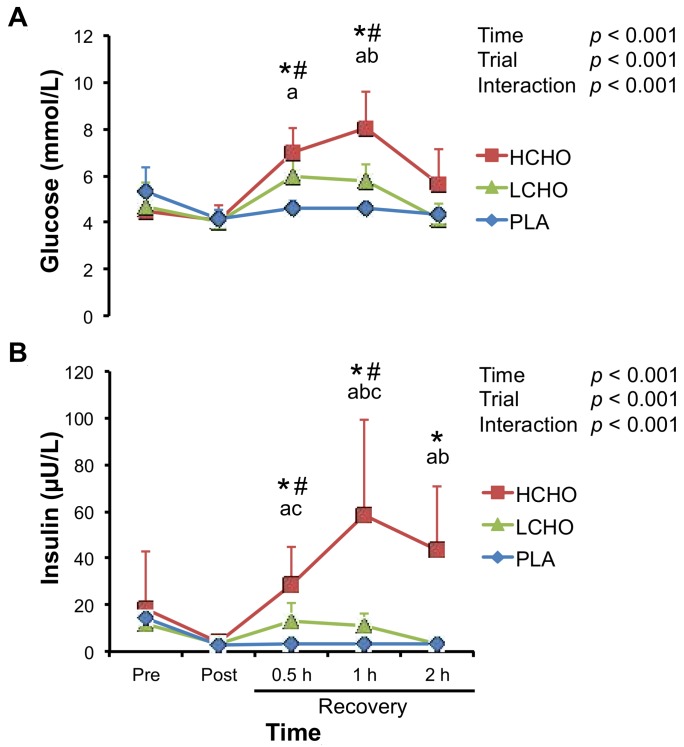
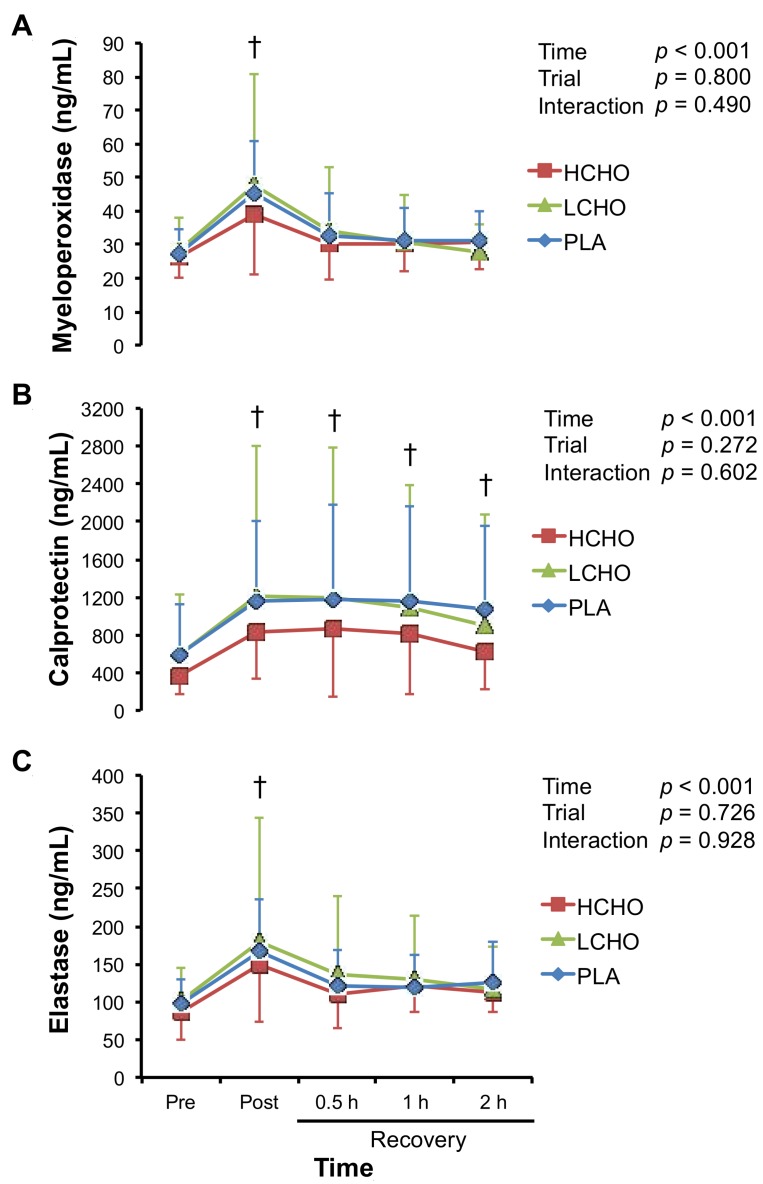
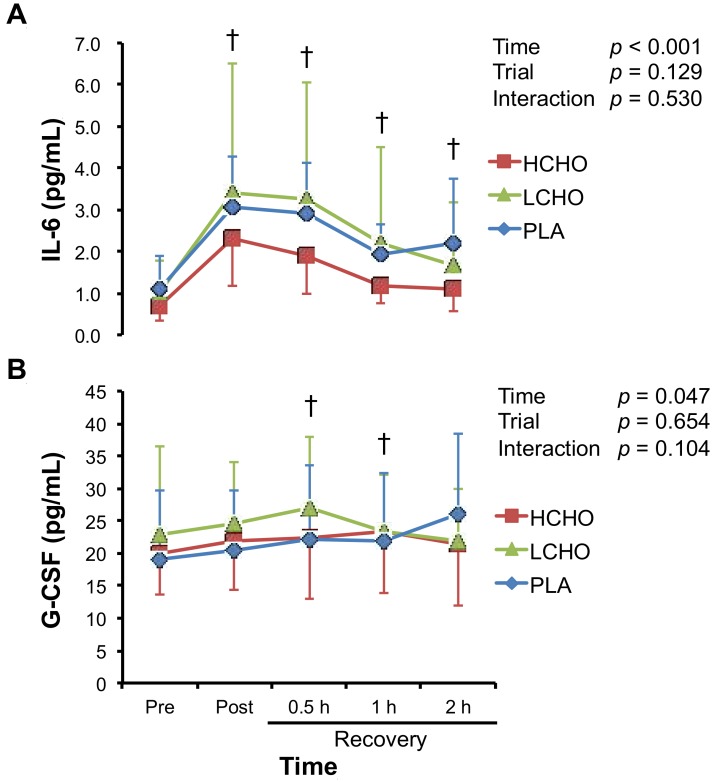
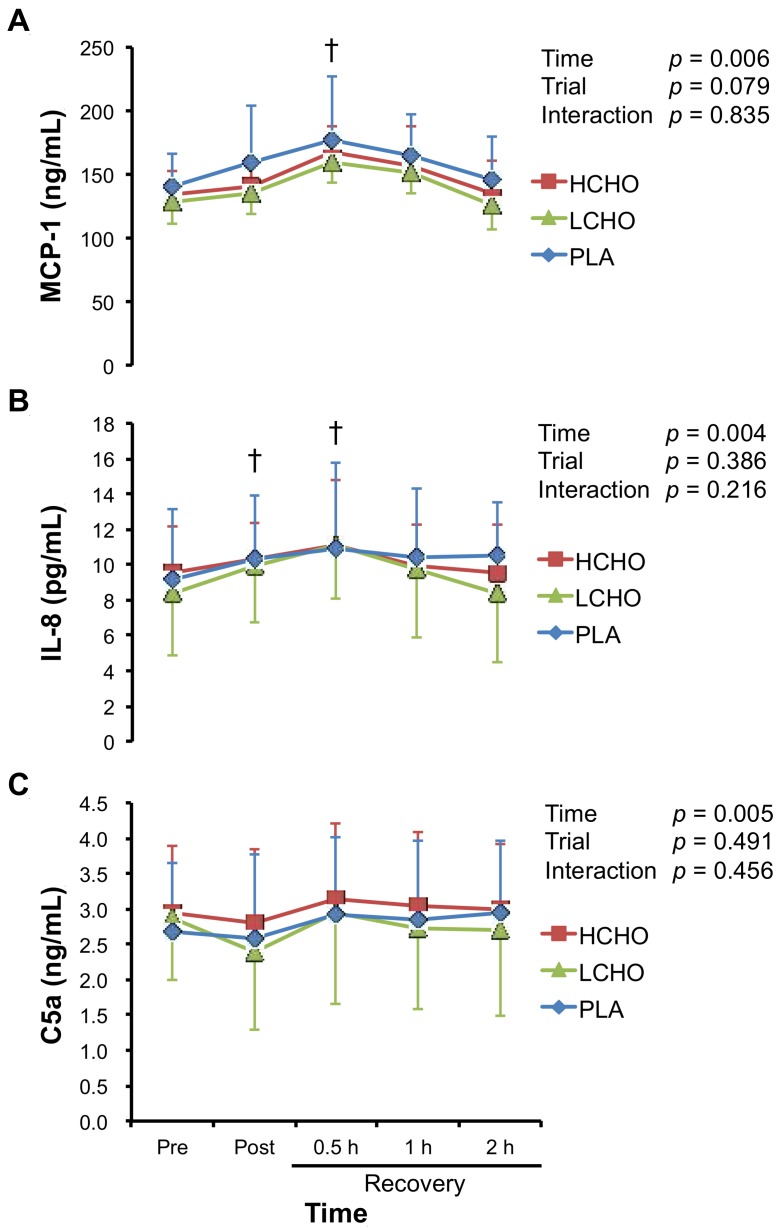
We aimed to examine the effects of ingestion of different amounts of carbohydrate (CHO) after endurance exercise on neutrophil count, circulating cytokine levels, and the markers of neutrophil activation and muscle damage. Nine participants completed three separate experimental trials consisting of 1 h of cycling exercise at 70% V · O₂ max, followed by ingestion of 1.2 g CHO·kg body mass·h (HCHO trial), 0.2 g CHO·kg body mass·h (LCHO trial), or placebo (PLA trial) during the 2 h recovery phase in random order. Circulating glucose, insulin, and cytokine levels, blood cell counts, and the markers of neutrophil activation and muscle damage were measured. The concentrations of plasma glucose and serum insulin at 1 h after exercise were higher in the HCHO trial than in the LCHO and PLA trials. Although there were significant main effects of time on several variables, including neutrophil count, cytokine levels, and the markers of neutrophil activation and muscle damage, significant time × trial interactions were not observed for any variables. These results suggest that CHO ingestion after endurance exercise does not enhance exercise-induced increase in circulating neutrophil and cytokine levels and markers of neutrophil activation and muscle damage, regardless of the amount of CHO ingested.
我们旨在研究耐力运动后摄入不同量碳水化合物(CHO)对中性粒细胞计数、循环细胞因子水平以及中性粒细胞活化和肌肉损伤标志物的影响。九名参与者完成了三项独立的实验试验,包括在70%最大摄氧量下进行1小时的自行车运动,随后在2小时恢复阶段随机依次摄入1.2克CHO·千克体重·小时(高碳水化合物试验,HCHO试验)、0.2克CHO·千克体重·小时(低碳水化合物试验,LCHO试验)或安慰剂(安慰剂试验,PLA试验)。测量了循环葡萄糖、胰岛素和细胞因子水平、血细胞计数以及中性粒细胞活化和肌肉损伤标志物。运动后1小时,HCHO试验中的血浆葡萄糖和血清胰岛素浓度高于LCHO试验和PLA试验。尽管时间对几个变量有显著的主效应,包括中性粒细胞计数、细胞因子水平以及中性粒细胞活化和肌肉损伤标志物,但未观察到任何变量有显著的时间×试验交互作用。这些结果表明,耐力运动后摄入CHO并不会增强运动诱导的循环中性粒细胞和细胞因子水平以及中性粒细胞活化和肌肉损伤标志物的增加,无论摄入的CHO量如何。