Schöck Matthias, Liebminger Stefan, Berg Gabriele, Cernava Tomislav
ACIB GmbH, Petersgasse 14, 8010, Graz, Austria.
Institute of Environmental Biotechnology, Graz University of Technology, Petersgasse 12, 8010, Graz, Austria.
AMB Express. 2018 Apr 3;8(1):54. doi: 10.1186/s13568-018-0583-6.
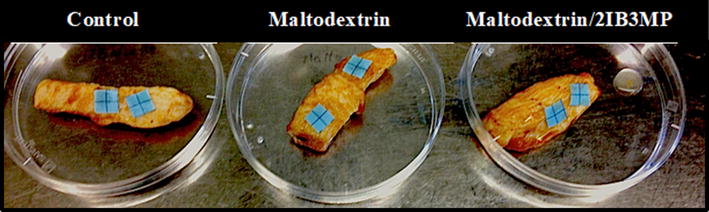
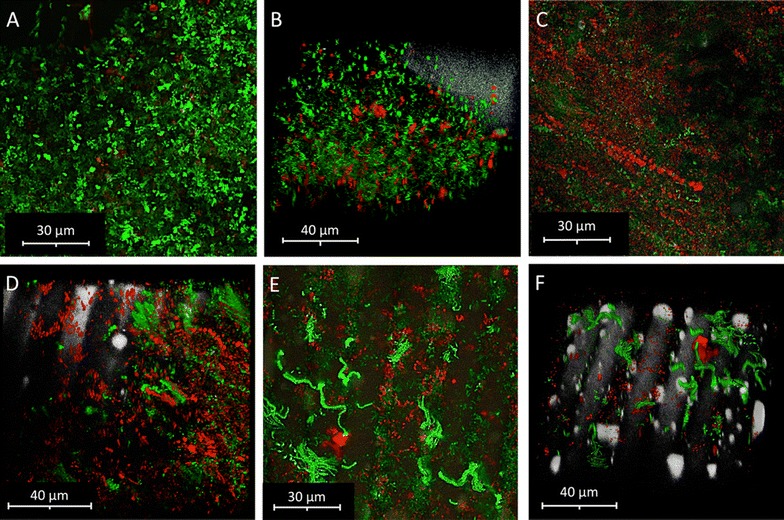
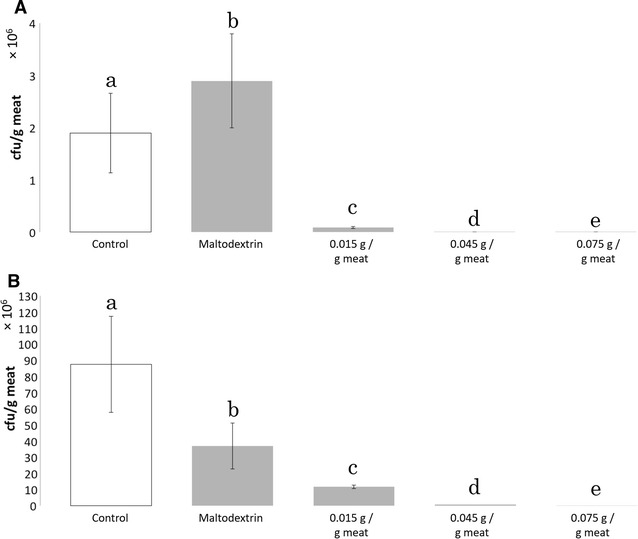
Every year about 20% of the globally produced meat gets lost due to microbial spoilage. Nevertheless, the demand for processed meat is constantly rising and producers are searching for novel strategies to reduce microbial contaminations in their products. In the present study, we evaluated the applicability of alkylpyrazines as antimicrobial agents. These fragrant molecules naturally occur in different vegetables, fruits, roasted nut and meat. Several pyrazine derivatives are readily added to processed products for flavoring purposes in the food industry. To evaluate their potential for application, two derivatives were tested for their antimicrobial activity against meat-associated bacterial contaminants and chicken meat as a whole. Isolates assigned to Carnobacteriaceae, Enterobacteriaceae, Listeriaceae, and Moraxellaceae were substantially inhibited in the pilot tests. Moreover, treatments of pyrazine-susceptible isolates resulted in 4-log reductions in bacterial cell counts. The effect was more pronounced when the model contaminants were exposed to higher concentrations of 5-isobutyl-2,3-dimethylpyrazine. In a first small-scale application with processed chicken meat, it was demonstrated that the antimicrobial effects of 2-isobutyl-3-methylpyrazine can be improved by additionally lowering the water activity on the meat surface when maltodextrin is used as a carrier substance. At low pyrazine dosages, the number of viable bacteria was decreased up to 95% in comparison to the corresponding controls. A complementary imaging method that was developed to assess the efficacy on the product, reinforced the applicability of this two-component system.
每年全球生产的肉类约有20%因微生物腐败而损失。尽管如此,加工肉类的需求仍在不断上升,生产商正在寻找新的策略来减少其产品中的微生物污染。在本研究中,我们评估了烷基吡嗪作为抗菌剂的适用性。这些芳香分子天然存在于不同的蔬菜、水果、烤坚果和肉类中。几种吡嗪衍生物很容易添加到加工产品中,用于食品工业中的调味目的。为了评估它们的应用潜力,测试了两种衍生物对肉类相关细菌污染物和整只鸡肉的抗菌活性。在初步试验中,属于肉食杆菌科、肠杆菌科、李斯特菌科和莫拉克斯氏菌科的分离株受到了显著抑制。此外,对吡嗪敏感的分离株进行处理后,细菌细胞数量减少了4个对数级。当模型污染物暴露于更高浓度的5-异丁基-2,3-二甲基吡嗪时,这种效果更为明显。在首次对加工鸡肉进行的小规模应用中,结果表明,当使用麦芽糊精作为载体物质时,通过额外降低肉表面的水分活度,可以提高2-异丁基-3-甲基吡嗪的抗菌效果。与相应的对照相比,在低吡嗪剂量下,活菌数量减少了95%。为评估该产品效果而开发的一种补充成像方法,增强了这种双组分系统的适用性。