ACIB GmbH, Petersgasse 14, 8010, Graz, Austria.
Institute of Environmental Biotechnology, Graz University of Technology, Petersgasse 12, 8010, Graz, Austria.
Sci Rep. 2017 Oct 16;7(1):13253. doi: 10.1038/s41598-017-13579-7.
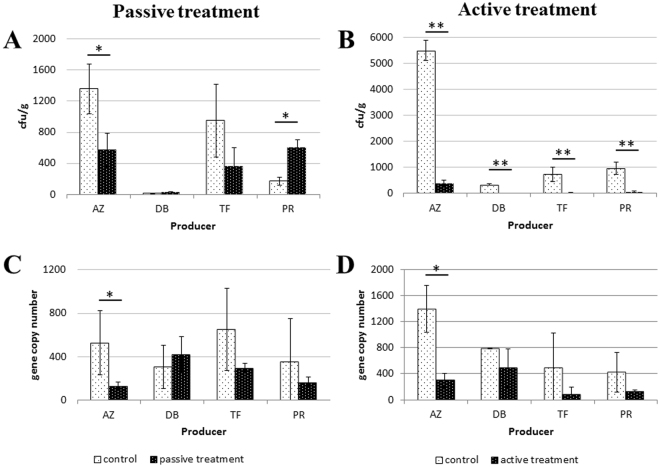
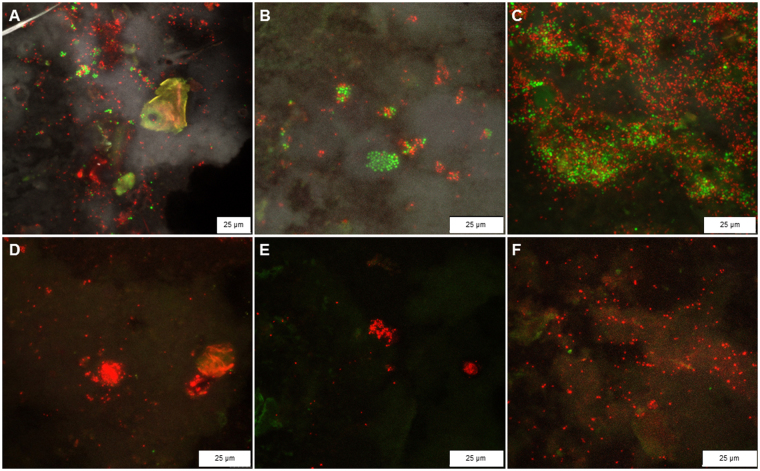
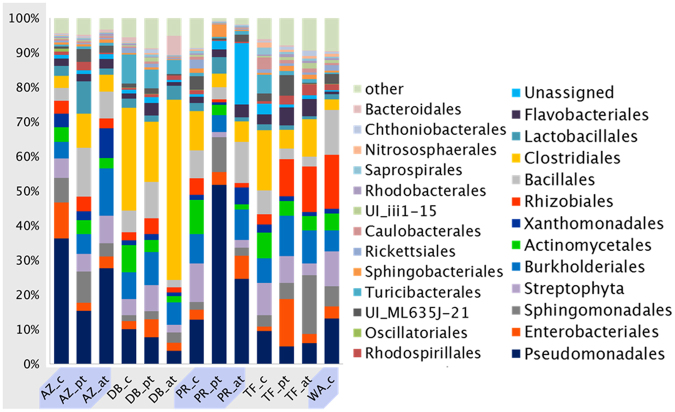
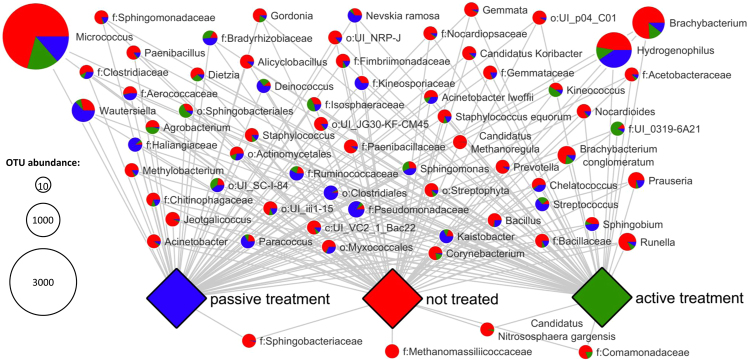
The treatment of hatching eggs relies on classic yet environmentally harmful decontamination methods such as formaldehyde fumigation. We evaluated bacteria-derived volatiles as a replacement within a fundamentally novel approach based on volatile organic compounds (VOCs), which are naturally involved in microbial communication and antagonism due to their high antimicrobial efficiency. Pyrazine (5-isobutyl-2,3-dimethylpyrazine) was applied passively and actively in prototypes of a pre-industry-scale utilization. Altogether, pyrazine decontamination rates of up to 99.6% were observed, which is comparable to formaldehyde fumigation. While active evaporation was highly efficient in all experiments, passive treatment showed reducing effects in two of four tested groups only. These results were confirmed by visualization using LIVE/DEAD staining microscopy. The natural egg shell microbiome was characterized by an unexpected bacterial diversity of Pseudomonadales, Enterobacteriales, Sphingomonadales, Streptophyta, Burkholderiales, Actinomycetales, Xanthomonadales, Rhizobiales, Bacillales, Clostridiales, Lactobacillales, and Flavobacteriales members. Interestingly, we found that especially low pyrazine concentrations lead to a microbiome shift, which can be explained by varying antimicrobial effects on different microorganisms. Micrococcus spp., which are linked to embryonic death and reduced hatchability, was found to be highly sensitive to pyrazines. Taken together, pyrazine application was shown to be a promising, environmentally friendly alternative for fumigation treatments of hatchery eggs.
孵化蛋的处理依赖于经典但对环境有害的消毒方法,如甲醛熏蒸。我们评估了细菌衍生的挥发物作为一种替代物,这种替代物基于挥发性有机化合物(VOC),由于其高效的抗菌性能,VOC 自然参与微生物的交流和拮抗。吡嗪(5-异丁基-2,3-二甲基吡嗪)在工业规模利用的原型中被动和主动应用。总的来说,观察到高达 99.6%的吡嗪消毒率,与甲醛熏蒸相当。虽然主动蒸发在所有实验中都非常高效,但被动处理仅在四个测试组中的两个中显示出降低效果。使用 LIVE/DEAD 染色显微镜进行可视化证实了这些结果。天然蛋壳微生物组具有出乎意料的细菌多样性,包括假单胞菌目、肠杆菌目、鞘氨醇单胞菌目、木贼目、伯克霍尔德菌目、放线菌目、黄单胞菌目、根瘤菌目、芽孢杆菌目、梭菌目、乳杆菌目和黄杆菌目成员。有趣的是,我们发现特别是低浓度的吡嗪会导致微生物组发生变化,这可以通过不同微生物对不同抗菌物质的不同反应来解释。与胚胎死亡和孵化率降低有关的微球菌属对吡嗪非常敏感。总之,吡嗪的应用被证明是一种有前途的、环保的孵化蛋熏蒸处理替代方法。