Shaheen N J, Mukkada V, Eichinger C S, Schofield H, Todorova L, Falk G W
Center for Esophageal Diseases and Swallowing, University of North Carolina School of Medicine, Chapel Hill, North Carolina.
Division of Gastroenterology, Hepatology and Nutrition, Cincinnati Children's Hospital Medical Center, University of Cincinnati College of Medicine, Cincinnati, Ohio.
Dis Esophagus. 2018 Aug 1;31(8). doi: 10.1093/dote/doy015.
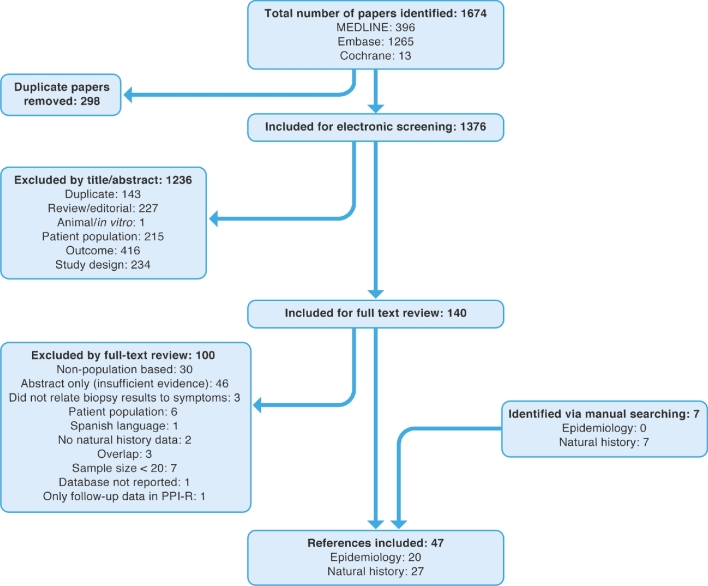
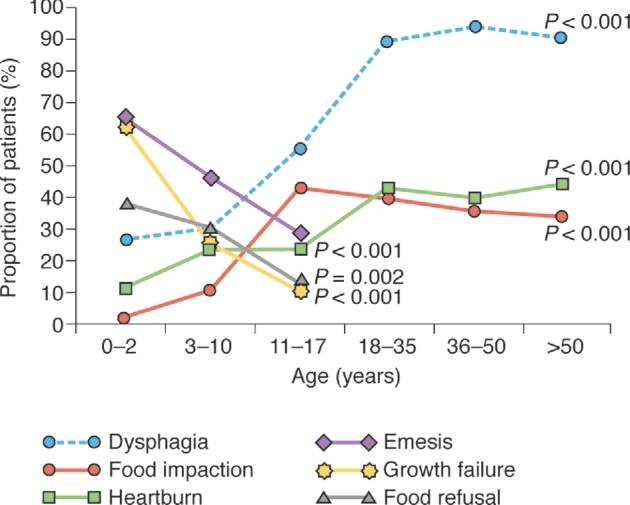
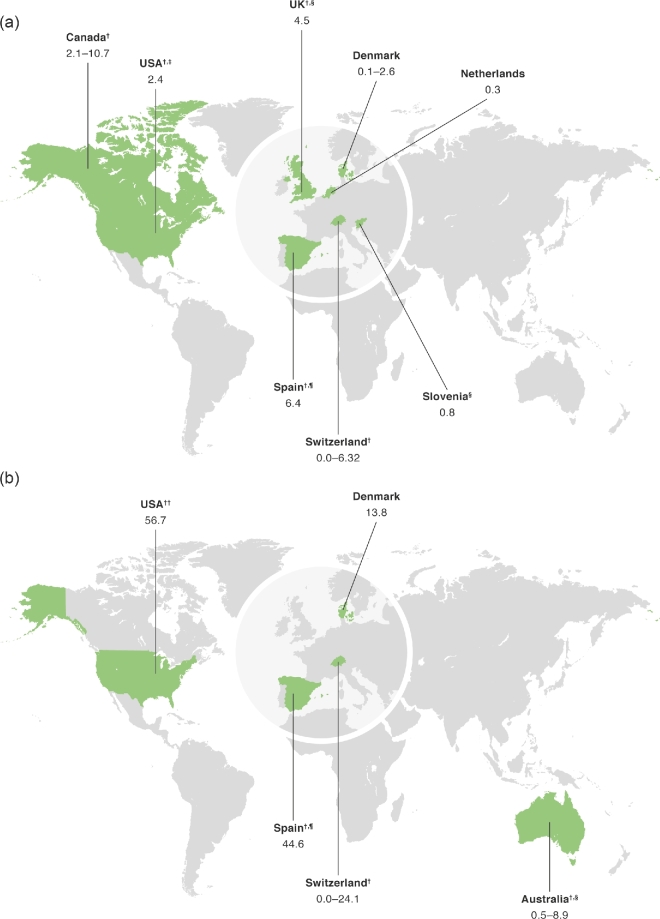
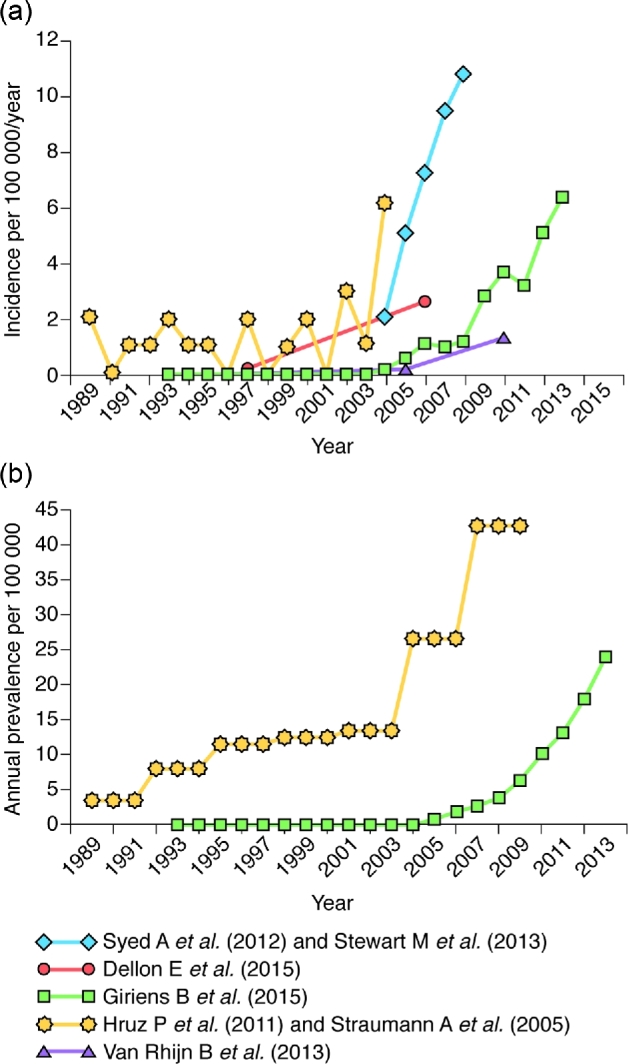
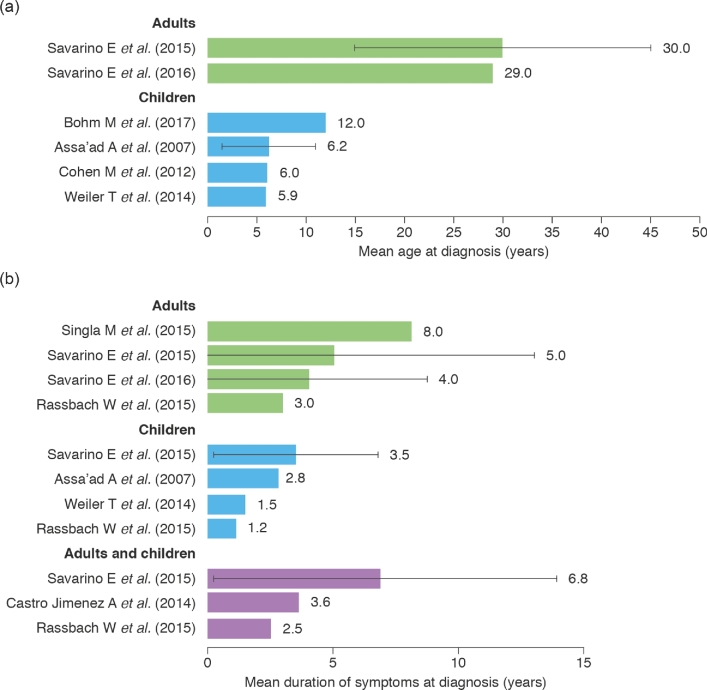
Eosinophilic esophagitis is a chronic immune-mediated esophageal disorder. For its timely diagnosis, clinicians must recognize common symptoms, and understand differences in symptoms across patient groups. The aim of this study is to systematically review the epidemiology and natural history of eosinophilic esophagitis. The MEDLINE, Embase, and Cochrane databases were searched from 1974 to February 2017 for studies describing the epidemiology and natural history of eosinophilic esophagitis. Congress abstracts from 2014 to 2016 were also searched. Search results were screened against predetermined inclusion/exclusion criteria by two independent reviewers, and data extraction was performed in accordance with the Preferred Reporting Items for Systematic Reviews and Meta-Analyses guidelines. Of 1376 articles identified, 47 met the inclusion criteria: 20 on epidemiology and 27 on natural history. Incidence and prevalence of eosinophilic esophagitis varied widely across North America and Europe, and increased over time. Incidence increased 131-fold in the Netherlands (1996-2010), 20-fold in Denmark (1997-2006), and 5.1-fold in Calgary, Canada (2004-2008). The most commonly reported symptoms were emesis and abdominal pain in children, and dysphagia and food impaction in adults. Age at diagnosis was 5.9-12.0 years in children, and approximately 30 years in adults. Time between symptom onset and diagnosis was 1.2-3.5 years in children and 3.0-8.0 years in adults. Diagnostic delay was associated with an increased risk of endoscopic features of fibrostenosis. Symptoms of eosinophilic esophagitis differed significantly by age and race. In conclusion, there is an increasing incidence and prevalence of eosinophilic esophagitis. The considerable delay between symptom onset and diagnosis suggests that clinicians do not readily recognize the disease, which may have important clinical ramifications.
嗜酸性粒细胞性食管炎是一种慢性免疫介导的食管疾病。为了及时诊断该病,临床医生必须认识常见症状,并了解不同患者群体症状的差异。本研究的目的是系统回顾嗜酸性粒细胞性食管炎的流行病学和自然史。检索了1974年至2017年2月的MEDLINE、Embase和Cochrane数据库,以查找描述嗜酸性粒细胞性食管炎流行病学和自然史的研究。还检索了2014年至2016年的会议摘要。由两名独立审阅者根据预先确定的纳入/排除标准对检索结果进行筛选,并按照系统评价和Meta分析的首选报告项目指南进行数据提取。在识别出的1376篇文章中,47篇符合纳入标准:20篇关于流行病学,27篇关于自然史。嗜酸性粒细胞性食管炎的发病率和患病率在北美和欧洲各地差异很大,且随时间增加。在荷兰(1996 - 2010年)发病率增加了131倍,在丹麦(1997 - 2006年)增加了20倍,在加拿大卡尔加里(2004 - 2008年)增加了5.1倍。最常报告症状在儿童中是呕吐和腹痛,在成人中是吞咽困难和食物嵌塞。儿童诊断年龄为5.9 - 12.0岁,成人约为30岁。儿童症状出现到诊断的时间为1.2 - 3.5年,成人则为3.0 - 8.0年。诊断延迟与纤维狭窄内镜特征风险增加相关。嗜酸性粒细胞性食管炎的症状在年龄和种族方面有显著差异。总之,嗜酸性粒细胞性食管炎的发病率和患病率在增加。症状出现与诊断之间的显著延迟表明临床医生不容易识别该疾病,这可能具有重要的临床影响。