Athinoula A. Martinos Center for Biomedical Imaging, Department of Radiology, Massachusetts General Hospital, Charlestown, MA, 02129, USA.
Department of Radiology and Biomedical Data Science, Stanford University, Palo Alto, CA, 94305, USA.
J Am Med Inform Assoc. 2018 Aug 1;25(8):945-954. doi: 10.1093/jamia/ocy017.
Deep learning has become a promising approach for automated support for clinical diagnosis. When medical data samples are limited, collaboration among multiple institutions is necessary to achieve high algorithm performance. However, sharing patient data often has limitations due to technical, legal, or ethical concerns. In this study, we propose methods of distributing deep learning models as an attractive alternative to sharing patient data.
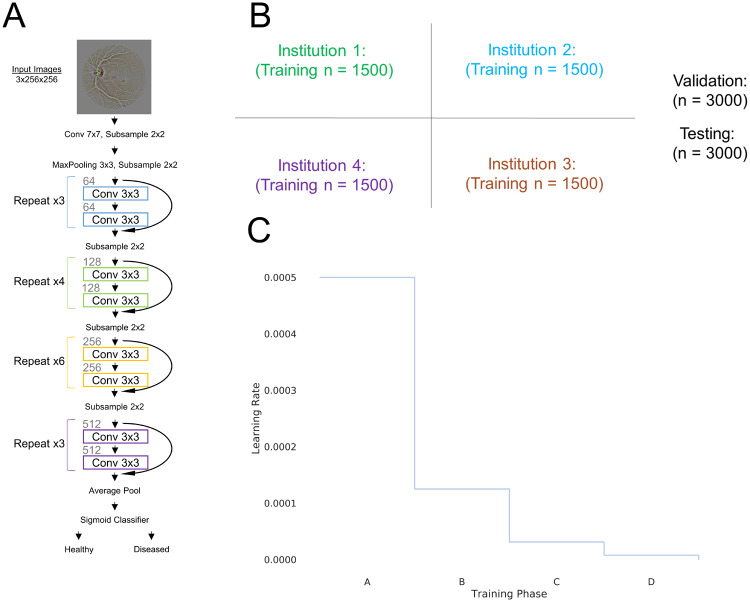
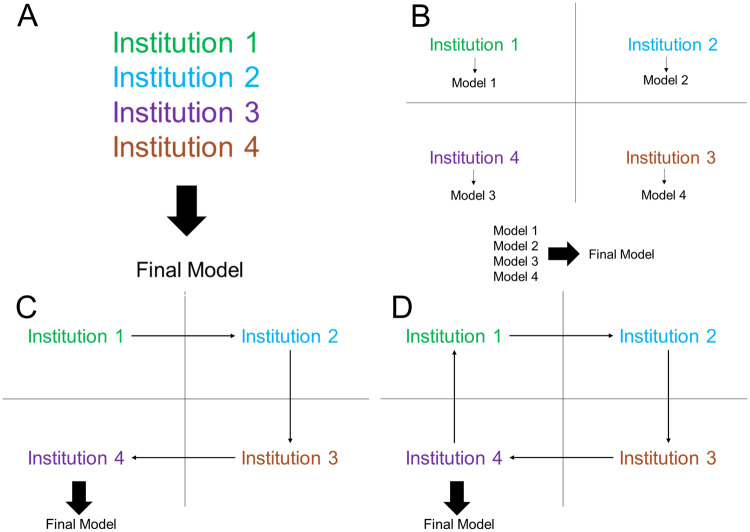
We simulate the distribution of deep learning models across 4 institutions using various training heuristics and compare the results with a deep learning model trained on centrally hosted patient data. The training heuristics investigated include ensembling single institution models, single weight transfer, and cyclical weight transfer. We evaluated these approaches for image classification in 3 independent image collections (retinal fundus photos, mammography, and ImageNet).
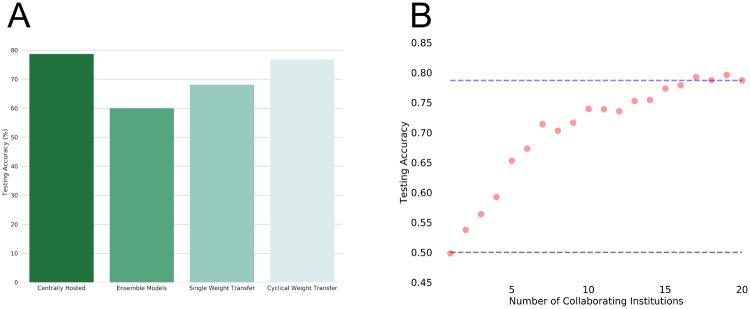
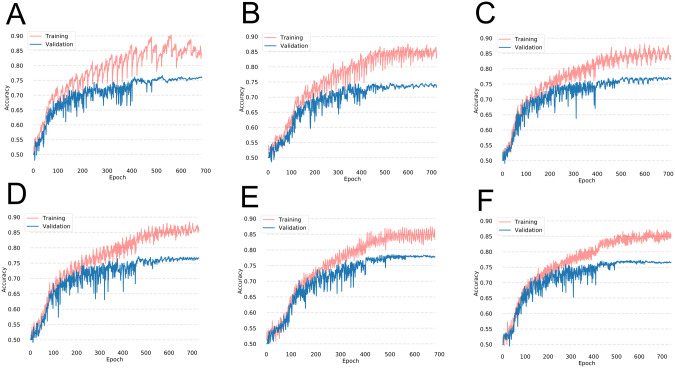
We find that cyclical weight transfer resulted in a performance that was comparable to that of centrally hosted patient data. We also found that there is an improvement in the performance of cyclical weight transfer heuristic with a high frequency of weight transfer.
We show that distributing deep learning models is an effective alternative to sharing patient data. This finding has implications for any collaborative deep learning study.
深度学习已成为临床诊断自动化支持的一种有前途的方法。当医学数据样本有限时,需要多个机构之间的合作才能实现算法的高性能。然而,由于技术、法律或道德方面的考虑,共享患者数据通常存在限制。在这项研究中,我们提出了分布式深度学习模型的方法,作为共享患者数据的替代方案。
我们使用各种训练启发式方法模拟了在 4 个机构之间分布深度学习模型,并将结果与在集中托管的患者数据上训练的深度学习模型进行比较。研究的训练启发式方法包括集成单个机构模型、单一权重转移和循环权重转移。我们在 3 个独立的图像集(视网膜眼底照片、乳房 X 光照片和 ImageNet)中评估了这些方法的图像分类性能。
我们发现循环权重转移导致的性能与集中托管的患者数据相当。我们还发现,随着权重转移频率的增加,循环权重转移启发式方法的性能有所提高。
我们证明了分布式深度学习模型是共享患者数据的有效替代方案。这一发现对任何合作性深度学习研究都具有重要意义。