Department of Clinical-Surgical, Diagnostic and Pediatric Sciences, University of Pavia, Pediatric Clinic, I.R.C.C.S. Policlinico "S. Matteo" Foundation, 27100, Pavia, Italy.
Department of Pediatrics, University of L'Aquila, San Salvatore Hospital, L'Aquila, Italy.
Ital J Pediatr. 2018 Apr 4;44(1):44. doi: 10.1186/s13052-018-0486-9.
The purpose of this study was to determine headache characteristics, impact on daily activities and medication attitudes among a large sample of adolescents in Italy.
Secondary school classes were randomly selected from a national stratified multistage sampling. Data regarding socio-familial factors, headache characteristics, impact on daily activities and medication use were recorded with an anonymous multiple-choice questionnaire.
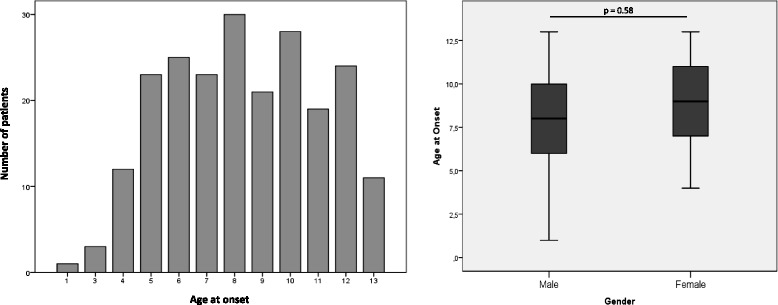
The survey involved 2064 adolescents. 1950 questionnaires were considered for analysis. Study population included 944 males (48.4%) and 1006 females (51.6%), aged between 11 and 16 years (mean 13.5 ± 1.87). Headache prevalence was 65.9%. Mean age at headache onset was 8.33 years. 9.8% suffered from headache > 1/week, 14.3% > 1/month, 24.2% monthly and 17.7% less than monthly. The mean duration of a headache episode was less than 30 min in 32.9%, 1 hour in 28.1%, 2 hours in 19.3% and several hours in 19.5%. Pain intensity was moderate in 52.2% and severe in 9.5%. School represented the main trigger factor (67%). Impact on daily activities was noted in 57.5%. 69.2% of adolescents reported the use of pain relievers. Up to 5.7% declared self-medication, while only 20.6% followed a physician's prescription. Female adolescents experienced headache more frequently (70.2% vs 60%) and more intensely than male peers. Girls had a higher family history of headache, could more frequently identify a trigger factor, and were more affected into their daily activities than boys.
Population-based studies of headache disorders are important, as they inform needs assessment and underpin service policy for a disease that is a public-health priority. Headache has a high prevalence among adolescents and carries a significant burden in terms of impact on daily activities and use of medication. Furthermore, underdiagnose is common, while trigger factors are often detectable. Special consideration should be given to female adolescents and self-medication attitudes.
本研究旨在确定意大利大量青少年的头痛特征、对日常活动的影响和药物使用态度。
从全国分层多阶段抽样中随机选择中学班级。使用匿名多项选择问卷记录社会家庭因素、头痛特征、对日常活动的影响和药物使用情况的数据。
调查涉及 2064 名青少年。考虑到 1950 份问卷进行分析。研究人群包括 944 名男性(48.4%)和 1006 名女性(51.6%),年龄在 11 至 16 岁之间(平均 13.5±1.87 岁)。头痛患病率为 65.9%。头痛发作的平均年龄为 8.33 岁。9.8%的人每周头痛>1 次,14.3%每月头痛>1 次,24.2%每月头痛,17.7%每月头痛<1 次。32.9%的头痛发作持续时间小于 30 分钟,28.1%的头痛发作持续时间为 1 小时,19.3%的头痛发作持续时间为 2 小时,19.5%的头痛发作持续时间为几个小时。52.2%的疼痛强度为中度,9.5%的疼痛强度为重度。学校是主要的诱发因素(67%)。57.5%的青少年注意到头痛对日常活动的影响。69.2%的青少年报告使用止痛药。高达 5.7%的青少年表示自行服药,而只有 20.6%的青少年遵循医生的处方。女性青少年比男性青少年更频繁(70.2%对 60%)和更强烈地经历头痛。女孩的家族头痛史更高,更能识别出诱发因素,并且对日常活动的影响比男孩更大。
头痛疾病的基于人群的研究很重要,因为它们可以提供需求评估信息,并为这一优先公共卫生疾病的服务政策提供依据。头痛在青少年中患病率较高,对日常活动和药物使用的影响带来了重大负担。此外,漏诊很常见,而诱发因素通常是可以检测到的。应特别关注女性青少年和自我用药态度。