Hasan Saba, Taha Ruba, Omri Halima El
Medical Oncology Department, National Center for Cancer Care and Research, Hamad Medical Corporation, Doha, Qatar.
Bioinformation. 2018 Feb 28;14(2):80-85. doi: 10.6026/97320630014080. eCollection 2018.
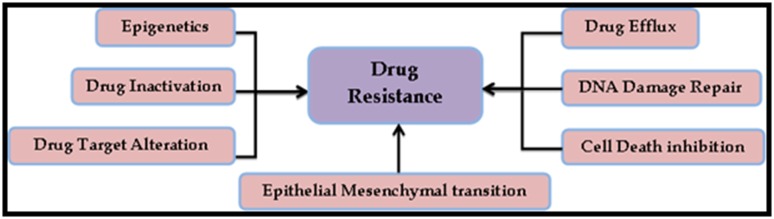
Sub population of cancer cells, referred to as Cancer stem cells (CSCs) or tumor initiating cells, have enhanced metastatic potential that drives tumor progression. CSCs have been found to hold intrinsic resistance to present chemotherapeutic strategies. This resistance is attributed to DNA reparability, slower cell cycle and high levels of detoxifying enzymes. Hence, CSCs pose an obstacle against chemotherapy. The increasing prevalence of drug resistant cancers necessitates further research and treatment development. The current review presents the essential mechanisms that impart chemoresistance in CSCs as well as the epigenetic modifications that can induce drug resistance and considers how such epigenetic factors may contribute to the development of cancer progenitor cells, which are not killed by conventional cancer therapies.
癌细胞的亚群,被称为癌症干细胞(CSCs)或肿瘤起始细胞,具有增强的转移潜能,推动肿瘤进展。已发现CSCs对目前的化疗策略具有内在抗性。这种抗性归因于DNA修复能力、较慢的细胞周期和高水平的解毒酶。因此,CSCs对化疗构成了障碍。耐药性癌症的日益普遍使得有必要进一步开展研究和开发治疗方法。本综述介绍了赋予CSCs化疗抗性的基本机制以及可诱导耐药性的表观遗传修饰,并探讨了这些表观遗传因素如何可能促进癌症祖细胞的发展,而这些祖细胞不会被传统癌症疗法杀死。