Yang Ruixue, Yi Mei, Xiang Bo
Hunan Cancer Hospital and the Affiliated Cancer Hospital of Xiangya School of Medicine, Central South University, Changsha, China.
Hypertension Center, FuWai Hospital, State Key Laboratory of Cardiovascular Disease, National Center for Cardiovascular Diseases, Peking Union Medical College, Chinese Academy of Medical Sciences, Beijing, China.
Front Cell Dev Biol. 2022 May 13;10:875318. doi: 10.3389/fcell.2022.875318. eCollection 2022.
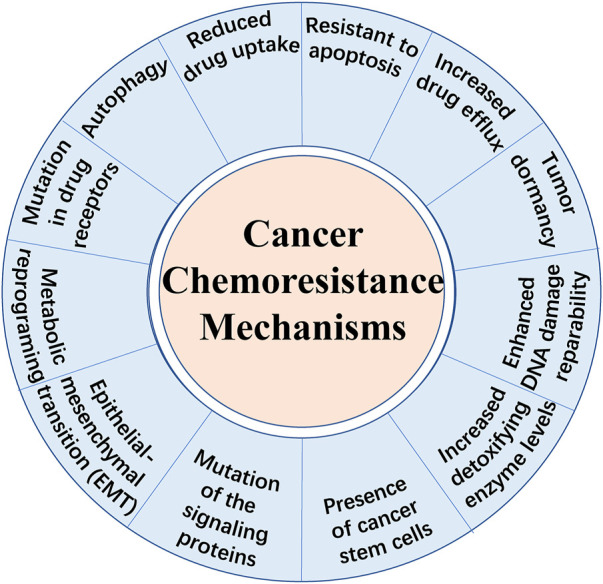
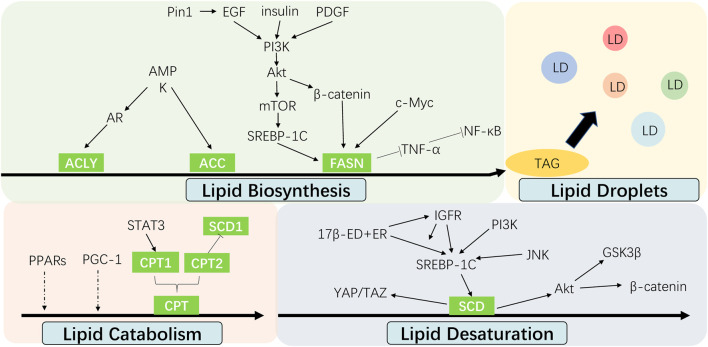
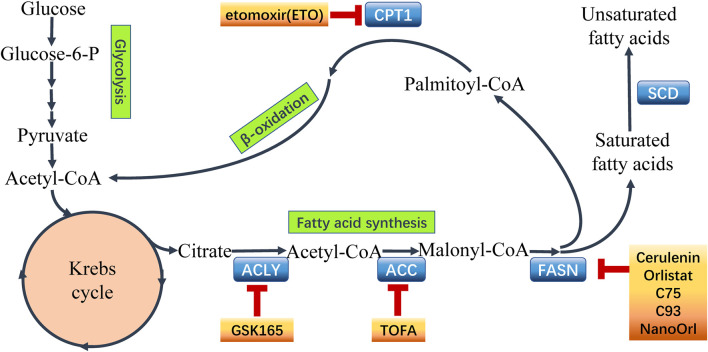
Chemotherapy is one of the primary treatments for most human cancers. Despite great progress in cancer therapeutics, chemotherapy continues to be important for improving the survival of cancer patients, especially for those who has unresectable metastatic tumors or fail to respond to immunotherapy. However, intrinsic or acquired chemoresistance results in tumor recurrence, which remains a major obstacle in anti-cancer treatment. The high prevalence of chemoresistant cancer makes it urgent to deepen our understanding on chemoresistance mechanisms and to develop novel therapeutic strategies. Multiple mechanisms, including drug efflux, enhanced DNA damage reparability, increased detoxifying enzymes levels, presence of cancer stem cells (CSCs), epithelial mesenchymal transition (EMT), autophagy, ferroptosis and resistance to apoptosis, underlie the development of chemoresistance. Recently, accumulating evidence suggests that lipid metabolism alteration is closely related to drug resistance in tumor. Targeting lipid metabolism in combination with traditional chemotherapeutic drugs is a promising strategy to overcome drug resistance. Therefore, this review compiles the current knowledge about aberrant lipid metabolism in chemoresistant cancer, mainly focusing on aberrant fatty acid metabolism, and presents novel therapeutic strategies targeting altered lipid metabolism to overcome chemoresistance in cancer.
化疗是大多数人类癌症的主要治疗方法之一。尽管癌症治疗取得了巨大进展,但化疗对于提高癌症患者的生存率仍然很重要,特别是对于那些患有不可切除的转移性肿瘤或对免疫疗法无反应的患者。然而,内在或获得性化疗耐药导致肿瘤复发,这仍然是抗癌治疗中的一个主要障碍。化疗耐药性癌症的高发病率使得迫切需要加深我们对化疗耐药机制的理解并开发新的治疗策略。多种机制,包括药物外排、增强的DNA损伤修复能力、解毒酶水平升高、癌症干细胞(CSCs)的存在、上皮间质转化(EMT)、自噬、铁死亡和对凋亡的抵抗,是化疗耐药发展的基础。最近,越来越多的证据表明脂质代谢改变与肿瘤中的耐药性密切相关。将脂质代谢靶向与传统化疗药物相结合是克服耐药性的一种有前景的策略。因此,本综述汇编了目前关于化疗耐药性癌症中异常脂质代谢的知识,主要关注异常脂肪酸代谢,并提出了针对改变的脂质代谢以克服癌症化疗耐药性的新治疗策略。