Neale Dave, Clackson Kaili, Georgieva Stanimira, Dedetas Hatice, Scarpate Melissa, Wass Sam, Leong Victoria
Department of Psychology, University of Cambridge, Cambridge, United Kingdom.
School of Education, University of Delaware, Newark, DE, United States.
Front Psychol. 2018 Mar 21;9:273. doi: 10.3389/fpsyg.2018.00273. eCollection 2018.
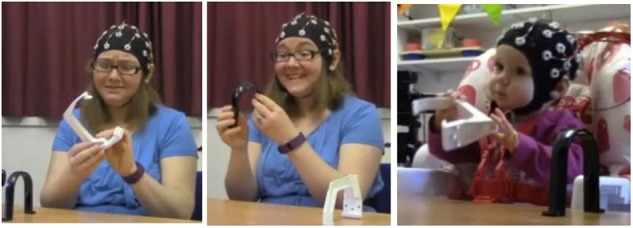
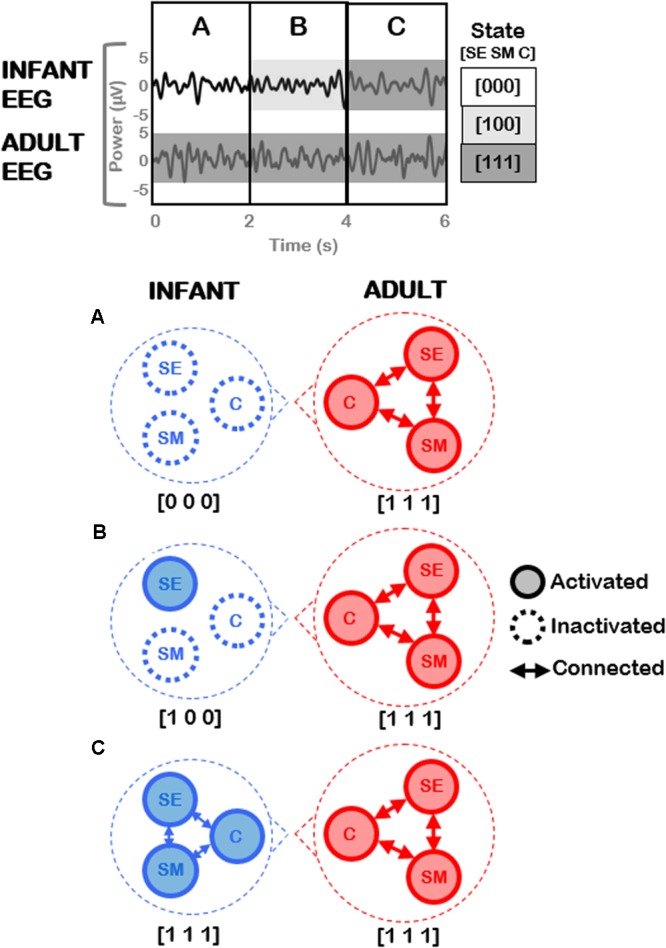
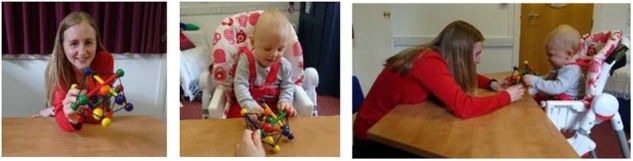
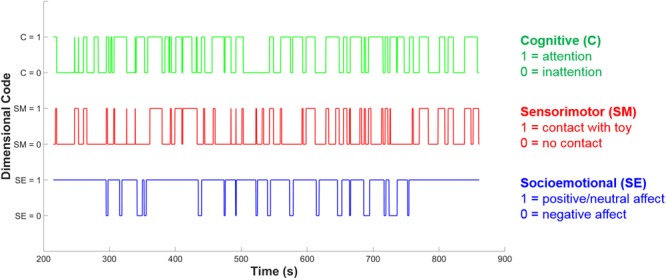
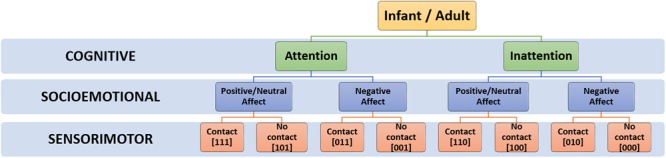
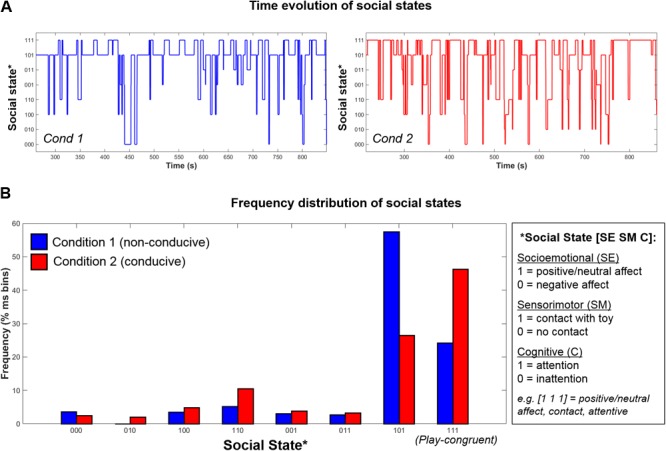
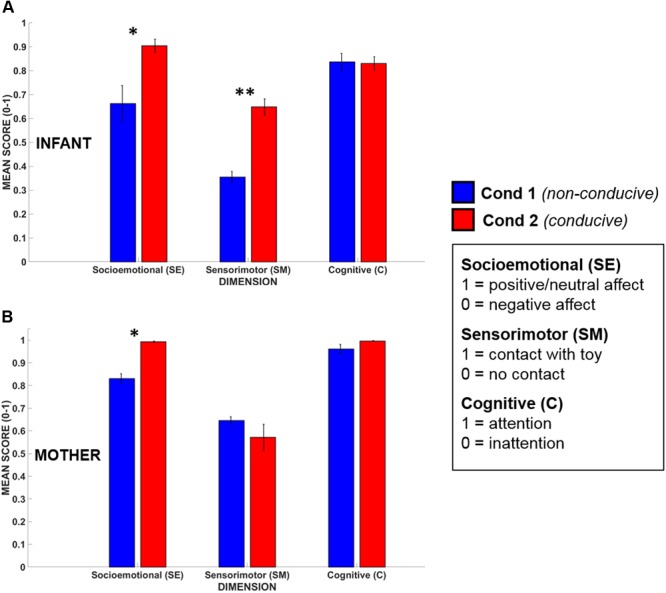
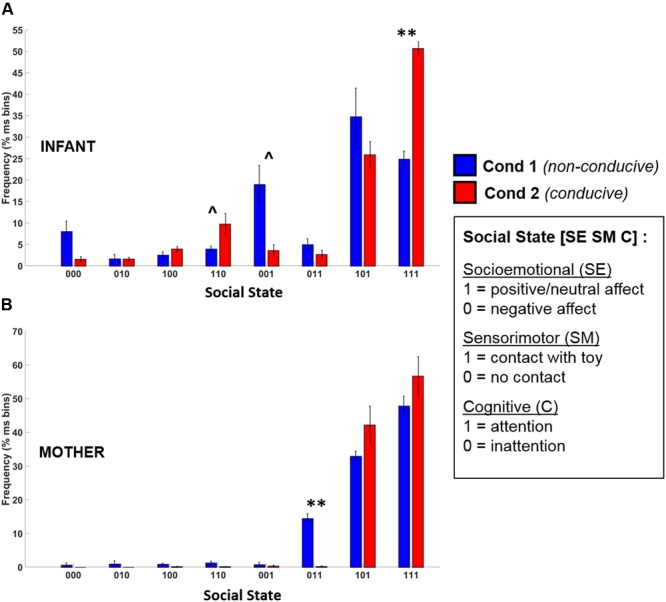
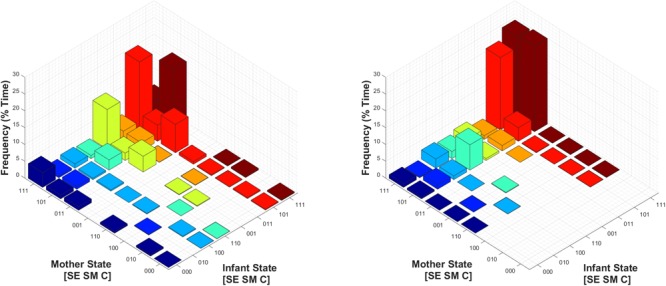
Play during early life is a ubiquitous activity, and an individual's propensity for play is positively related to cognitive development and emotional well-being. Play behavior (which may be solitary or shared with a social partner) is diverse and multi-faceted. A challenge for current research is to converge on a common definition and measurement system for play - whether examined at a behavioral, cognitive or neurological level. Combining these different approaches in a multimodal analysis could yield significant advances in understanding the neurocognitive mechanisms of play, and provide the basis for developing biologically grounded play models. However, there is currently no integrated framework for conducting a multimodal analysis of play that spans brain, cognition and behavior. The proposed coding framework uses grounded and observable behaviors along three dimensions (sensorimotor, cognitive and socio-emotional), to compute inferences about playful behavior in a social context, and related social interactional states. Here, we illustrate the sensitivity and utility of the proposed coding framework using two contrasting dyadic corpora ( = 5) of mother-infant object-oriented interactions during experimental conditions that were either non-conducive (Condition 1) or conducive (Condition 2) to the emergence of playful behavior. We find that the framework accurately identifies the modal form of social interaction as being either non-playful (Condition 1) or playful (Condition 2), and further provides useful insights about differences in the quality of social interaction and temporal synchronicity within the dyad. It is intended that this fine-grained coding of play behavior will be easily assimilated with, and inform, future analysis of neural data that is also collected during adult-infant play. In conclusion, here, we present a novel framework for analyzing the continuous time-evolution of adult-infant play patterns, underpinned by biologically informed state coding along sensorimotor, cognitive and socio-emotional dimensions. We expect that the proposed framework will have wide utility amongst researchers wishing to employ an integrated, multimodal approach to the study of play, and lead toward a greater understanding of the neuroscientific basis of play. It may also yield insights into a new biologically grounded taxonomy of play interactions.
幼年时期的玩耍是一种普遍存在的活动,个体的玩耍倾向与认知发展和情绪健康呈正相关。玩耍行为(可能是独自进行,也可能是与社交伙伴一起)多种多样且具有多面性。当前研究面临的一个挑战是要就玩耍的共同定义和测量系统达成共识——无论在行为、认知还是神经层面进行研究。在多模态分析中结合这些不同方法,可能会在理解玩耍的神经认知机制方面取得重大进展,并为开发基于生物学的玩耍模型提供基础。然而,目前尚无一个综合框架来对跨越大脑、认知和行为的玩耍进行多模态分析。所提出的编码框架沿着三个维度(感觉运动、认知和社会情感)使用基于实际观察的行为,以推断社交情境中的玩耍行为以及相关的社会互动状态。在此,我们使用两组对比的二元语料库(每组(n = 5)),展示所提出的编码框架的敏感性和实用性。这两组语料库记录了母婴在实验条件下围绕物体的互动,其中一种实验条件不利于玩耍行为的出现(条件1),另一种则有利于玩耍行为的出现(条件2)。我们发现,该框架能够准确识别社交互动的模式是不具玩耍性质的(条件1)还是具有玩耍性质的(条件2),并且还能进一步提供有关二元组内社交互动质量和时间同步性差异的有用见解。我们希望这种对玩耍行为的精细编码能够很容易地与未来在成人与婴儿玩耍过程中收集的神经数据的分析相结合,并为其提供信息。总之,在此我们提出了一个新颖的框架,用于分析成人与婴儿玩耍模式的连续时间演变,该框架以沿着感觉运动、认知和社会情感维度进行的基于生物学知识的状态编码为基础。我们期望所提出的框架将在希望采用综合多模态方法研究玩耍的研究人员中具有广泛的实用性,并有助于更深入地理解玩耍的神经科学基础。它还可能为基于生物学的玩耍互动新分类法提供见解。