Yang Haijian, He Qiaoning, Hu Chunxiang
1Key Laboratory of Algal Biology, Institute of Hydrobiology, Chinese Academy of Sciences (CAS), Wuhan, 430072 China.
2University of Chinese Academy of Sciences, Beijing, 100039 China.
Biotechnol Biofuels. 2018 Apr 2;11:82. doi: 10.1186/s13068-018-1068-1. eCollection 2018.
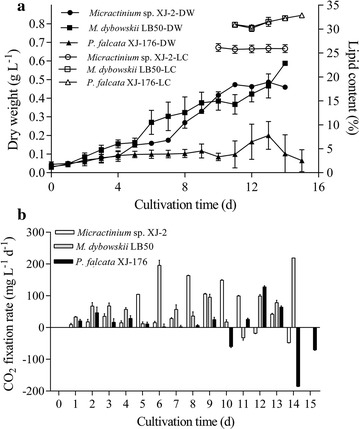
Compared with other general energy crops, microalgae are more compatible with desert conditions. In addition, microalgae cultivated in desert regions can be used to develop biodiesel. Therefore, screening oil-rich microalgae, and researching the algae growth, CO fixation and oil yield in desert areas not only effectively utilize the idle desertification lands and other resources, but also reduce CO emission.
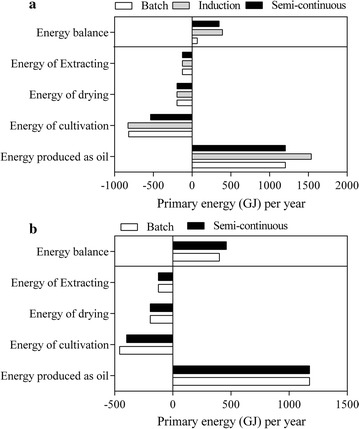
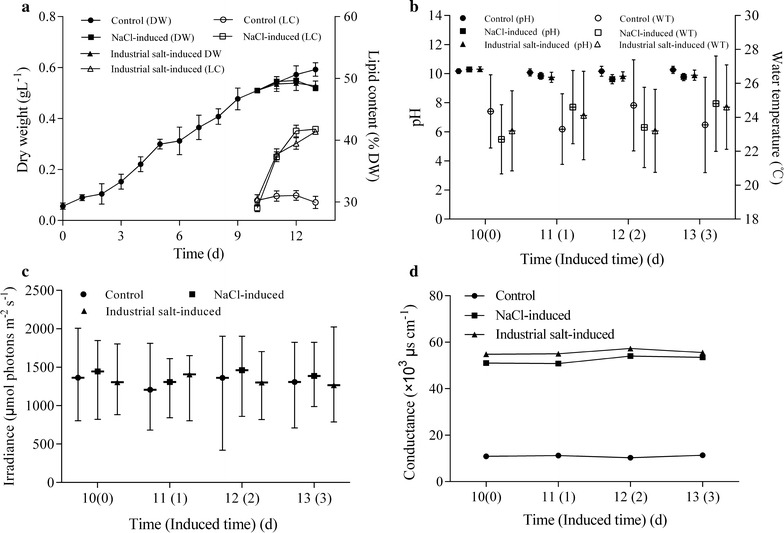
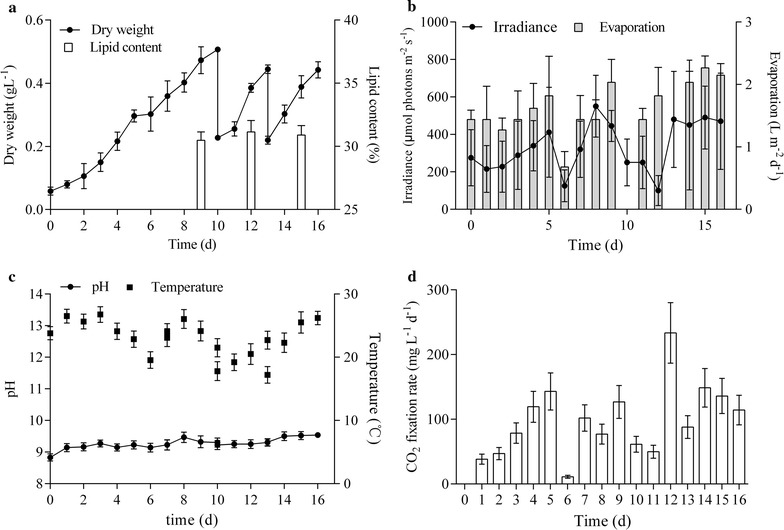
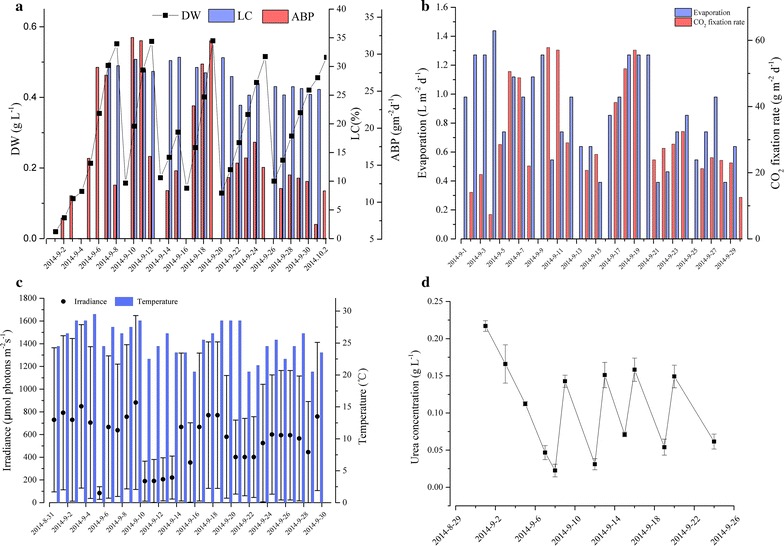
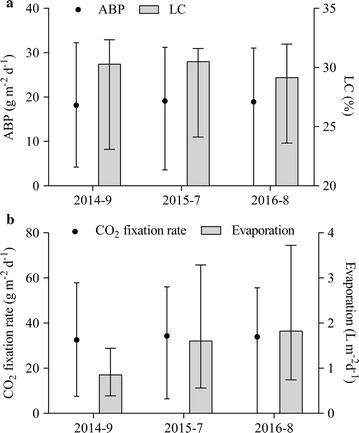
LB50 can be efficiently cultured in the desert area using light resources, and lipid yield can be effectively improved using two-stage induction and semi-continuous culture modes in open raceway ponds (ORPs). Lipid content (LC) and lipid productivity (LP) were increased by 20% under two-stage industrial salt induction, whereas biomass productivity (BP) increased by 80% to enhance LP under semi-continuous mode in 5 m ORPs. After 3 years of operation, LB50 was successfully and stably cultivated under semi-continuous mode for a month during five cycles of repeated culture in a 200 m ORP in the desert area. This culture mode reduced the supply of the original species. The BP and CO fixation rate were maintained at 18 and 33 g m day, respectively. Moreover, LC decreased only during the fifth cycle of repeated culture. Evaporation occurred at 0.9-1.8 L m day, which corresponded to 6.5-13% of evaporation loss rate. Semi-continuous and two-stage salt induction culture modes can reduce energy consumption and increase energy balance through the energy consumption analysis of life cycle.
This study demonstrates the feasibility of combining biodiesel production and CO fixation using microalgae grown as feedstock under culture modes with ORPs by using the resources in the desert area. The understanding of evaporation loss and the sustainability of semi-continuous culture render this approach practically viable. The novel strategy may be a promising alternative to existing technology for CO emission reduction and biofuel production.
与其他一般能源作物相比,微藻更适合沙漠环境。此外,在沙漠地区种植的微藻可用于开发生物柴油。因此,筛选富含油脂的微藻,并研究其在沙漠地区的生长、二氧化碳固定和油脂产量,不仅能有效利用闲置的荒漠化土地及其他资源,还能减少二氧化碳排放。
LB50能够利用沙漠地区的光照资源高效培养,通过在开放式跑道池中采用两阶段诱导和半连续培养模式,可有效提高油脂产量。在两阶段工业盐诱导下,油脂含量(LC)和油脂生产率(LP)提高了20%,而在5米的开放式跑道池中采用半连续模式时,生物量生产率(BP)提高了80%以提高LP。经过3年的运行,在沙漠地区200米的开放式跑道池中,LB50在五个重复培养周期中成功且稳定地以半连续模式培养了一个月。这种培养模式减少了原种的供应。BP和二氧化碳固定率分别维持在18克/平方米·天和33克/平方米·天。此外,仅在重复培养的第五个周期中LC有所下降。蒸发量为0.9 - 1.8升/平方米·天,相当于蒸发损失率的6.5 - 13%。通过生命周期的能耗分析,半连续和两阶段盐诱导培养模式可降低能耗并提高能量平衡。
本研究证明了利用沙漠地区的资源,在开放式跑道池培养模式下,以微藻为原料结合生物柴油生产和二氧化碳固定的可行性。对蒸发损失的理解以及半连续培养的可持续性使这种方法切实可行。该新策略可能是现有二氧化碳减排和生物燃料生产技术的一个有前景的替代方案。