Rao Shan-Shan, Hu Yin, Xie Ping-Li, Cao Jia, Wang Zhen-Xing, Liu Jiang-Hua, Yin Hao, Huang Jie, Tan Yi-Juan, Luo Juan, Luo Ming-Jie, Tang Si-Yuan, Chen Tuan-Hui, Yuan Ling-Qing, Liao Er-Yuan, Xu Ran, Liu Zheng-Zhao, Chen Chun-Yuan, Xie Hui
1Movement System Injury and Repair Research Center, Xiangya Hospital, Central South University, Changsha, Hunan 410008 China.
2Department of Spine Surgery, Xiangya Hospital, Central South University, Changsha, Hunan 410008 China.
Bone Res. 2018 Mar 30;6:9. doi: 10.1038/s41413-018-0012-0. eCollection 2018.
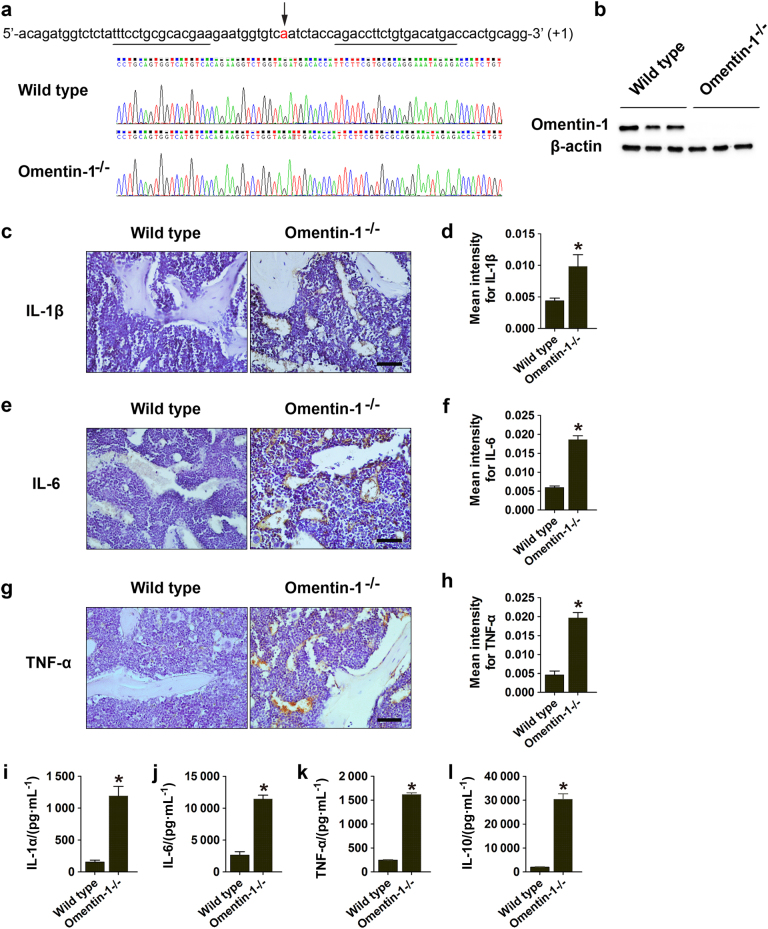
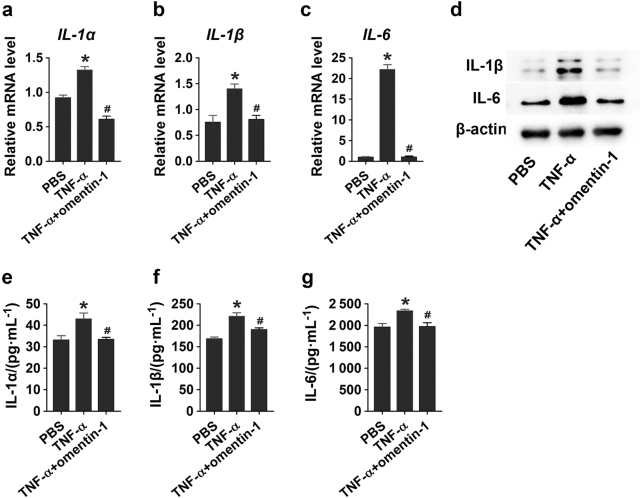
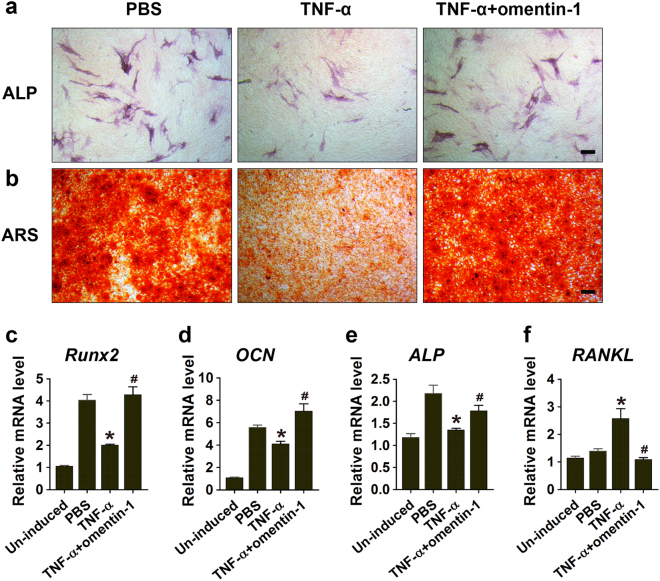
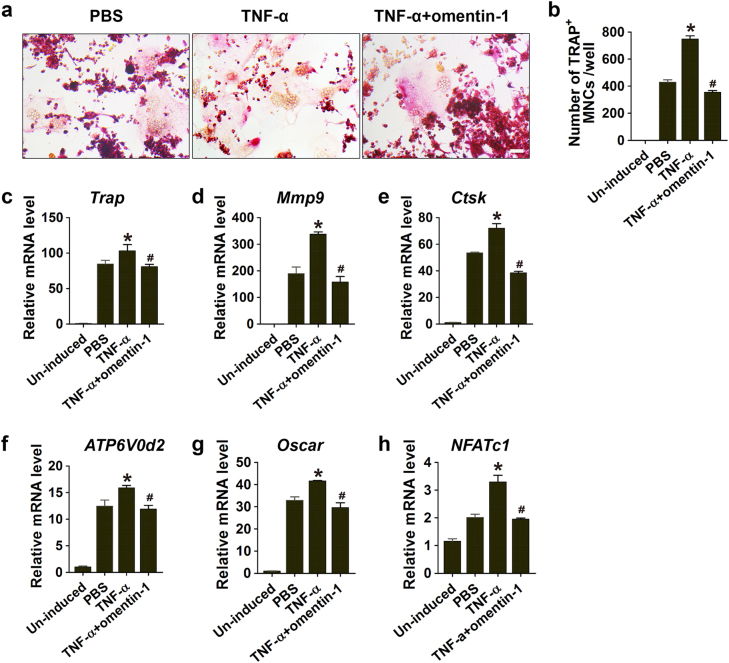
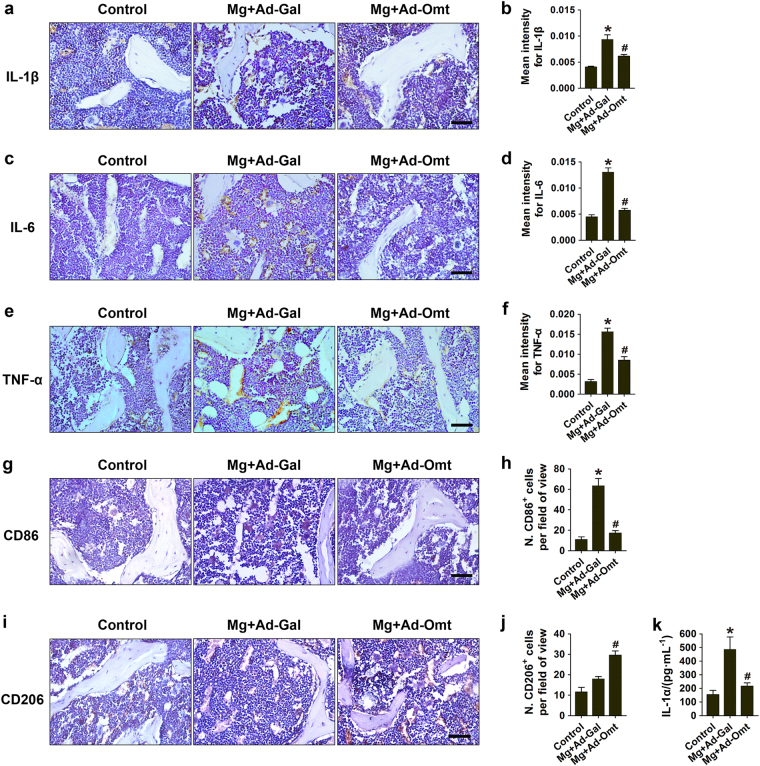
Osteoporosis is a frequent complication of chronic inflammatory diseases and increases in the pro-inflammatory cytokines make an important contribution to bone loss by promoting bone resorption and impairing bone formation. Omentin-1 is a newly identified adipocytokine that has anti-inflammatory effects, but little is known about the role of omentin-1 in inflammatory osteoporosis. Here we generated global knockout () mice and demonstrated that depletion of omentin-1 induces inflammatory bone loss-like phenotypes in mice, as defined by abnormally elevated pro-inflammatory cytokines, increased osteoclast formation and bone tissue destruction, as well as impaired osteogenic activities. Using an inflammatory cell model induced by tumor necrosis factor-α (TNF-α), we determined that recombinant omentin-1 reduces the production of pro-inflammatory factors in the TNF-α-activated macrophages, and suppresses their anti-osteoblastic and pro-osteoclastic abilities. In the magnesium silicate-induced inflammatory osteoporosis mouse model, the systemic administration of adenoviral-delivered omentin-1 significantly protects from osteoporotic bone loss and inflammation. Our study suggests that omentin-1 can be used as a promising therapeutic agent for the prevention or treatment of inflammatory bone diseases by downregulating the pro-inflammatory cytokines.
骨质疏松症是慢性炎症性疾病的常见并发症,促炎细胞因子的增加通过促进骨吸收和损害骨形成,对骨质流失起重要作用。网膜素-1是一种新发现的具有抗炎作用的脂肪细胞因子,但关于网膜素-1在炎症性骨质疏松症中的作用知之甚少。在此,我们构建了全身性基因敲除()小鼠,并证明网膜素-1的缺失会在小鼠中诱导出类似炎症性骨质流失的表型,其表现为促炎细胞因子异常升高、破骨细胞形成增加和骨组织破坏,以及成骨活性受损。使用肿瘤坏死因子-α(TNF-α)诱导的炎症细胞模型,我们确定重组网膜素-1可减少TNF-α激活的巨噬细胞中促炎因子的产生,并抑制其抗成骨和促破骨能力。在硅酸镁诱导的炎症性骨质疏松症小鼠模型中,腺病毒递送的网膜素-1全身给药可显著预防骨质疏松性骨质流失和炎症。我们的研究表明,网膜素-1可通过下调促炎细胞因子,作为预防或治疗炎症性骨疾病的一种有前景的治疗药物。