Mukherjee Kaushik, Ruan Qichao, Nutt Steven, Tao Jinhui, De Yoreo James J, Moradian-Oldak Janet
Center for Craniofacial Molecular Biology, Division of Biomedical Sciences, Herman Ostrow School of Dentistry, University of Southern California, 2250 Alcazar Street, 90033 Los Angeles, United States.
Mork Family Department of Chemical Engineering and Materials Science, University of Southern California, 3651 Watt Way, 90089 Los Angeles, United States.
ACS Omega. 2018 Mar 31;3(3):2546-2557. doi: 10.1021/acsomega.7b02004. Epub 2018 Mar 2.
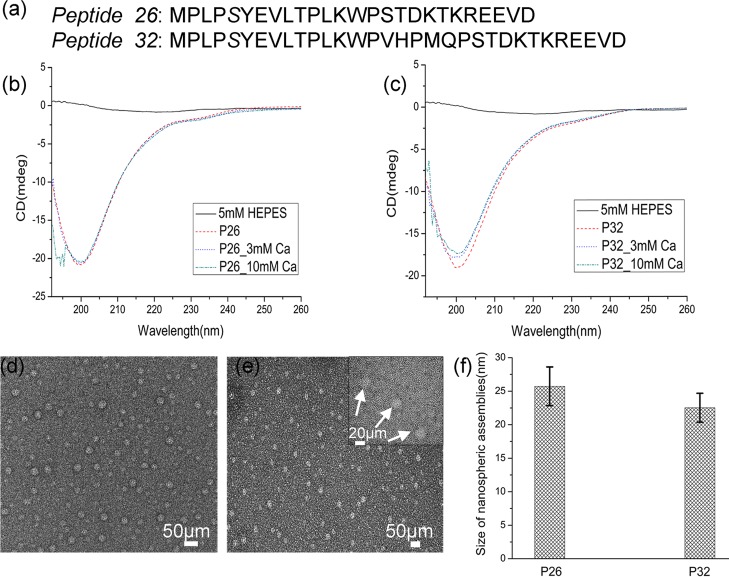
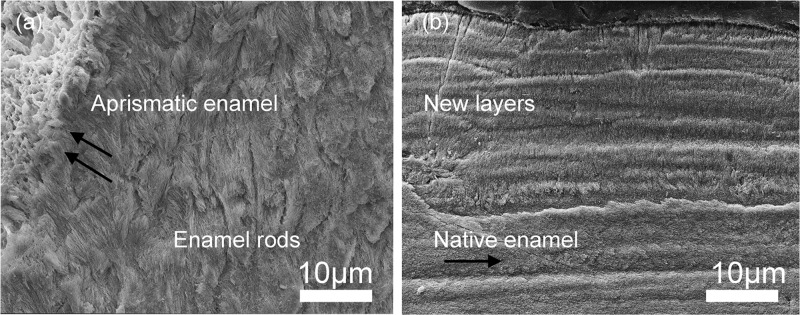
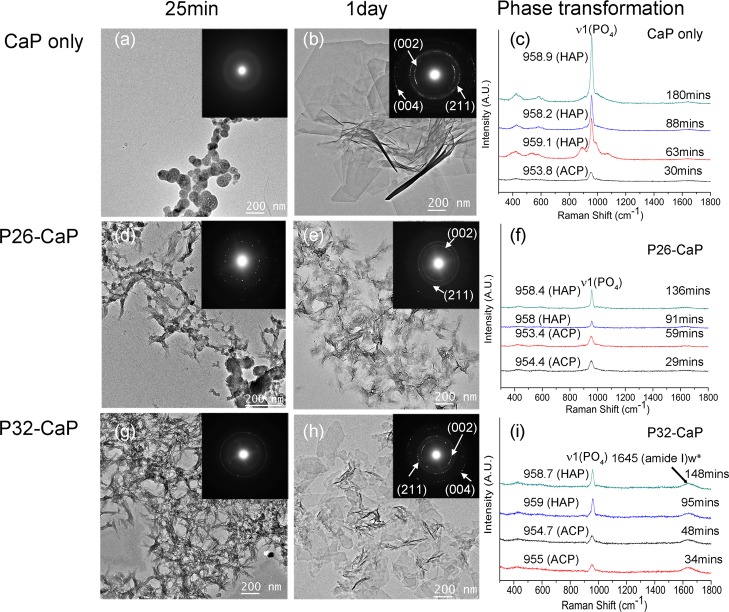
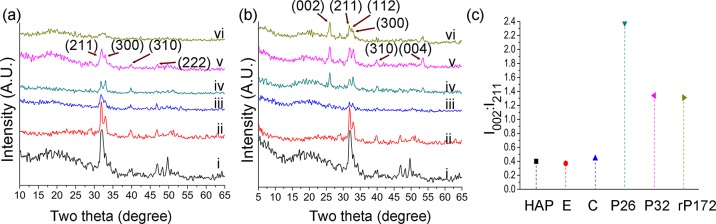
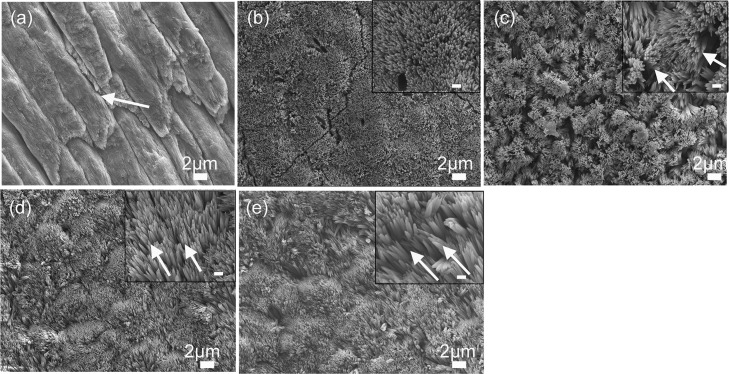
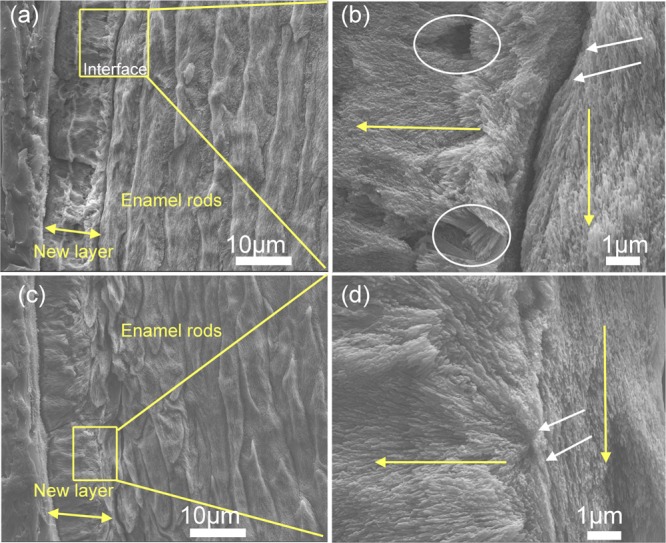
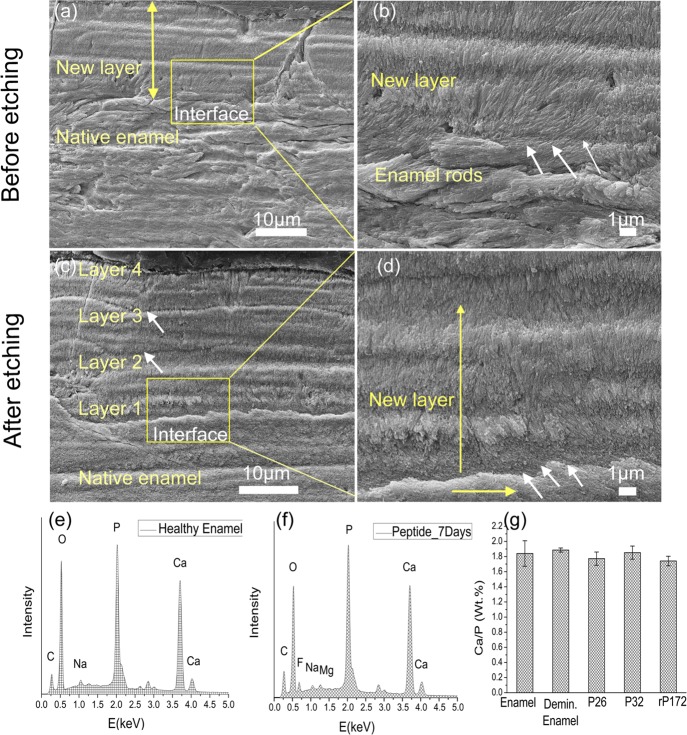
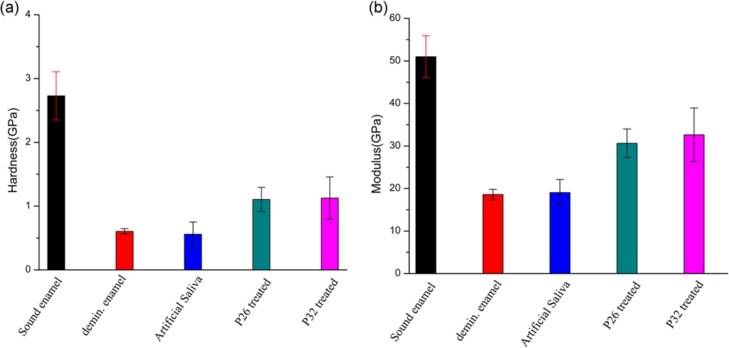
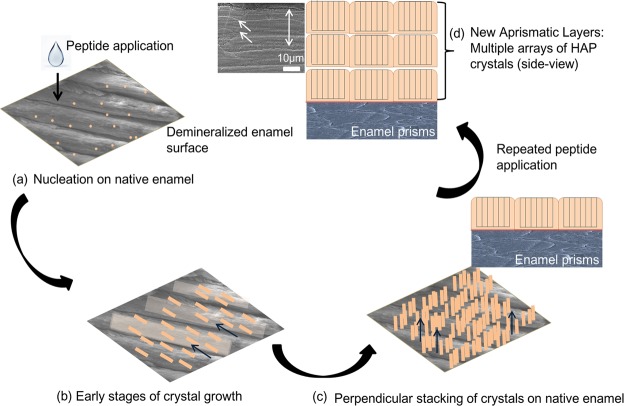
The gradual discovery of functional domains in native enamel matrix proteins has enabled the design of smart bioinspired peptides for tooth enamel mimetics and repair. In this study, we expanded upon the concept of biomineralization to design smaller amelogenin-inspired peptides with conserved functional domains for clinical translation. The synthetic peptides displayed a characteristic nanostructured scaffold reminiscent of 'nanospheres' seen in the enamel matrix and effectively controlled apatite nucleation in vitro resulting in the formation of smaller crystallites. Following application of the peptides to sectioned human molar teeth, a robust, oriented, synthetic aprismatic enamel was observed after 7 days of incubation in situ. There was a two-fold increase in the hardness and modulus of the regrown enamel-like apatite layers and an increase in the attachment of the tooth-regrown layer interface compared to control samples. Repeated peptide applications generated multiple enamel-like hydroxyapatite (HAP) layers of limited thickness produced by epitaxial growth in which -axis oriented nanorods evolved on the surface of native enamel. We conclude that peptide analogues with active domains can effectively regulate the orientation of regenerated HAP layers to influence functional response. Moreover, this enamel biofabrication approach demonstrates the peptide-mediated growth of multiple microscale HAP arrays of organized microarchitecture with potential for enamel repair.
天然牙釉质基质蛋白中功能域的逐步发现,使得能够设计出用于牙釉质模拟和修复的智能仿生肽。在本研究中,我们扩展了生物矿化的概念,设计了具有保守功能域的更小的釉原蛋白启发肽,用于临床转化。合成肽展示出一种特征性的纳米结构支架,让人联想到在牙釉质基质中看到的“纳米球”,并在体外有效控制了磷灰石成核,从而形成更小的微晶。将这些肽应用于人类磨牙切片后,原位孵育7天后观察到形成了坚固、定向的合成无棱柱釉质。与对照样品相比,再生的类牙釉质磷灰石层的硬度和模量增加了两倍,牙再生层界面的附着力也有所增加。重复应用肽会产生由外延生长产生的有限厚度的多个类牙釉质羟基磷灰石(HAP)层,其中c轴取向的纳米棒在天然牙釉质表面演化。我们得出结论,具有活性域的肽类似物可以有效调节再生HAP层的取向,以影响功能反应。此外,这种牙釉质生物制造方法证明了肽介导的具有有序微结构的多个微尺度HAP阵列的生长,具有牙釉质修复的潜力。