Antonini-Canterin Francesco, Di Nora Concetta, Poli Stefano, Sparacino Lina, Cosei Iulian, Ravasel Andreea, Popescu Andreea Catarina, Popescu Bogdan Alexandru
Ospedale Riabilitativo di Alta Specializzazione, Cardiologia Riabilitativa, Motta Di Livenza, Trieste, Italy.
"Ospedali Riuniti" di Trieste, Cardiovascular Department, Trieste, Italy.
J Cardiovasc Echogr. 2018 Jan-Mar;28(1):18-25. doi: 10.4103/jcecho.jcecho_63_17.
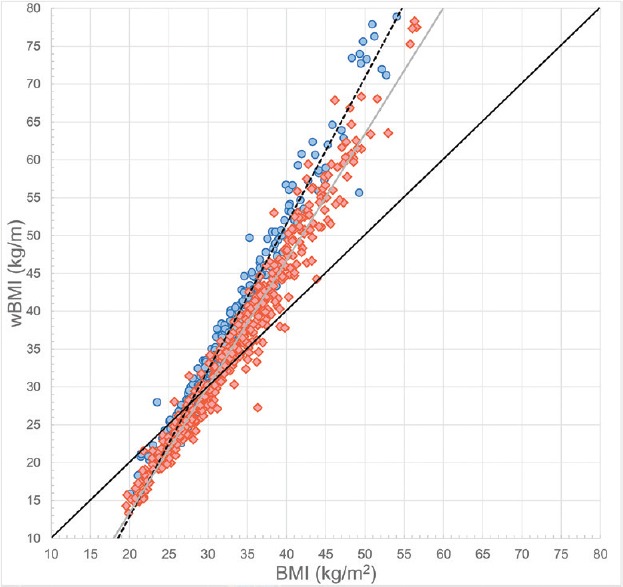
The body mass index (BMI), the most used anthropometric index of obesity, has an important limitation, not taking into consideration the distribution of body fat. We developed a new simple index: the waist-corrected BMI (wBMI), calculated as waist circumference (WC) × BMI. The study aim was to assess the role of wBMI, compared to BMI, WC, and Waist-to-Height Ratio (WHtR) in predicting abnormal cardiac geometry, insulin resistance, increased arterial stiffness, and dyslipidemia.
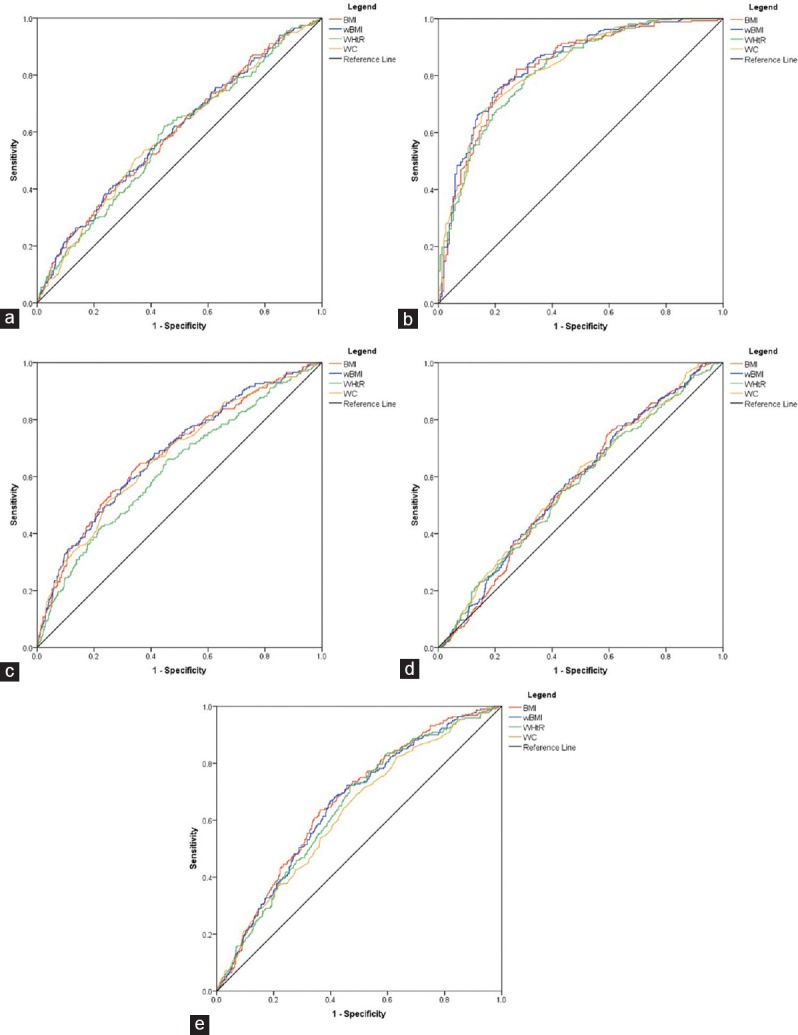
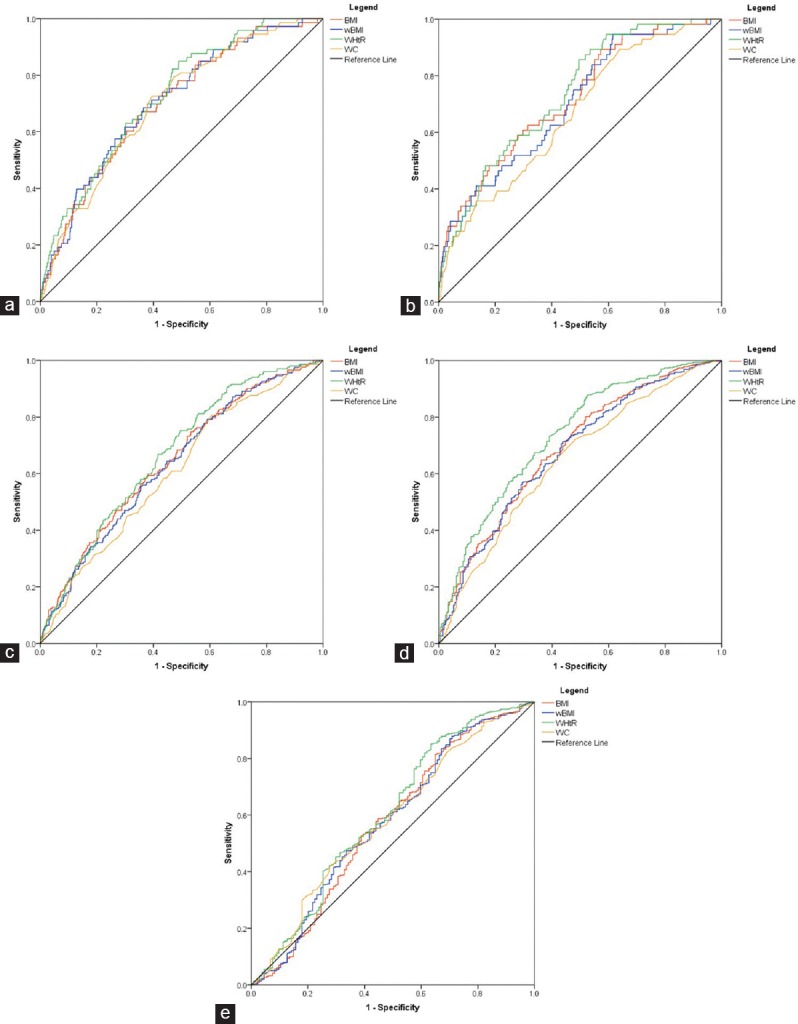
This was a cross-sectional study that included 805 patients referred to our Department of Preventive Cardiology for risk factors evaluation and treatment. Eleven echographic and laboratory parameters were determined, and receiver operating characteristic (ROC) curves were derived. Areas under ROC curves (AUC) were used to assess the accuracy of the four indexes to identify unfavorable characteristics.
There were 29% overweight, 59% obese, and 77% hypertensive patients. Of 11 echographic and laboratory parameters, wBMI, BMI, WHtR, and WC had the largest AUC for identifying 3, 1, 6, and 1 parameters, respectively, but with overlapping 95% confidence intervals. wBMI had the largest AUC for increased arterial stiffness and insulin resistance; also, it was superior to BMI for increased left atrial volume, relative wall thickness, and triglyceride level.
In a large population with a high prevalence of obesity and hypertension, all four indexes were associated with unfavorable characteristics. wBMI has the theoretical advantage of taking into account simultaneously the global fat mass and distribution and might be useful for a better cardiovascular risk assessment.
体重指数(BMI)是最常用的肥胖人体测量指标,但存在一个重要局限性,即未考虑体脂分布情况。我们开发了一种新的简单指标:腰围校正体重指数(wBMI),计算方法为腰围(WC)×体重指数。本研究的目的是评估wBMI与BMI、WC和腰高比(WHtR)相比,在预测心脏几何结构异常、胰岛素抵抗、动脉僵硬度增加和血脂异常方面的作用。
这是一项横断面研究,纳入了805名因危险因素评估和治疗而转诊至我们预防心脏病科的患者。测定了11项超声心动图和实验室参数,并绘制了受试者工作特征(ROC)曲线。ROC曲线下面积(AUC)用于评估这四个指标识别不良特征的准确性。
超重患者占29%,肥胖患者占59%,高血压患者占77%。在11项超声心动图和实验室参数中,wBMI、BMI、WHtR和WC分别在识别3项、1项、6项和1项参数时具有最大的AUC,但95%置信区间存在重叠。wBMI在动脉僵硬度增加和胰岛素抵抗方面具有最大的AUC;此外,在左心房容积增加、相对壁厚度增加和甘油三酯水平方面,wBMI优于BMI。
在肥胖和高血压患病率较高的大人群中,所有这四个指标均与不良特征相关。wBMI在理论上具有同时考虑总体脂肪量和分布的优势,可能有助于更好地进行心血管风险评估。