Nergård Solveig, Mercer James B, de Weerd Louis
Department of Plastic Surgery and Reconstructive Surgery, University Hospital of North Norway, Medical Imaging Research Group, Department of Clinical Medicine, UiT The Arctic University of Norway Tromsø, Norway; Department of Radiology, University Hospital of North Norway, Tromsø, Norway; Cardiovascular Research Group, Department of Medical Biology, UiT The Arctic University of Norway, Tromsø, Norway; and Medical Imaging Research Group, Department of Clinical Medicine, UiT The Arctic University of Norway, Tromsø, Norway.
Plast Reconstr Surg Glob Open. 2017 Dec 28;5(12):e1601. doi: 10.1097/GOX.0000000000001601. eCollection 2017 Dec.
Wound healing problems at the donor site in free abdominal flap breast reconstruction cause significant morbidity to patients. No studies have investigated what impact the use of the internal mammary artery in free abdominal flap breast reconstruction has on abdominal skin perfusion. We hypothesized that harvesting the internal mammary vessels (IMV) has a negative effect on abdominal skin perfusion.
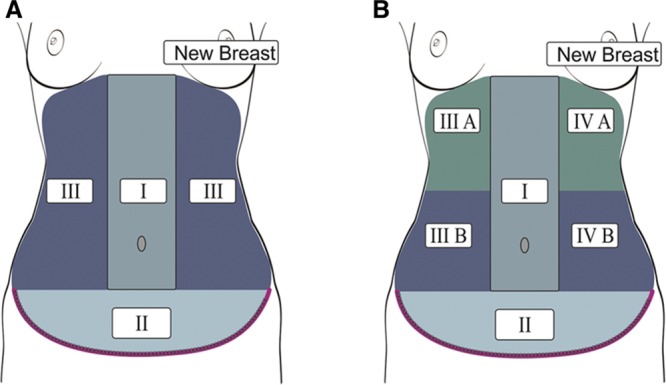
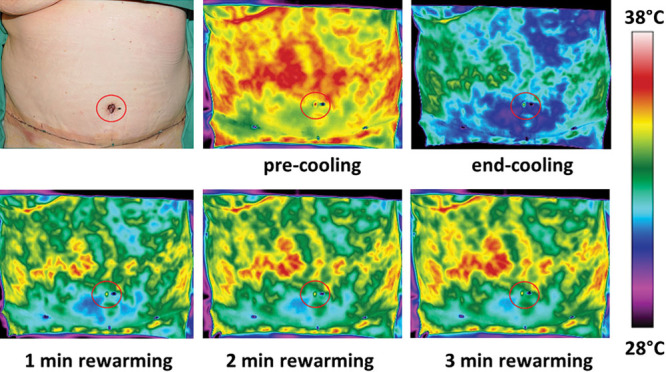
The abdomen and anterior thoracic wall of 17 patients scheduled for secondary free abdominal flap breast reconstruction using IMV was pre-, intra-, and postoperatively examined with dynamic infrared thermography. Qualitative and quantitative analyses of the rate and pattern of recovery in Huger's vascular zones were made with each patient being its own control. Zone III on the side where IMV were used was numbered zone IV. The contralateral zone III was used as reference.
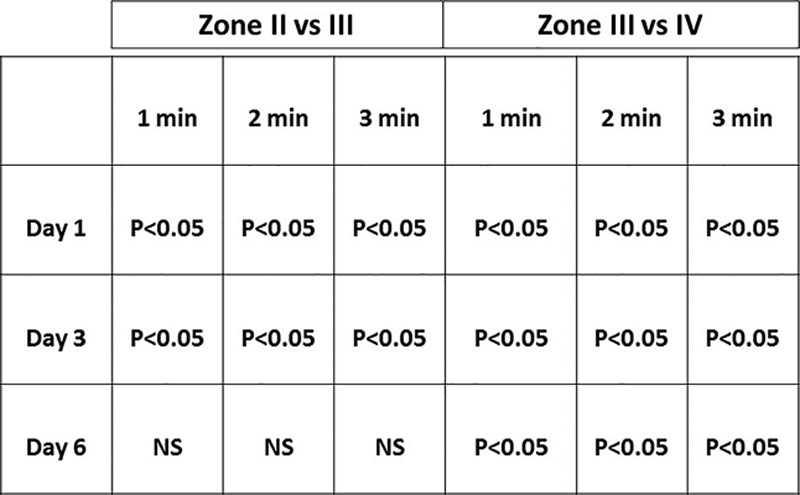
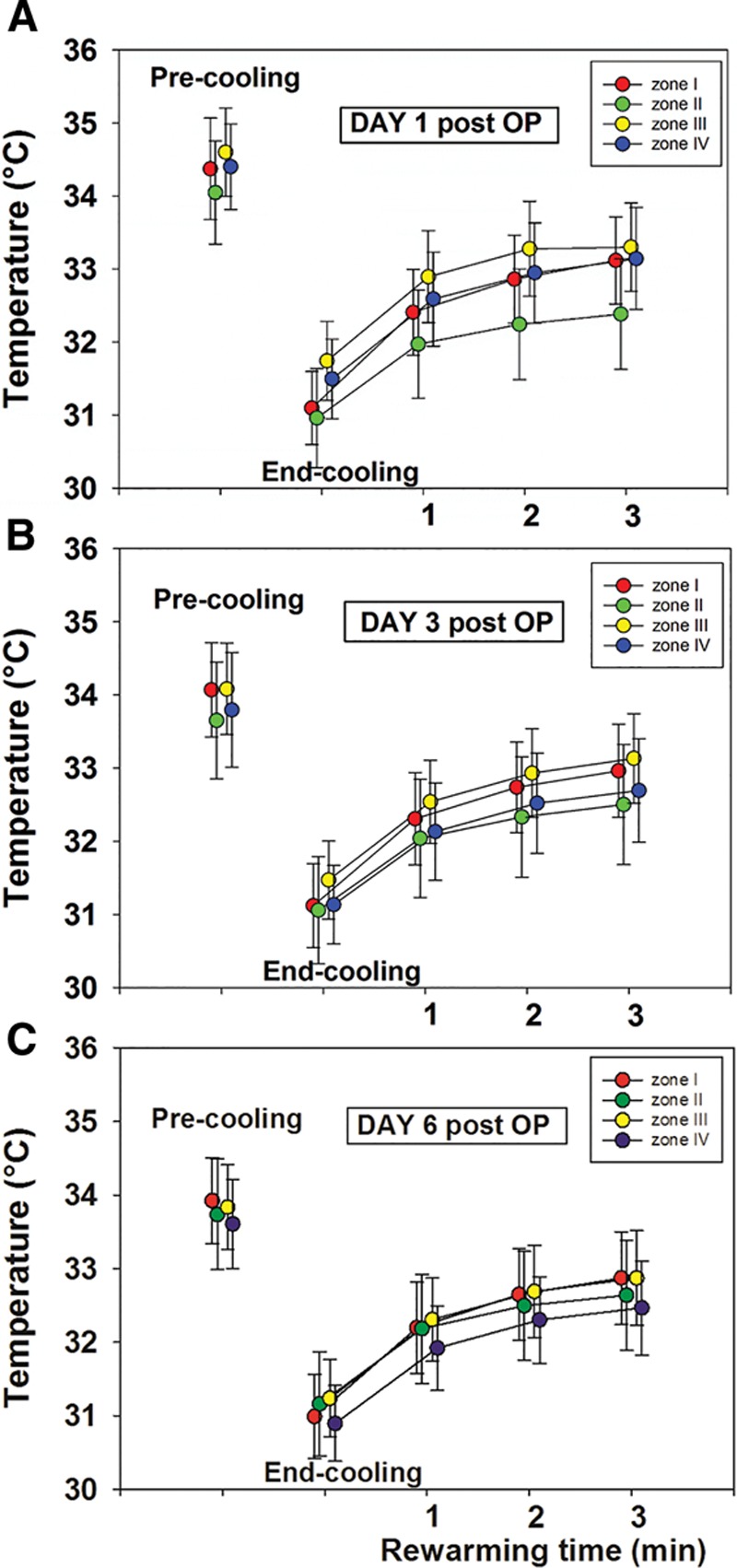
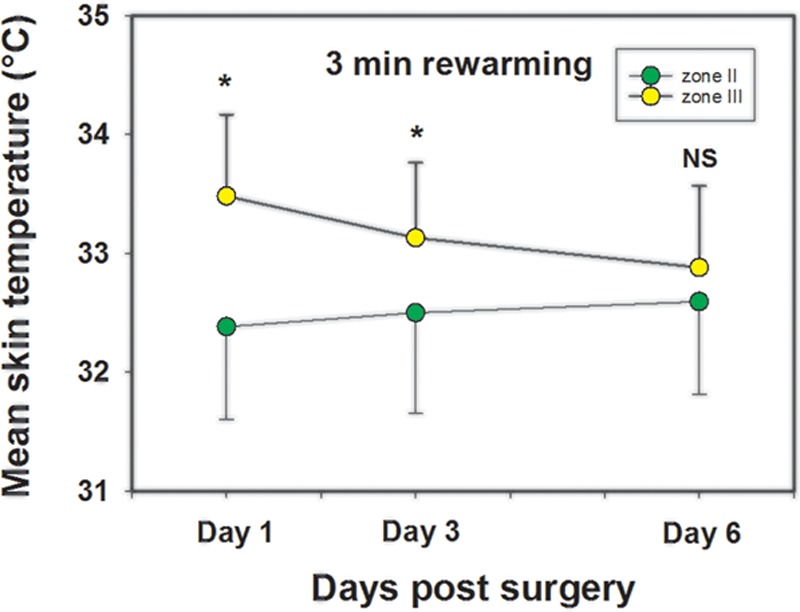
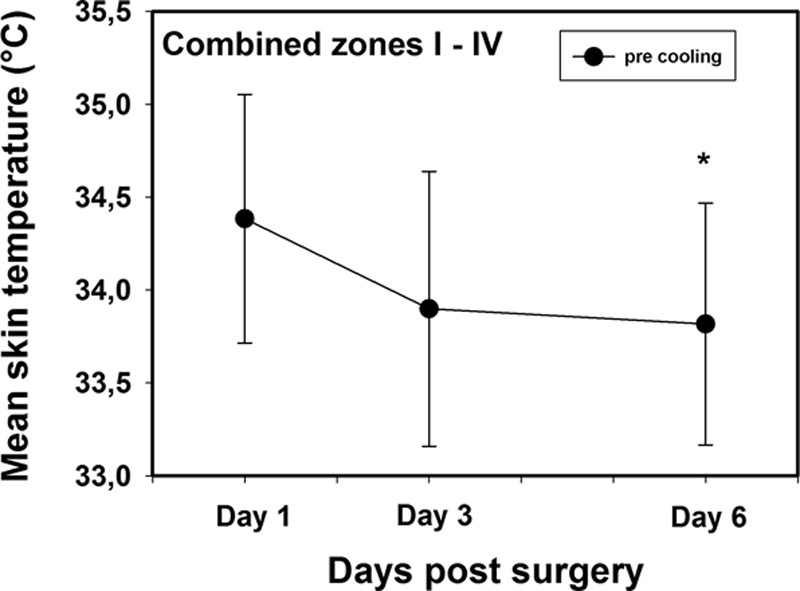
Postoperative abdominal skin perfusion in zone IV was always significantly reduced compared with zone III (1-tailed test, < 0.05). The difference between zones II and III was statistically significant for day 1 and 3, but not for day 6 (2-tailed test, < 0.05). Skin perfusion in zones II and IV increased during consecutive postoperative days with an increase of hot spots in these areas.
Using the IMV in free abdominal flap breast reconstruction had a significant effect on abdominal skin perfusion and may contribute to abdominal wound healing problems. The reperfusion of the abdominal skin was a dynamic process showing an increase in perfusion in the affected areas during the postoperative days.
在游离腹直肌肌皮瓣乳房重建术中,供区伤口愈合问题给患者带来了严重的发病风险。尚无研究调查在游离腹直肌肌皮瓣乳房重建术中使用胸廓内动脉对腹部皮肤灌注有何影响。我们推测,切取胸廓内血管(IMV)会对腹部皮肤灌注产生负面影响。
对17例计划采用IMV进行二期游离腹直肌肌皮瓣乳房重建的患者,在术前、术中和术后使用动态红外热成像技术对腹部和前胸壁进行检查。以每位患者自身作为对照,对休格血管区域的恢复速率和模式进行定性和定量分析。使用IMV一侧的Ⅲ区标记为Ⅳ区。对侧的Ⅲ区作为对照。
与Ⅲ区相比,Ⅳ区术后腹部皮肤灌注始终显著降低(单尾检验,<0.05)。Ⅱ区和Ⅲ区之间的差异在术后第1天和第3天具有统计学意义,但在第6天无统计学意义(双尾检验,<0.05)。术后连续几天内,Ⅱ区和Ⅳ区的皮肤灌注增加,这些区域的热点也增加。
在游离腹直肌肌皮瓣乳房重建术中使用IMV对腹部皮肤灌注有显著影响,可能导致腹部伤口愈合问题。腹部皮肤的再灌注是一个动态过程,术后几天内受影响区域的灌注增加。