Quantitative & Systems Biology, University of California, Merced, Merced, CA, 95343, USA.
Molecular Cell Biology, School of Natural Sciences, University of California, Merced, Merced, CA, 95343, USA.
Sci Rep. 2018 Apr 10;8(1):5777. doi: 10.1038/s41598-018-24217-1.
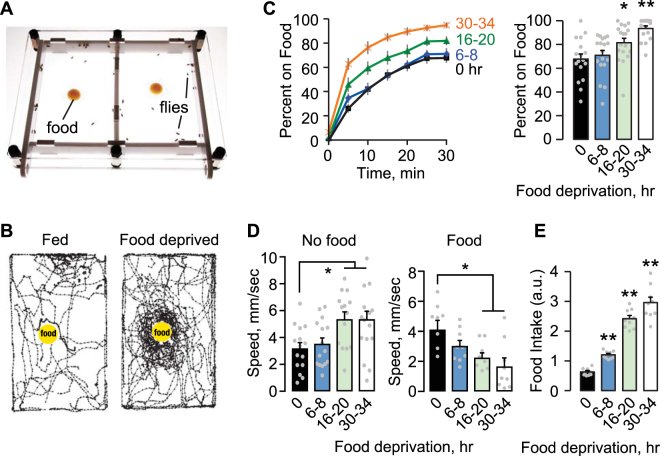
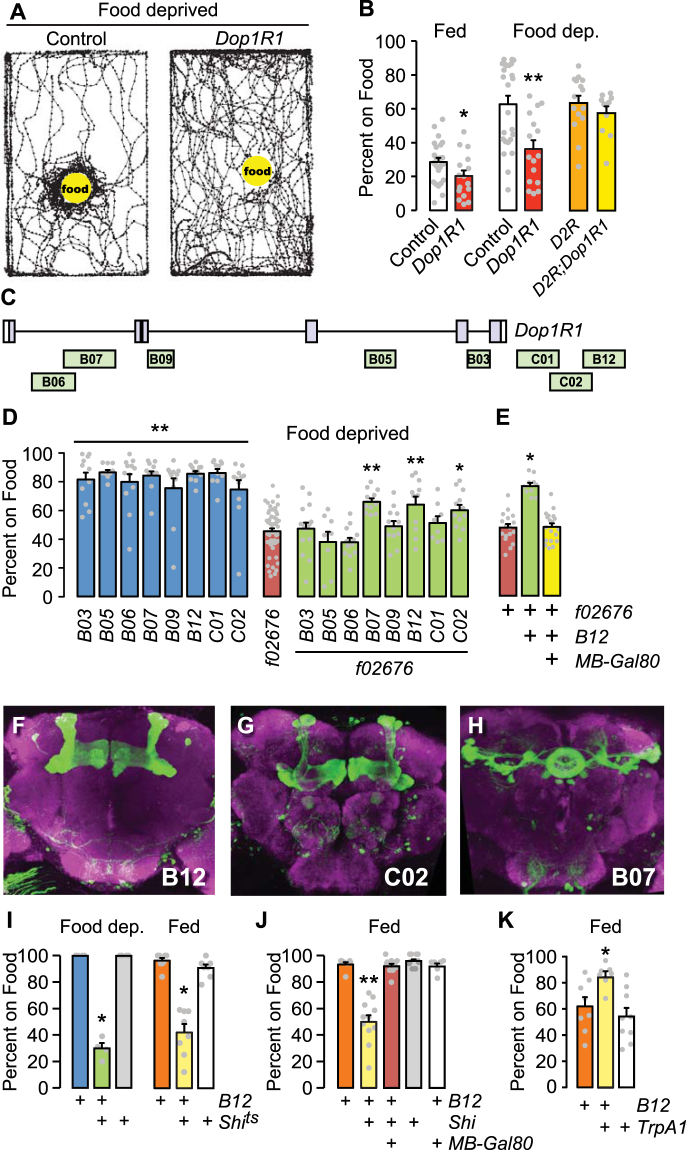
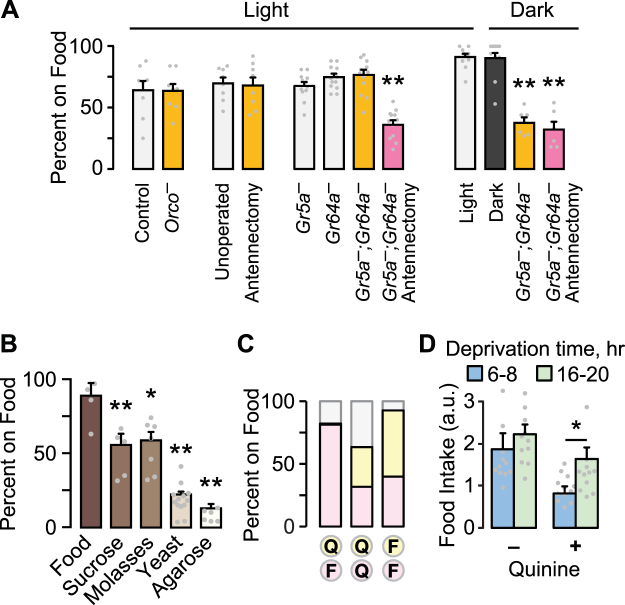
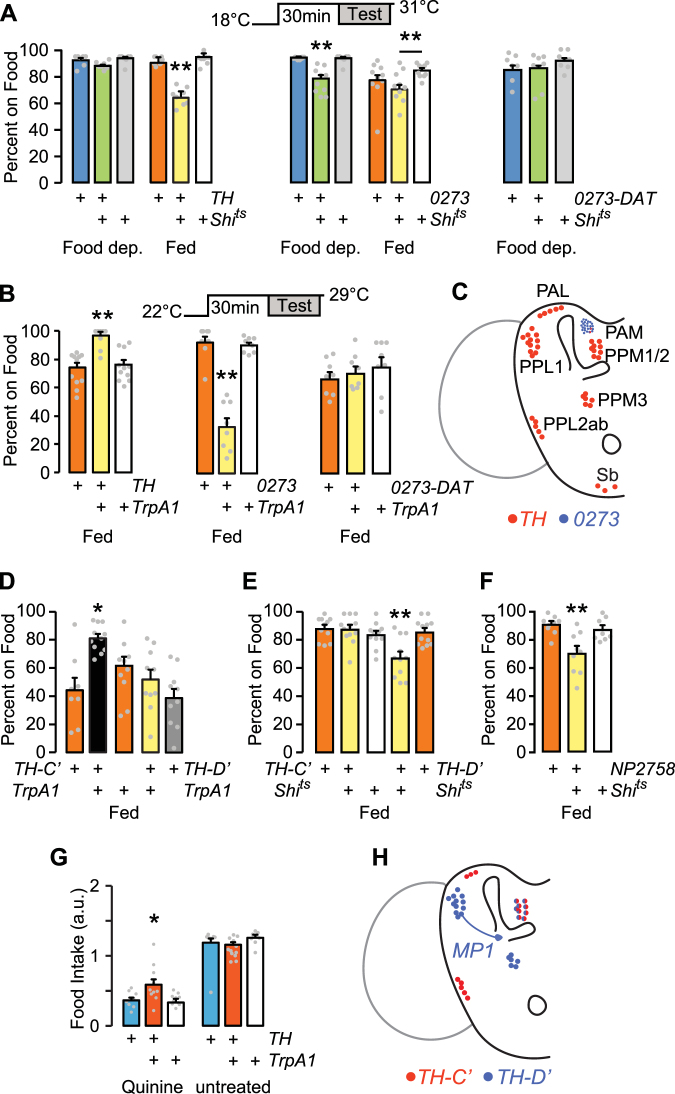
Hunger evokes stereotypic behaviors that favor the discovery of nutrients. The neural pathways that coordinate internal and external cues to motivate foraging behaviors are only partly known. Drosophila that are food deprived increase locomotor activity, are more efficient in locating a discrete source of nutrition, and are willing to overcome adversity to obtain food. We developed a simple open field assay that allows flies to freely perform multiple steps of the foraging sequence, and we show that two distinct dopaminergic neural circuits regulate measures of foraging behaviors. One group, the PAM neurons, functions in food deprived flies while the other functions in well fed flies, and both promote foraging. These satiation state-dependent circuits converge on dopamine D1 receptor-expressing Kenyon cells of the mushroom body, where neural activity promotes foraging independent of satiation state. These findings provide evidence for active foraging in well-fed flies that is separable from hunger-driven foraging.
饥饿会引起刻板的行为,有利于发现营养物质。协调内部和外部线索以激励觅食行为的神经通路还不完全清楚。饥饿的果蝇会增加运动活性,更有效地找到离散的营养源,并愿意克服困难获得食物。我们开发了一种简单的开放场测试,允许苍蝇自由地进行觅食序列的多个步骤,我们发现两种不同的多巴胺能神经回路调节觅食行为的措施。一组是 PAM 神经元,在饥饿的果蝇中起作用,而另一组在饱食的果蝇中起作用,都促进了觅食。这些饱腹感状态依赖性回路汇聚到蘑菇体中表达多巴胺 D1 受体的 Kenyon 细胞,其中神经活动促进了觅食,而与饱腹感状态无关。这些发现为饱食的苍蝇中存在主动觅食提供了证据,这种觅食与饥饿驱动的觅食是可分离的。