Cho Gyu-Sung, Li Bo, Rostalsky André, Fiedler Gregor, Rösch Niels, Igbinosa Etinosa, Kabisch Jan, Bockelmann Wilhelm, Hammer Philipp, Huys Geert, Franz Charles M A P
Department of Microbiology and Biotechnology, Max Rubner-Institut, Kiel, Germany.
Department of Microbiology, Faculty of Life Science, University of Benin, Benin City, Nigeria.
Front Microbiol. 2018 Mar 27;9:536. doi: 10.3389/fmicb.2018.00536. eCollection 2018.
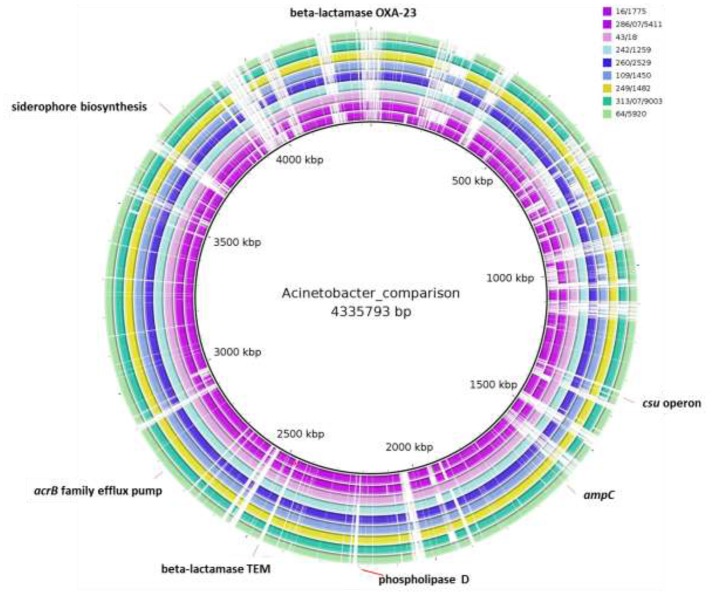
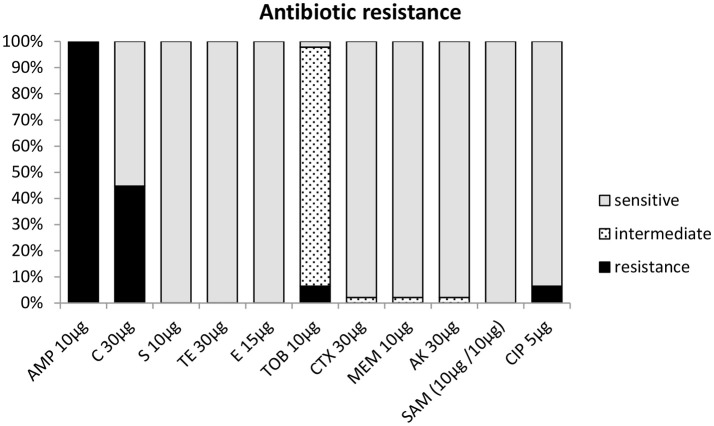
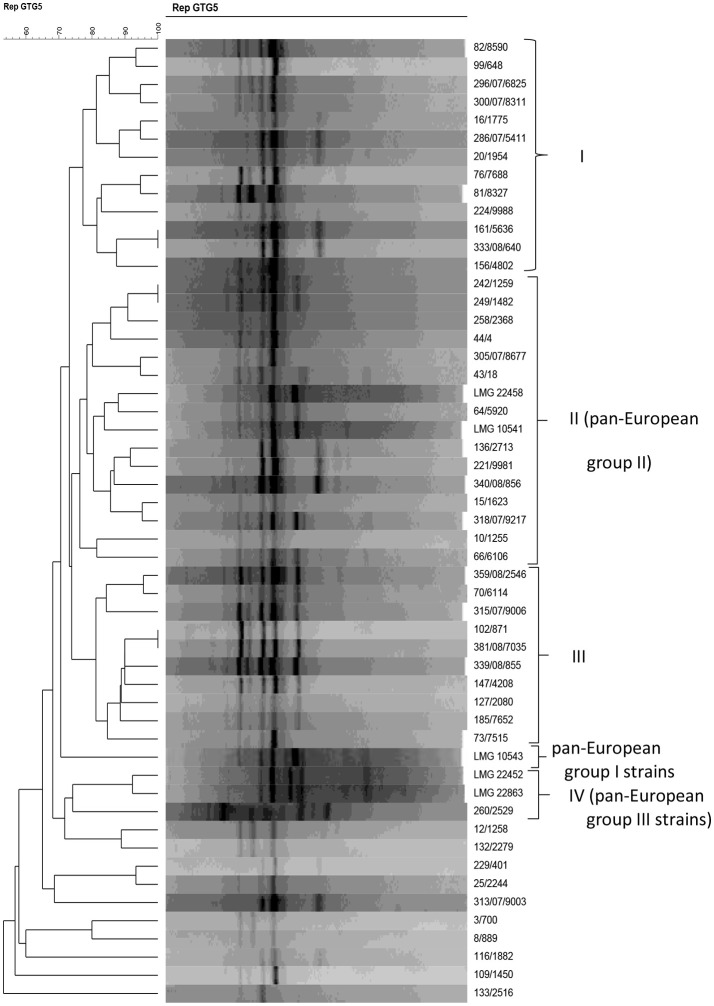
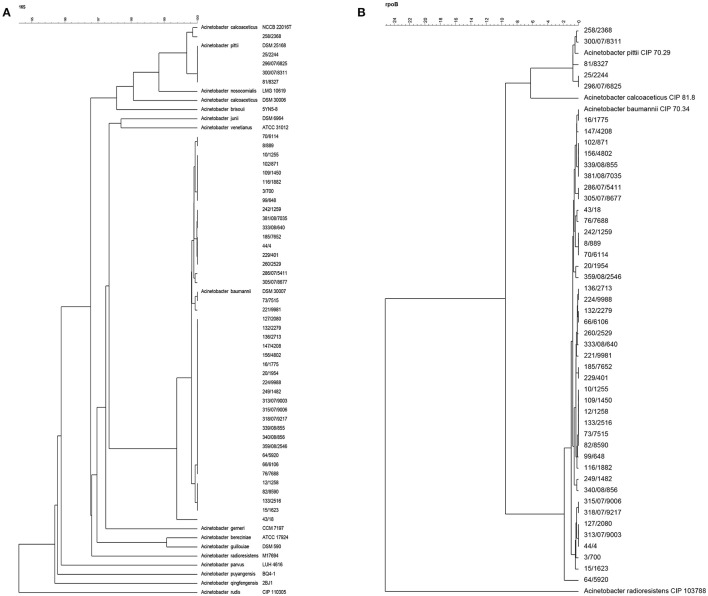
Forty-seven spp. isolates from milk powder obtained from a powdered milk producer in Germany were investigated for their antibiotic resistance susceptibilities, in order to assess whether strains from food harbor multiple antibiotic resistances and whether the food route is important for dissemination of resistance genes. The strains were identified by 16S rRNA and B gene sequencing, as well as by whole genome sequencing of selected isolates and their DNA-DNA hybridization (DDH). Furthermore, they were genotyped by rep-PCR together with reference strains of pan-European groups I, II, and III strains of . Of the 47 strains, 42 were identified as , 4 as , and 1 as based on 16S rRNA gene sequencing. DDH with the genome sequence data of selected strains and B gene sequencing data suggested that the five non- strains all belonged to , suggesting that the B gene is more reliable than the 16S rRNA gene for species level identification in this genus. Rep-PCR genotyping of the strains showed that these could be grouped into four groups, and that some strains clustered together with reference strains of pan-European clinical group II and III strains. All strains in this study were intrinsically resistant toward chloramphenicol and oxacillin, but susceptible toward tetracycline, tobramycin, erythromycin, and ciprofloxacin. For cefotaxime, 43 strains (91.5%) were intermediate and 3 strains (6.4%) resistant, while 3 (6.4%) and 21 (44.7%) strains exhibited resistance to cefepime and streptomycin, respectively. Forty-six (97.9%) strains were susceptible to amikacin and ampicillin-sulbactam. Therefore, the strains in this study were generally not resistant to the clinically relevant antibiotics, especially tobramycin, ciprofloxacin, cefepime, and meropenem, suggesting that the food route probably poses only a low risk for multidrug resistant strains or resistance genes.
对从德国一家奶粉生产商的奶粉中分离出的47株菌株进行了抗生素耐药性敏感性研究,以评估食品来源的菌株是否具有多重抗生素耐药性,以及食品途径对耐药基因传播是否重要。通过16S rRNA和B基因测序,以及对选定分离株的全基因组测序及其DNA-DNA杂交(DDH)对菌株进行鉴定。此外,通过重复聚合酶链反应(rep-PCR)对它们进行基因分型,并与泛欧洲I、II和III组的参考菌株进行比较。基于16S rRNA基因测序,47株菌株中,42株被鉴定为[具体菌名1],4株为[具体菌名2],1株为[具体菌名3]。对选定菌株的基因组序列数据和B基因测序数据进行的DDH表明,这5株非[具体菌名1]菌株均属于[另一菌名],这表明在该属的种水平鉴定中,B基因比16S rRNA基因更可靠。对[具体菌名1]菌株进行的rep-PCR基因分型表明,这些菌株可分为四组,且一些菌株与泛欧洲临床II组和III组的参考菌株聚集在一起。本研究中的所有菌株对氯霉素和苯唑西林具有固有抗性,但对四环素、妥布霉素、红霉素和环丙沙星敏感。对于头孢噻肟,43株(91.5%)为中介型,3株(6.4%)耐药,而分别有3株(6.4%)和21株(44.7%)菌株对头孢吡肟和链霉素耐药。46株(97.9%)菌株对阿米卡星和氨苄西林-舒巴坦敏感。因此,本研究中的菌株通常对临床相关抗生素不耐药,尤其是对妥布霉素、环丙沙星、头孢吡肟和美罗培南,这表明食品途径可能仅对多重耐药[具体菌名1]菌株或耐药基因构成低风险。