Sinha Subodh Kumar, Sevanthi V Amitha Mithra, Chaudhary Saurabh, Tyagi Punit, Venkadesan Sureshkumar, Rani Manju, Mandal Pranab Kumar
ICAR-National Research Centre on Plant Biotechnology, New Delhi 110012, India.
School of Human and Life Sciences, Canterbury Christ Church University, Canterbury CT1 1QU, UK.
Genes (Basel). 2018 Apr 11;9(4):206. doi: 10.3390/genes9040206.
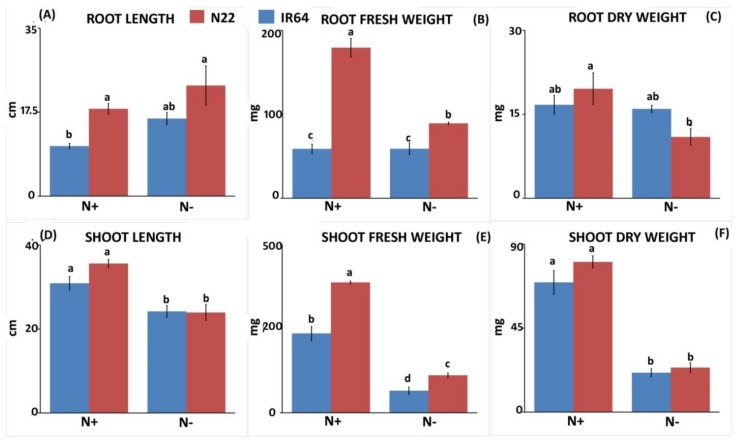
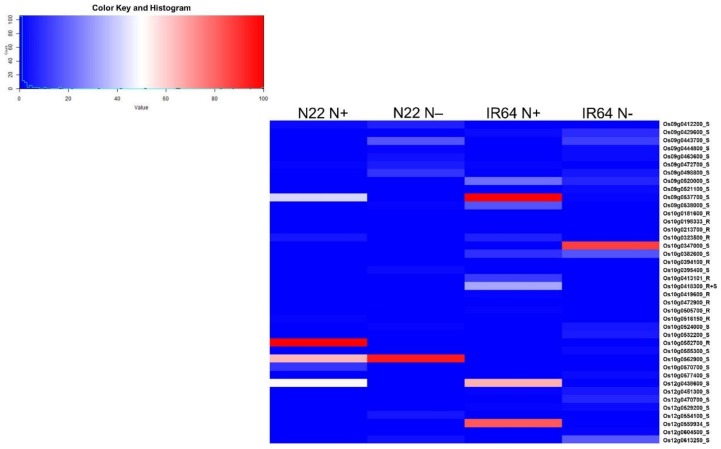
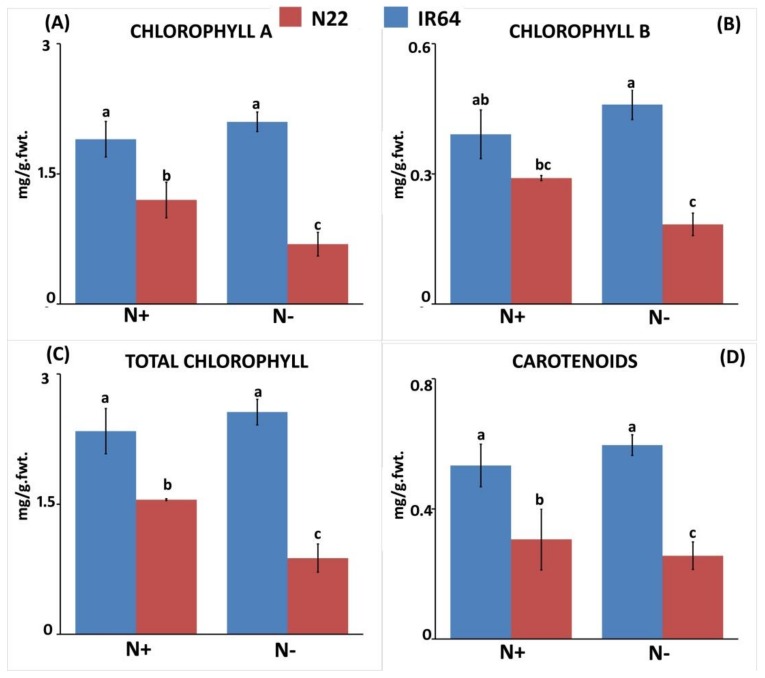
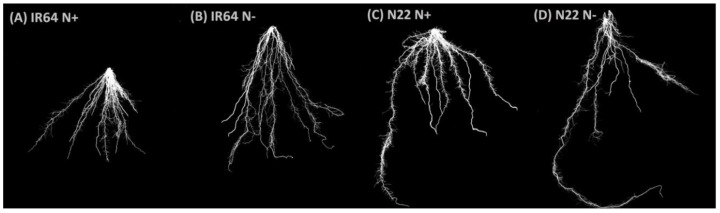
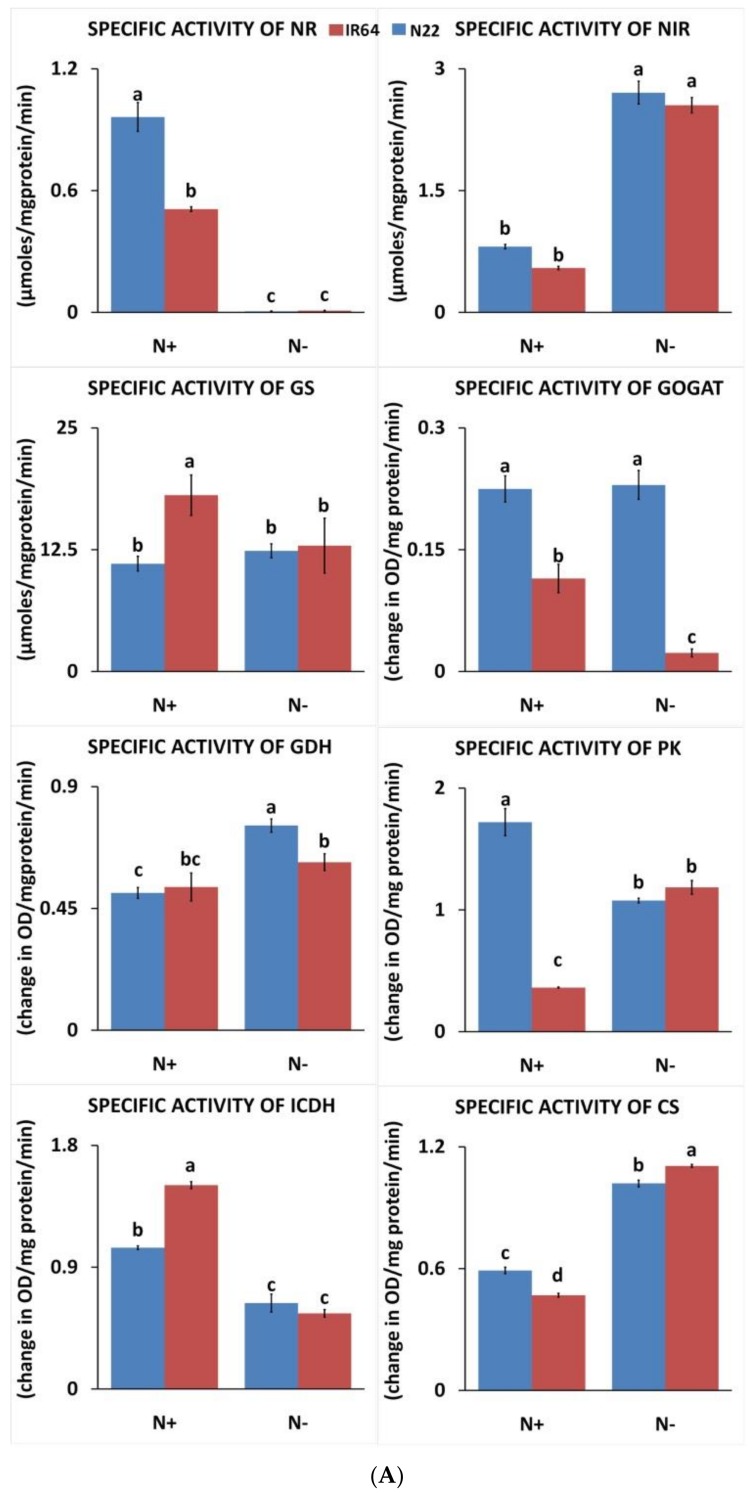
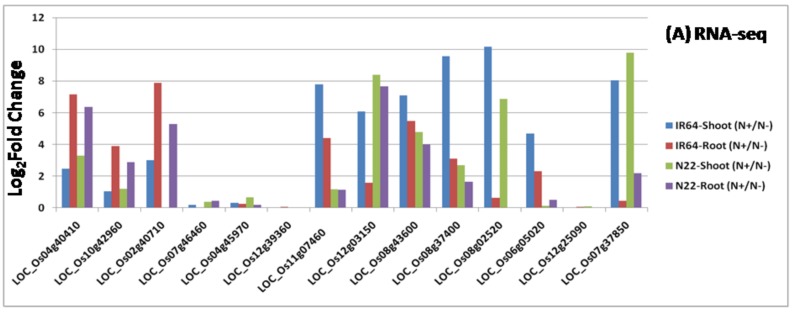
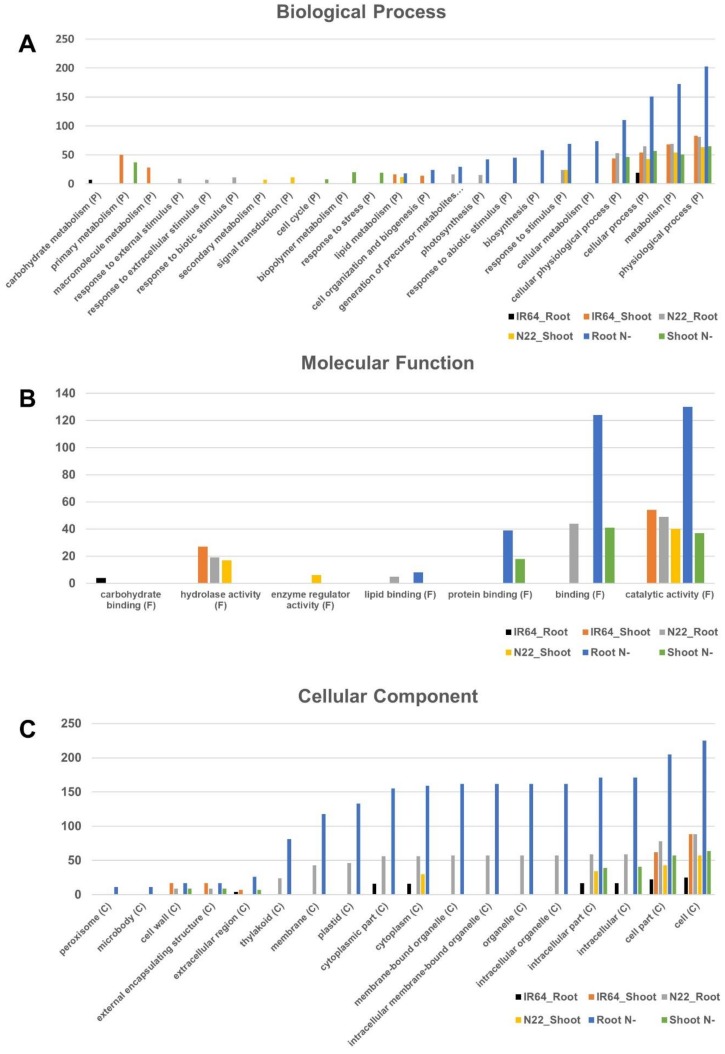
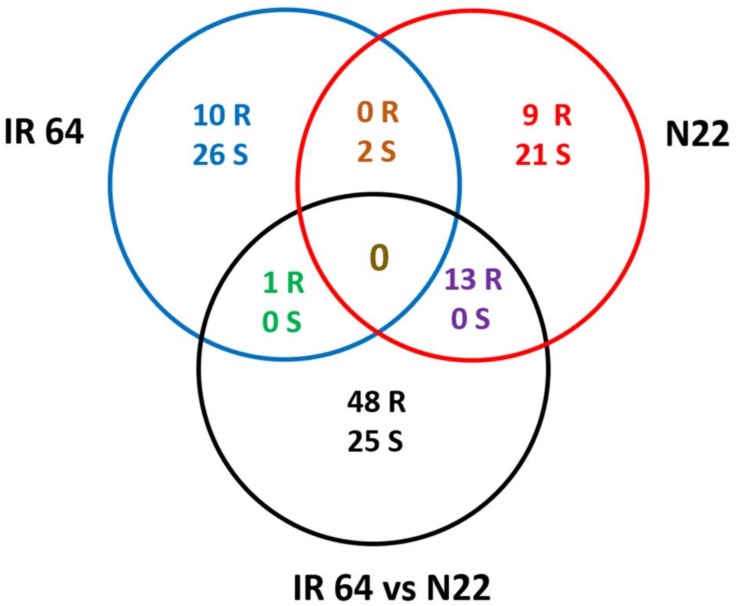
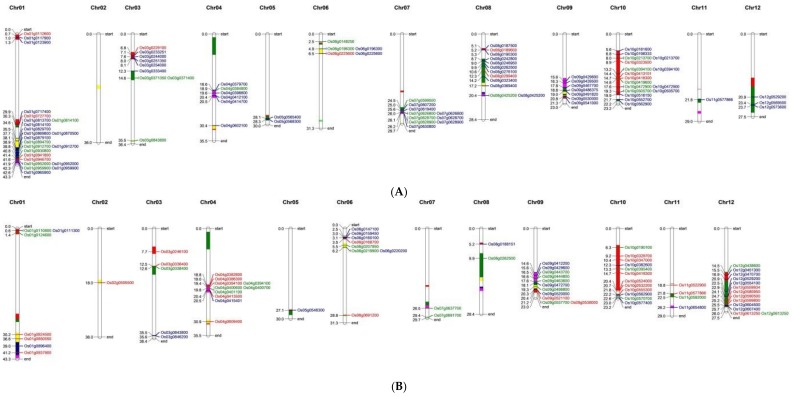
The nitrogen use efficiency (NUE) of crop plants is limited and enhancing it in rice, a major cereal crop, would be beneficial for farmers and the environment alike. Here we report the genome-wide transcriptome analysis of two rice genotypes, IR 64 (IR64) and Nagina 22 (N22) under optimal (+N) and chronic starvation (-N) of nitrogen (N) from 15-day-old root and shoot tissues. The two genotypes were found to be contrasting in their response to -N; IR64 root architecture and root dry weight remained almost equivalent to that under +N conditions, while N22 showed high foraging ability but a substantial reduction in biomass under -N. Similarly, the photosynthetic pigments showed a drastic reduction in N22 under low N, while IR64 was more resilient. Nitrate reductase showed significantly low specific activity under -N in both genotypes. Glutamate synthase (GOGAT) and citrate synthase CS activity were highly reduced in N22 but not in IR64. Transcriptome analysis of these genotypes revealed nearly double the number of genes to be differentially expressed (DEGs) in roots (1016) compared to shoots (571). The response of the two genotypes to N starvation was distinctly different reflecting their morphological/biochemical response with just two and eight common DEGs in the root and shoot tissues. There were a total of 385 nitrogen-responsive DEGs (106 in shoots and 279 in roots) between the two genotypes. Fifty-two of the 89 DEGs identified as specific to N22 root tissues were also found to be differentially expressed between the two genotypes under -N. Most of these DEGs belonged to starch and chloroplast metabolism, followed by membrane and signaling proteins. Physical mapping of DEGs revealed 95 DEGs in roots and 76 in shoots to be present in quantitative trait loci (QTL) known for NUE.
作物的氮利用效率(NUE)有限,提高主要谷类作物水稻的氮利用效率对农民和环境都有益。在此,我们报告了对两种水稻基因型IR 64和Nagina 22(N22)在15日龄根和地上部组织处于最佳氮素供应(+N)和长期缺氮(-N)条件下的全基因组转录组分析。发现这两种基因型对 -N的反应截然不同;IR64的根系结构和根干重几乎与 +N条件下相当,而N22表现出高觅食能力,但在 -N条件下生物量大幅减少。同样,低氮条件下N22的光合色素急剧减少,而IR64更具弹性。两种基因型在 -N条件下硝酸还原酶的比活性均显著降低。谷氨酸合酶(GOGAT)和柠檬酸合酶CS活性在N-22中大幅降低,但在IR64中未降低。这些基因型的转录组分析显示,与地上部(571个)相比,根中差异表达基因(DEG)的数量几乎翻倍(1016个)。两种基因型对氮饥饿的反应明显不同,反映了它们在形态/生化反应上的差异,根和地上部组织中仅有两个和八个共同的DEG。两种基因型之间共有385个氮响应DEG(地上部106个,根中279个)。在鉴定为N22根组织特有的89个DEG中,有52个在 -N条件下的两种基因型之间也存在差异表达。这些DEG大多属于淀粉和叶绿体代谢,其次是膜和信号蛋白。DEG的物理定位显示,根中有95个DEG,地上部有76个DEG存在于已知的氮利用效率数量性状位点(QTL)中。