• 文献检索
  • 文档翻译
  • 深度研究
  • 学术资讯
  • Suppr Zotero 插件Zotero 插件
  • 邀请有礼
  • 套餐&价格
  • 历史记录
应用&插件
Suppr Zotero 插件Zotero 插件浏览器插件Mac 客户端Windows 客户端微信小程序
定价
高级版会员购买积分包购买API积分包
服务
文献检索文档翻译深度研究API 文档MCP 服务
关于我们
关于 Suppr公司介绍联系我们用户协议隐私条款
关注我们

Suppr 超能文献

核心技术专利:CN118964589B侵权必究
粤ICP备2023148730 号-1Suppr @ 2026

文献检索

告别复杂PubMed语法,用中文像聊天一样搜索,搜遍4000万医学文献。AI智能推荐,让科研检索更轻松。

立即免费搜索

文件翻译

保留排版,准确专业,支持PDF/Word/PPT等文件格式,支持 12+语言互译。

免费翻译文档

深度研究

AI帮你快速写综述,25分钟生成高质量综述,智能提取关键信息,辅助科研写作。

立即免费体验

个人微生物组分析提高了学生对免疫学、分子生物学和基因组学本科课程的参与度和兴趣。

Personal microbiome analysis improves student engagement and interest in Immunology, Molecular Biology, and Genomics undergraduate courses.

机构信息

Department of Microbiology and Molecular Biology, Brigham Young University, Provo, Utah, United States of America.

Department of Biology, Brigham Young University, Provo, Utah, United States of America.

出版信息

PLoS One. 2018 Apr 11;13(4):e0193696. doi: 10.1371/journal.pone.0193696. eCollection 2018.

DOI:10.1371/journal.pone.0193696
PMID:29641525
原文链接:https://pmc.ncbi.nlm.nih.gov/articles/PMC5894996/
Abstract

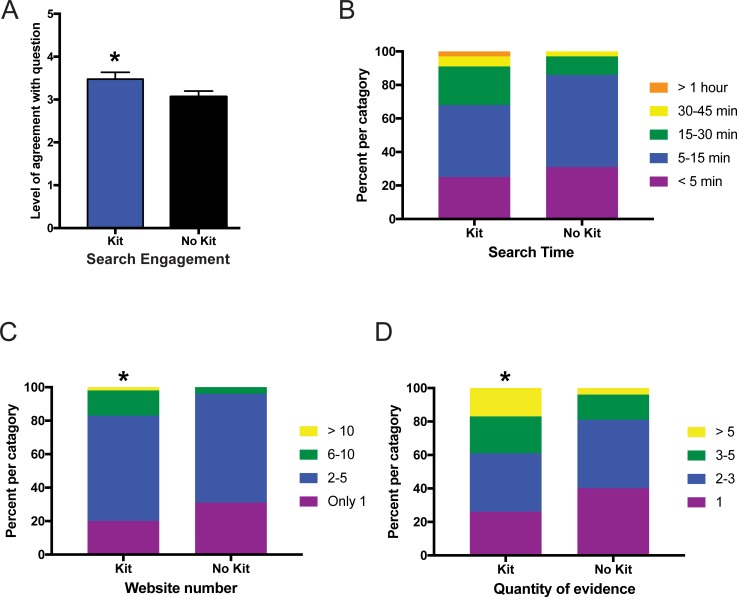
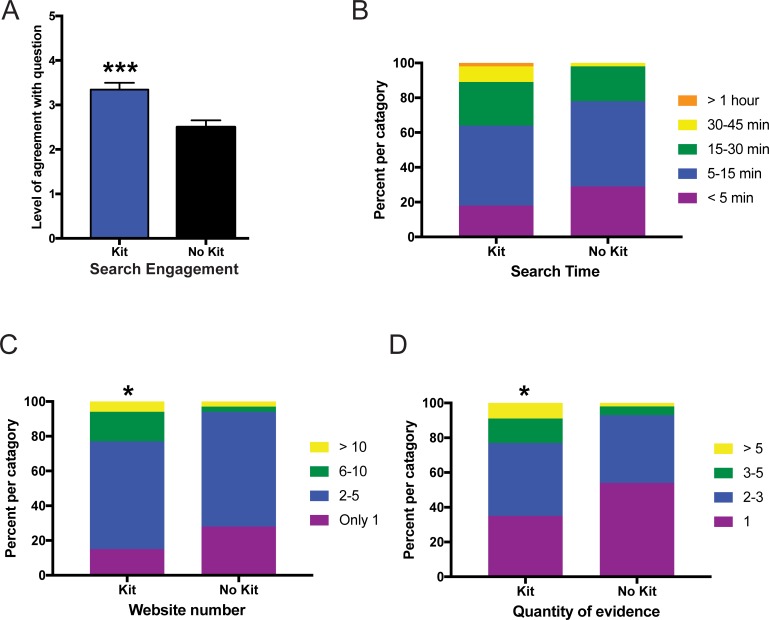
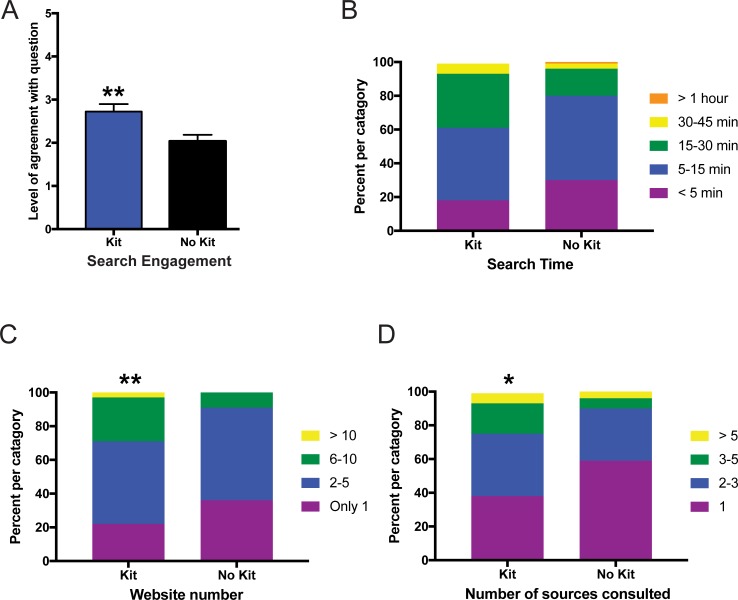
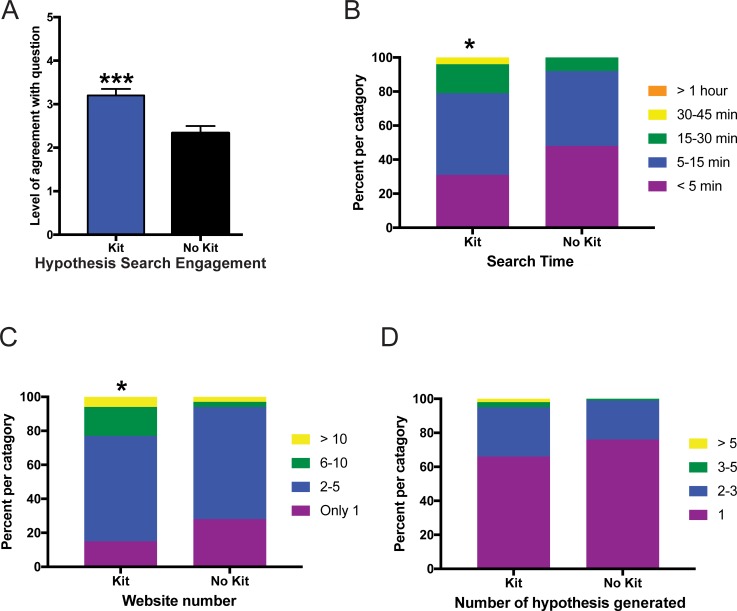
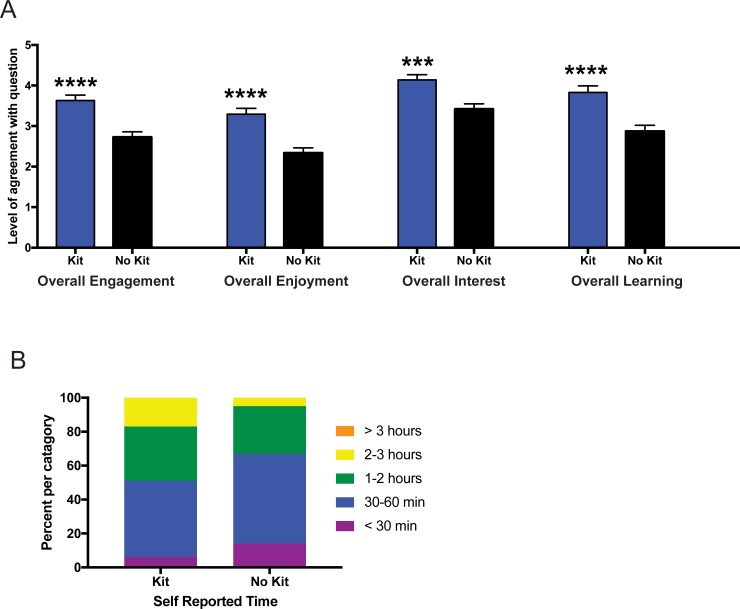
A critical area of emphasis for science educators is the identification of effective means of teaching and engaging undergraduate students. Personal microbiome analysis is a means of identifying the microbial communities found on or in our body. We hypothesized the use of personal microbiome analysis in the classroom could improve science education by making courses more applied and engaging for undergraduate students. We determined to test this prediction in three Brigham Young University undergraduate courses: Immunology, Advanced Molecular Biology Laboratory, and Genomics. These three courses have a two-week microbiome unit and students during the 2016 semester students could submit their own personal microbiome kit or use the demo data, whereas during the 2017 semester students were given access to microbiome data from an anonymous individual. The students were surveyed before, during, and after the human microbiome unit to determine whether analyzing their own personal microbiome data, compared to analyzing demo microbiome data, impacted student engagement and interest. We found that personal microbiome analysis significantly enhanced the engagement and interest of students while completing microbiome assignments, the self-reported time students spent researching the microbiome during the two week microbiome unit, and the attitudes of students regarding the course overall. Thus, we found that integrating personal microbiome analysis in the classroom was a powerful means of improving student engagement and interest in undergraduate science courses.

摘要

对于科学教育工作者来说,一个重点关注的关键领域是确定有效的教学方法和手段,以吸引大学生的参与。个人微生物组分析是一种识别存在于我们身体表面或内部的微生物群落的方法。我们假设,在课堂上使用个人微生物组分析可以通过使课程更具实用性和吸引力来提高科学教育水平。我们决定在三所杨百翰大学的本科课程中验证这一预测:免疫学、高级分子生物学实验室和基因组学。这三门课程都有为期两周的微生物组单元,在 2016 年的学期中,学生可以提交自己的个人微生物组试剂盒,也可以使用演示数据,而在 2017 年的学期中,学生可以访问匿名个体的微生物组数据。在人类微生物组单元之前、期间和之后,学生们都接受了调查,以确定分析自己的个人微生物组数据与分析演示微生物组数据相比,是否会影响学生的参与度和兴趣。我们发现,个人微生物组分析显著提高了学生在完成微生物组作业时的参与度和兴趣,以及学生在两周的微生物组单元中研究微生物组的自我报告时间,以及学生对课程的总体态度。因此,我们发现将个人微生物组分析纳入课堂是提高本科科学课程学生参与度和兴趣的有力手段。

https://cdn.ncbi.nlm.nih.gov/pmc/blobs/c498/5894996/1a937e24d909/pone.0193696.g008.jpg
https://cdn.ncbi.nlm.nih.gov/pmc/blobs/c498/5894996/32bb8cbe5392/pone.0193696.g001.jpg
https://cdn.ncbi.nlm.nih.gov/pmc/blobs/c498/5894996/fa57394106b2/pone.0193696.g002.jpg
https://cdn.ncbi.nlm.nih.gov/pmc/blobs/c498/5894996/4ce319c13001/pone.0193696.g003.jpg
https://cdn.ncbi.nlm.nih.gov/pmc/blobs/c498/5894996/1c657a7210ae/pone.0193696.g004.jpg
https://cdn.ncbi.nlm.nih.gov/pmc/blobs/c498/5894996/c9b47b3fc6b2/pone.0193696.g005.jpg
https://cdn.ncbi.nlm.nih.gov/pmc/blobs/c498/5894996/e5d5ab6fc128/pone.0193696.g006.jpg
https://cdn.ncbi.nlm.nih.gov/pmc/blobs/c498/5894996/630df1bd3dd0/pone.0193696.g007.jpg
https://cdn.ncbi.nlm.nih.gov/pmc/blobs/c498/5894996/1a937e24d909/pone.0193696.g008.jpg
https://cdn.ncbi.nlm.nih.gov/pmc/blobs/c498/5894996/32bb8cbe5392/pone.0193696.g001.jpg
https://cdn.ncbi.nlm.nih.gov/pmc/blobs/c498/5894996/fa57394106b2/pone.0193696.g002.jpg
https://cdn.ncbi.nlm.nih.gov/pmc/blobs/c498/5894996/4ce319c13001/pone.0193696.g003.jpg
https://cdn.ncbi.nlm.nih.gov/pmc/blobs/c498/5894996/1c657a7210ae/pone.0193696.g004.jpg
https://cdn.ncbi.nlm.nih.gov/pmc/blobs/c498/5894996/c9b47b3fc6b2/pone.0193696.g005.jpg
https://cdn.ncbi.nlm.nih.gov/pmc/blobs/c498/5894996/e5d5ab6fc128/pone.0193696.g006.jpg
https://cdn.ncbi.nlm.nih.gov/pmc/blobs/c498/5894996/630df1bd3dd0/pone.0193696.g007.jpg
https://cdn.ncbi.nlm.nih.gov/pmc/blobs/c498/5894996/1a937e24d909/pone.0193696.g008.jpg

相似文献

1
Personal microbiome analysis improves student engagement and interest in Immunology, Molecular Biology, and Genomics undergraduate courses.个人微生物组分析提高了学生对免疫学、分子生物学和基因组学本科课程的参与度和兴趣。
PLoS One. 2018 Apr 11;13(4):e0193696. doi: 10.1371/journal.pone.0193696. eCollection 2018.
2
Anticipation of Personal Genomics Data Enhances Interest and Learning Environment in Genomics and Molecular Biology Undergraduate Courses.对个人基因组数据的预期提升了基因组学和分子生物学本科课程中的兴趣和学习环境。
PLoS One. 2015 Aug 4;10(8):e0133486. doi: 10.1371/journal.pone.0133486. eCollection 2015.
3
Undergraduate basic science preparation for dental school.牙科学校的本科基础科学准备。
J Dent Educ. 2002 Nov;66(11):1252-9.
4
Impacts of incorporating personal genome sequencing into graduate genomics education: a longitudinal study over three course years.将个人基因组测序纳入研究生基因组学教育的影响:一项为期三个学年的纵向研究。
BMC Med Genomics. 2018 Jan 30;11(1):5. doi: 10.1186/s12920-018-0319-0.
5
The use of writing assignments to help students synthesize content in upper-level undergraduate biology courses.在本科高年级生物学课程中,利用写作作业帮助学生综合所学内容。
FEMS Microbiol Lett. 2017 Feb 1;364(3). doi: 10.1093/femsle/fnx024.
6
Knowledge loss of medical students on first year basic science courses at the University of Saskatchewan.萨斯喀彻温大学医学院学生在第一年基础科学课程中的知识遗忘情况。
BMC Med Educ. 2006 Jan 14;6:5. doi: 10.1186/1472-6920-6-5.
7
Immunological tools: engaging students in the use and analysis of flow cytometry and enzyme-linked immunosorbent assay (ELISA).免疫学工具:让学生参与流式细胞术和酶联免疫吸附测定(ELISA)的使用与分析。
Biochem Mol Biol Educ. 2014 Sep-Oct;42(5):382-97. doi: 10.1002/bmb.20808. Epub 2014 Jul 23.
8
Exploring the molecular genetic foundations of cancer biology and how biomedical advances are made in an advanced undergraduate course.在一门高级本科课程中探索癌症生物学的分子遗传基础以及生物医学进展是如何取得的。
Biochem Mol Biol Educ. 2019 Jul;47(4):408-416. doi: 10.1002/bmb.21247. Epub 2019 Apr 15.
9
Educating young educators: a pedagogical internship for undergraduate teaching assistants.教育青年教育工作者:本科助教的教学实习。
CBE Life Sci Educ. 2010 Summer;9(2):80-6. doi: 10.1187/cbe.09-09-0060.
10
Undergraduate student attitudes to current poultry industry issues over four semesters: surveying an introductory poultry science course.本科生对当前家禽业问题的态度在四个学期内的变化:对一门家禽科学入门课程的调查。
J Anim Sci. 2023 Jan 3;101. doi: 10.1093/jas/skac381.

引用本文的文献

1
Inquiry-Driven Bioinformatics Laboratory Research Module: Metagenomic Study of Student Oral Microbes.探究驱动的生物信息学实验室研究模块:学生口腔微生物的宏基因组学研究
J Microbiol Biol Educ. 2021 Jun 30;22(2). doi: 10.1128/jmbe.00136-21. eCollection 2021 Fall.
2
Analysis of Microbial Water Contamination, Soil Microbial Community Structure, and Soil Respiration in a Collaborative First-Year Students as Scholars Program (SAS).协作式大一学生学者计划(SAS)中微生物水污染、土壤微生物群落结构及土壤呼吸的分析
Front Microbiol. 2020 Dec 17;11:590035. doi: 10.3389/fmicb.2020.590035. eCollection 2020.
3
Microbiomes for All.

本文引用的文献

1
Making Learning Personally Meaningful: A New Framework for Relevance Research.让学习具有个人意义:相关性研究的新框架。
J Exp Educ. 2018;86(1):11-29. doi: 10.1080/00220973.2017.1380589. Epub 2017 Oct 18.
2
Using Backward Design in Education Research: A Research Methods Essay.教育研究中运用逆向设计:一篇研究方法论文。
J Microbiol Biol Educ. 2017 Oct 5;18(3). doi: 10.1128/jmbe.v18i3.1367. eCollection 2017.
3
Application of active learning modalities to achieve medical genetics competencies and their learning outcome assessments.
全民微生物组
Front Microbiol. 2020 Nov 12;11:593472. doi: 10.3389/fmicb.2020.593472. eCollection 2020.
4
PUMAA: A Platform for Accessible Microbiome Analysis in the Undergraduate Classroom.PUMAA:本科课堂中微生物组分析的可及性平台。
Front Microbiol. 2020 Oct 6;11:584699. doi: 10.3389/fmicb.2020.584699. eCollection 2020.
5
The Bean Beetle Microbiome Project: A Course-Based Undergraduate Research Experience in Microbiology.豆象微生物组计划:微生物学领域基于课程的本科研究经历
Front Microbiol. 2020 Sep 15;11:577621. doi: 10.3389/fmicb.2020.577621. eCollection 2020.
6
Fiber Force: A Fiber Diet Intervention in an Advanced Course-Based Undergraduate Research Experience (CURE) Course.纤维力量:在一门基于课程的本科高级研究经验(CURE)课程中的纤维饮食干预
J Microbiol Biol Educ. 2020 Apr 30;21(1). doi: 10.1128/jmbe.v21i1.1991. eCollection 2020.
7
Genomics Education in the Era of Personal Genomics: Academic, Professional, and Public Considerations.个人基因组时代的基因组学教育:学术、专业和公众的考虑。
Int J Mol Sci. 2020 Jan 24;21(3):768. doi: 10.3390/ijms21030768.
8
Primary Care Physicians' Knowledge, Attitudes, and Experience with Personal Genetic Testing.基层医疗医生关于个人基因检测的知识、态度及经验
J Pers Med. 2019 May 24;9(2):29. doi: 10.3390/jpm9020029.
应用主动学习模式实现医学遗传学能力及其学习成果评估。
Adv Med Educ Pract. 2017 Dec 14;8:817-829. doi: 10.2147/AMEP.S145696. eCollection 2017.
4
Metabolic Instruction of Immunity.免疫的代谢指令
Cell. 2017 May 4;169(4):570-586. doi: 10.1016/j.cell.2017.04.004.
5
Using Next-Generation Sequencing to Explore Genetics and Race in the High School Classroom.利用下一代测序技术在高中课堂中探索遗传学和种族问题。
CBE Life Sci Educ. 2017 Summer;16(2). doi: 10.1187/cbe.16-09-0281.
6
Finding enzymes in the gut metagenome.在肠道宏基因组中寻找酶。
Science. 2017 Feb 10;355(6325):577-578. doi: 10.1126/science.aam7446.
7
The Human Intestinal Microbiome in Health and Disease.健康与疾病中的人类肠道微生物群
N Engl J Med. 2016 Dec 15;375(24):2369-2379. doi: 10.1056/NEJMra1600266.
8
Personal microbiomes and next-generation sequencing for laboratory-based education.基于实验室教学的个人微生物群与下一代测序
FEMS Microbiol Lett. 2016 Dec;363(23). doi: 10.1093/femsle/fnw266. Epub 2016 Nov 16.
9
Effects of Using Personal Genotype Data on Student Learning and Attitudes in a Pharmacogenomics Course.在药物基因组学课程中使用个人基因型数据对学生学习和态度的影响。
Am J Pharm Educ. 2016 Sep 25;80(7):122. doi: 10.5688/ajpe807122.
10
Ethical issues in microbiome research and medicine.微生物组研究与医学中的伦理问题。
BMC Med. 2016 Oct 12;14(1):156. doi: 10.1186/s12916-016-0702-7.