Chang Soyoung, Kilic Tugba, Lee Chang Kee, Avci Huseyin, Bae Hojae, Oskui Shirin Mesbah, Jung Sung Mi, Shin Su Ryon, Kim Seon Jeong
Center for Bio-Artificial Muscle and Department of Biomedical Engineering, Hanyang University, Seoul 04763, Korea.
Division of Engineering in Medicine, Department of Medicine, Brigham and Women's Hospital, Harvard Medical School, Cambridge, MA 02139, USA.
Nanomaterials (Basel). 2018 Apr 8;8(4):226. doi: 10.3390/nano8040226.
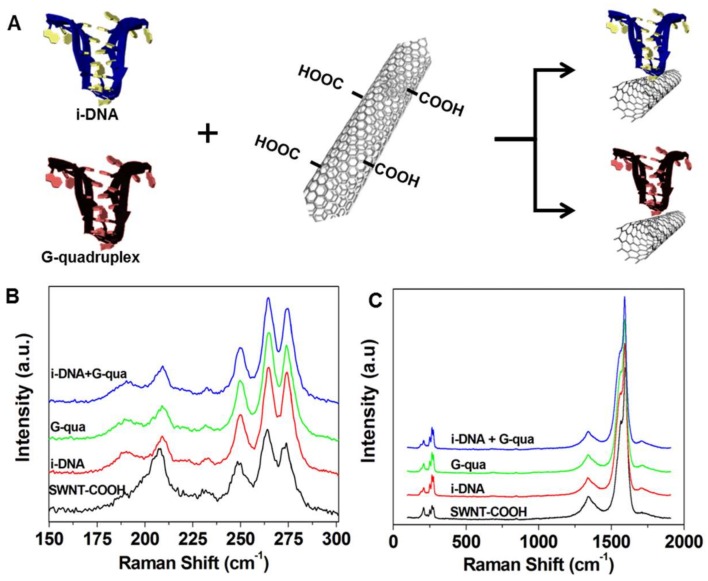
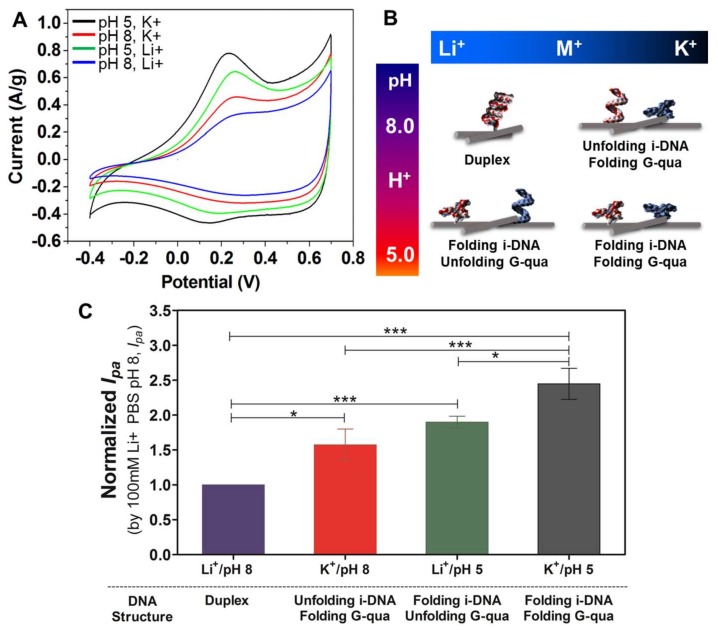
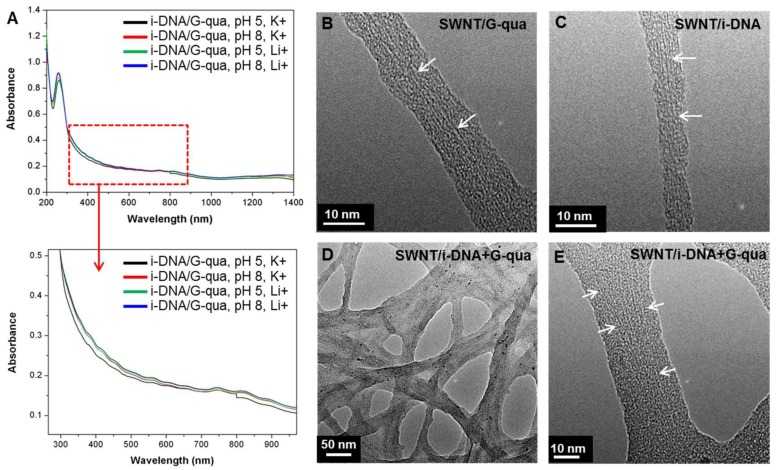
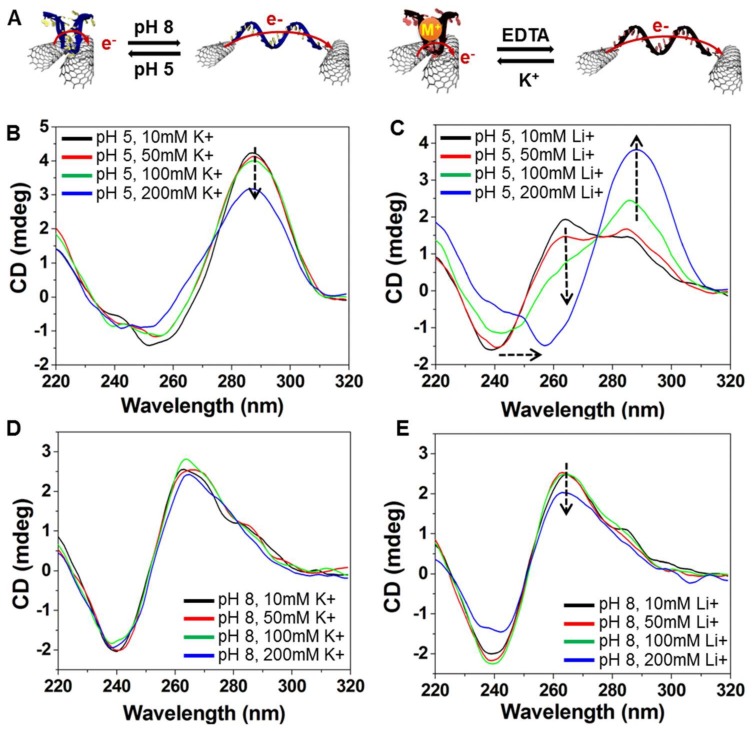
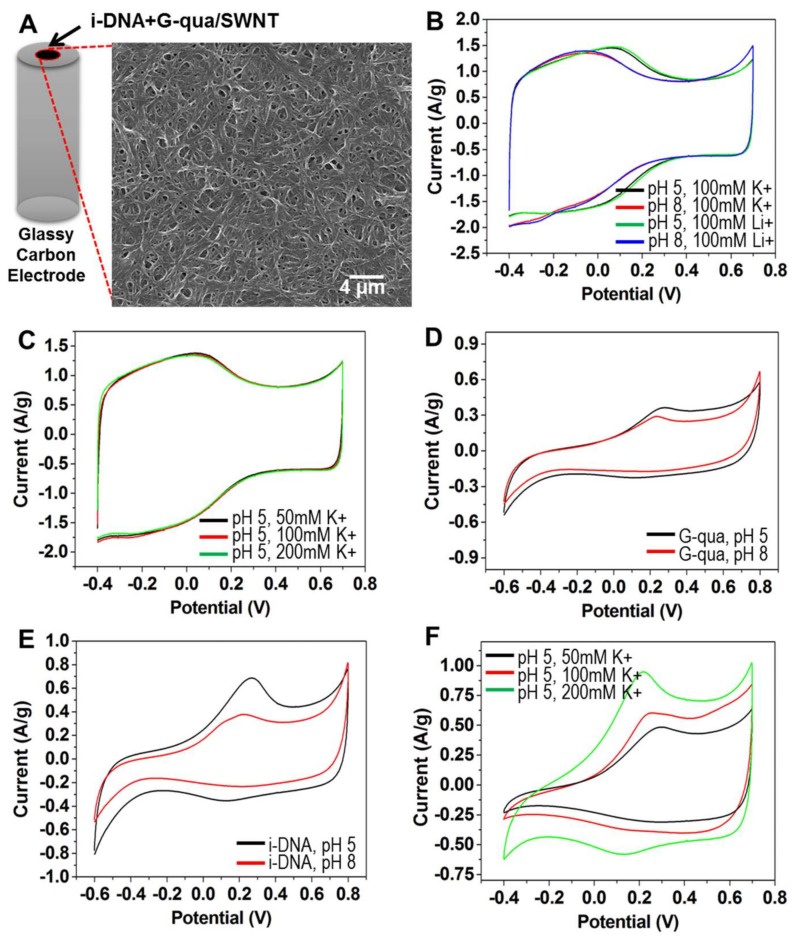
The unique biological features of supramolecular DNA have led to an increasing interest in biomedical applications such as biosensors. We have developed an i-motif and G-rich DNA conjugated single-walled carbon nanotube hybrid materials, which shows reversible conformational switching upon external stimuli such as pH (5 and 8) and presence of ions (Li⁺ and K⁺). We observed reversible electrochemical redox activity upon external stimuli in a quick and robust manner. Given the ease and the robustness of this method, we believe that pH- and ion-driven reversible DNA structure transformations will be utilized for future applications for developing novel biosensors.
超分子DNA独特的生物学特性使其在生物传感器等生物医学应用方面越来越受到关注。我们开发了一种含i-基序和富含G的DNA共轭单壁碳纳米管杂化材料,该材料在诸如pH值(5和8)以及离子(Li⁺和K⁺)存在等外部刺激下会发生可逆的构象转换。我们观察到在外部刺激下该材料能快速且稳定地呈现可逆的电化学氧化还原活性。鉴于此方法的简便性和稳定性,我们相信pH值和离子驱动的可逆DNA结构转变将在未来用于开发新型生物传感器的应用中得到利用。