School of Geosciences, University of Sydney, Sydney, NSW, 2006, Australia.
PLoS One. 2018 Apr 12;13(4):e0195557. doi: 10.1371/journal.pone.0195557. eCollection 2018.
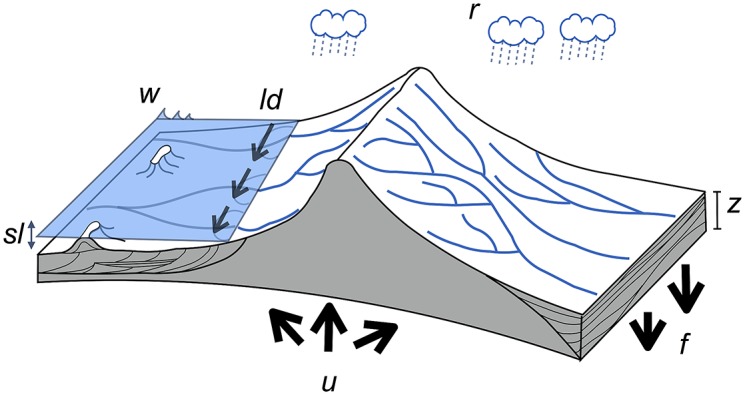
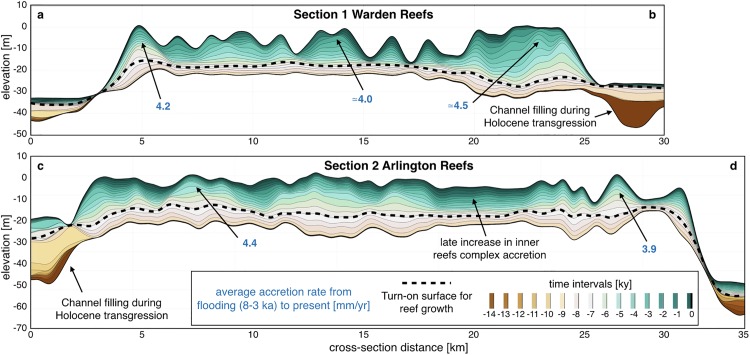
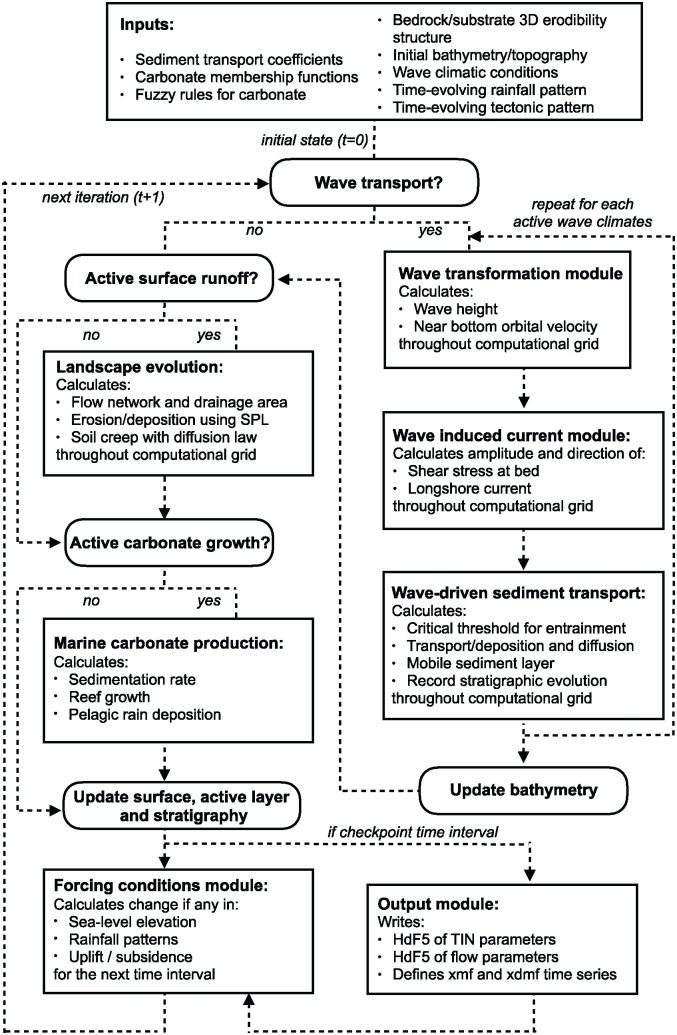
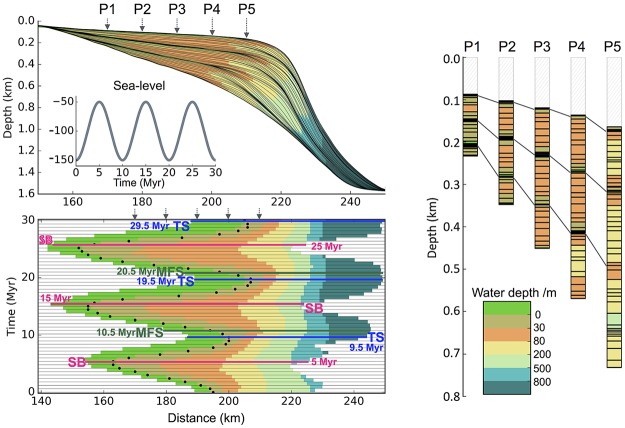
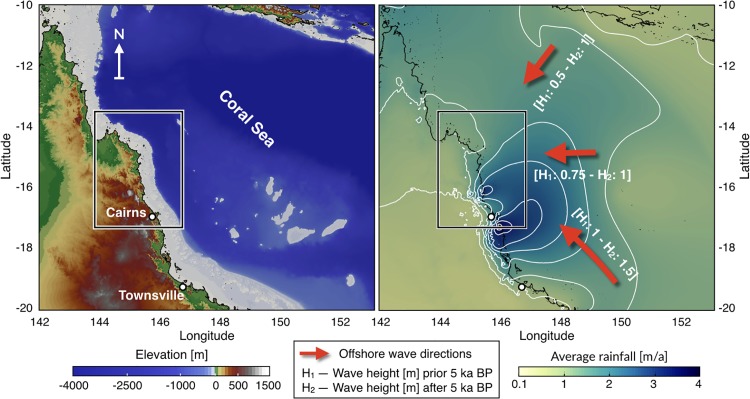
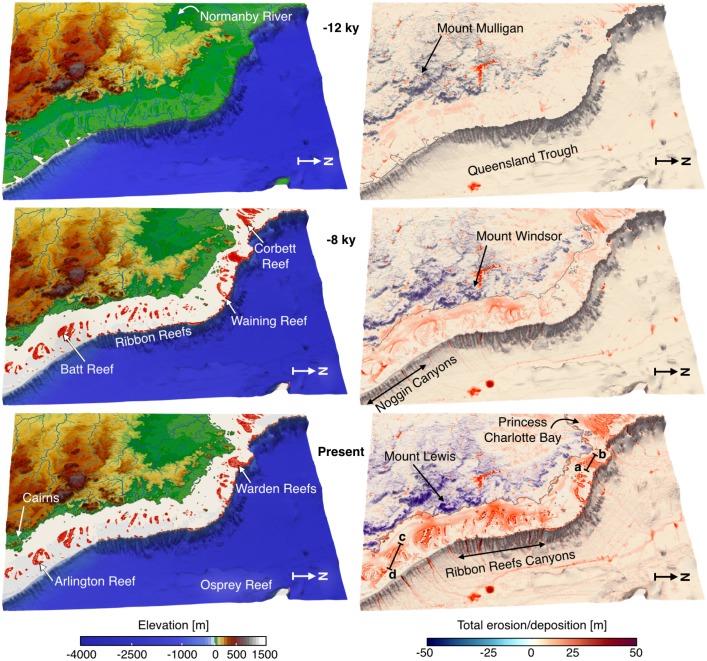
Understanding Earth surface responses in terms of sediment dynamics to climatic variability and tectonics forcing is hindered by limited ability of current models to simulate long-term evolution of sediment transfer and associated morphological changes. This paper presents pyBadlands, an open-source python-based framework which computes over geological time (1) sediment transport from landmasses to coasts, (2) reworking of marine sediments by longshore currents and (3) development of coral reef systems. pyBadlands is cross-platform, distributed under the GPLv3 license and available on GitHub (http://github.com/badlands-model). Here, we describe the underlying physical assumptions behind the simulated processes and the main options already available in the numerical framework. Along with the source code, a list of hands-on examples is provided that illustrates the model capabilities. In addition, pre and post-processing classes have been built and are accessible as a companion toolbox which comprises a series of workflows to efficiently build, quantify and explore simulation input and output files. While the framework has been primarily designed for research, its simplicity of use and portability makes it a great tool for teaching purposes.
理解地球表面对气候变异性和构造力的响应,受限于当前模型模拟长期输沙和相关形态变化的能力有限。本文介绍了 pyBadlands,一个基于 python 的开源框架,它可以计算地质时间内(1)从陆地到海岸的泥沙输送,(2)沿岸流对海洋沉积物的再作用,以及(3)珊瑚礁系统的发育。pyBadlands 是跨平台的,根据 GPLv3 许可证分发,并可在 GitHub 上获得(http://github.com/badlands-model)。在这里,我们描述了模拟过程背后的基本物理假设,以及数值框架中已经提供的主要选项。随着源代码,还提供了一系列的实例,说明模型的功能。此外,还构建了预处理和后处理类,并作为一个配套工具包提供,其中包含一系列工作流程,用于高效构建、量化和探索模拟输入和输出文件。虽然该框架主要是为研究而设计的,但它的易用性和可移植性使其成为教学的理想工具。