Consciousness Studies Programme, National Institute of Advanced Studies, Bangalore, India.
Animal Behaviour and Cognition Programme, National Institute of Advanced Studies, Bangalore, India.
Sci Rep. 2018 Apr 12;8(1):5147. doi: 10.1038/s41598-018-22928-z.
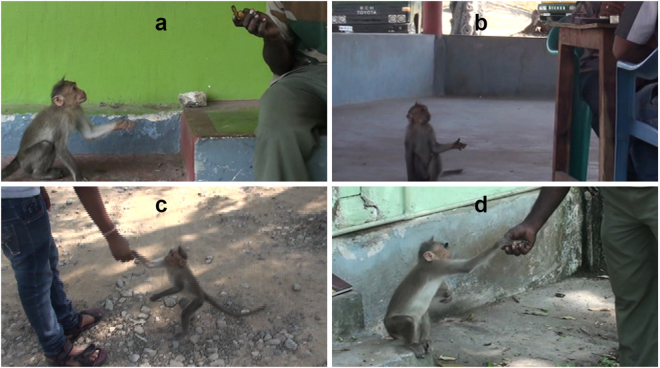
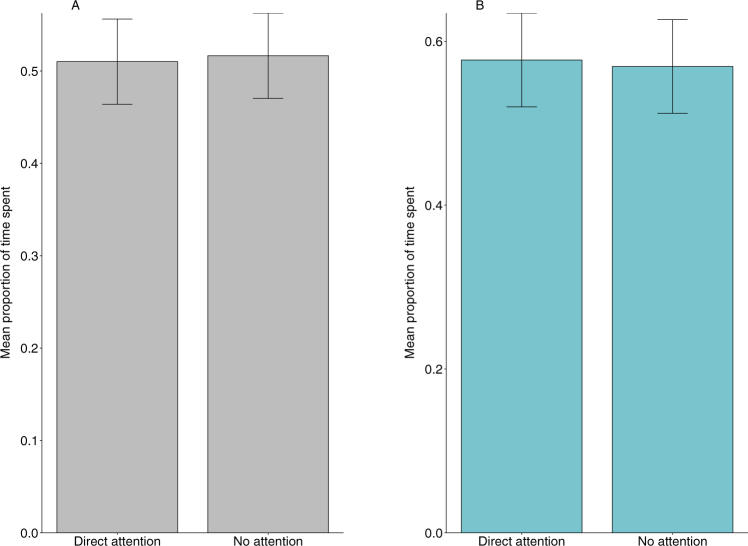
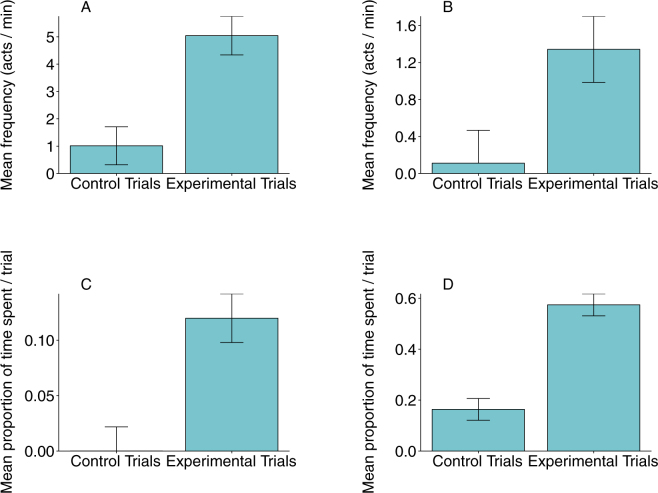
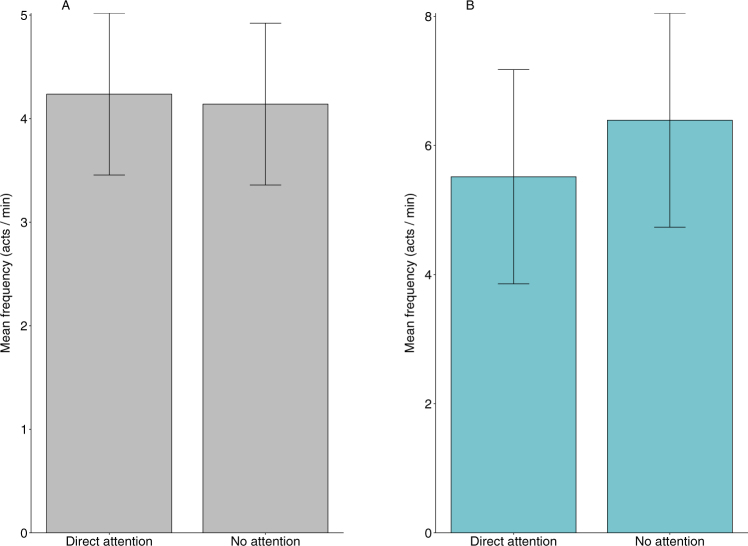
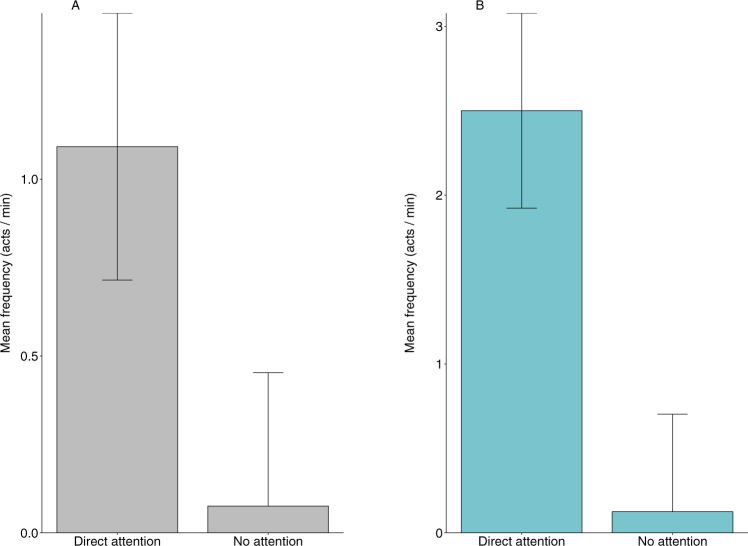
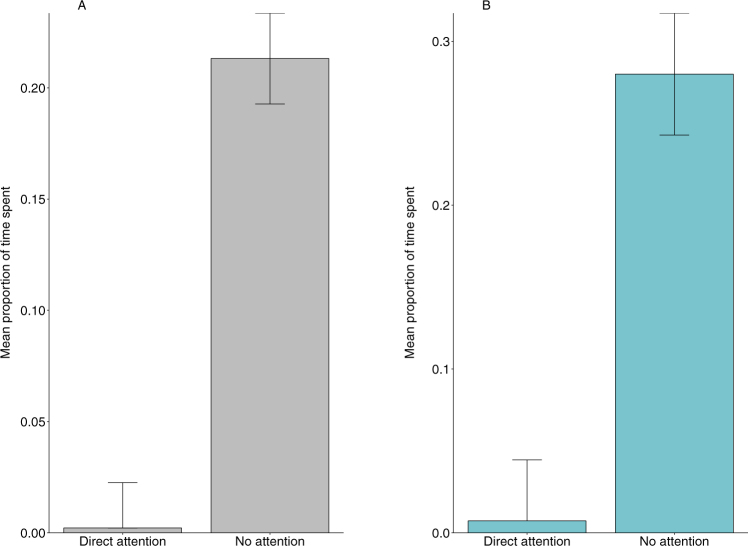
Comparative studies of nonhuman communication systems could provide insights into the origins and evolution of a distinct dimension of human language: intentionality. Recent studies have provided evidence for intentional communication in different species but generally in captive settings. We report here a novel behaviour of food requesting from humans displayed by wild bonnet macaques Macaca radiata, an Old World cercopithecine primate, in the Bandipur National Park of southern India. Using both natural observations and field experiments, we examined four different behavioural components-coo-calls, hand-extension gesture, orientation, and monitoring behaviour-of food requesting for their conformity with the established criteria of intentional communication. Our results suggest that food requesting by bonnet macaques is potentially an intentionally produced behavioural strategy as all the food requesting behaviours except coo-calls qualify the criteria for intentionality. We comment on plausible hypotheses for the origin and spread of this novel behavioural strategy in the study macaque population and speculate that the cognitive precursors for language production may be manifest in the usage of combination of signals of different modalities in communication, which could have emerged in simians earlier than in the anthropoid apes.
对非人类沟通系统的比较研究可以深入了解人类语言的一个独特维度——意图的起源和演化。最近的研究在不同物种中提供了意图沟通的证据,但通常是在圈养环境中。我们在这里报告了一个新的行为,野生冠毛猕猴 Macaca radiata 在印度南部的班迪普尔国家公园向人类索要食物。我们使用自然观察和野外实验,研究了食物请求的四种不同行为成分——鸣叫、伸手姿势、定向和监测行为——以检验它们是否符合既定的意图沟通标准。我们的结果表明,猕猴的食物请求可能是一种有意产生的行为策略,因为除了鸣叫之外,所有的食物请求行为都符合意图的标准。我们对这种新行为策略在研究猕猴群体中的起源和传播提出了合理的假设,并推测语言产生的认知前体可能表现在不同感觉通道信号的组合使用中,这在灵长类动物中可能比在类人猿中更早出现。