London School of Hygiene and Tropical Medicine, London, UK.
University of Glasgow, Glasgow, UK.
BMC Public Health. 2018 Apr 13;18(1):499. doi: 10.1186/s12889-018-5256-5.
Increasing routine HIV testing among key populations is a public health imperative, so improving access to acceptable testing options for those in need is a priority. Despite increasing targeted distribution and uptake of HIV self-sampling kits (SSKs) among men who have sex with men in the UK, little is known about why targeted SSK interventions for black African users are not as wide-spread or well-used. This paper addresses this key gap, offering insight into why some groups may be less likely than others to adopt certain types of SSK interventions in particular contexts. These data were collected during the development phase of a larger study to explore the feasibility and acceptability of targeted distribution of SSKs to black African people.
We undertook 6 focus groups with members of the public who self-identified as black African (n = 48), 6 groups with specialists providing HIV and social services to black African people (n = 53), and interviews with HIV specialist consultants and policy-makers (n = 9). Framework analysis was undertaken, using inductive and deductive analysis to develop and check themes.
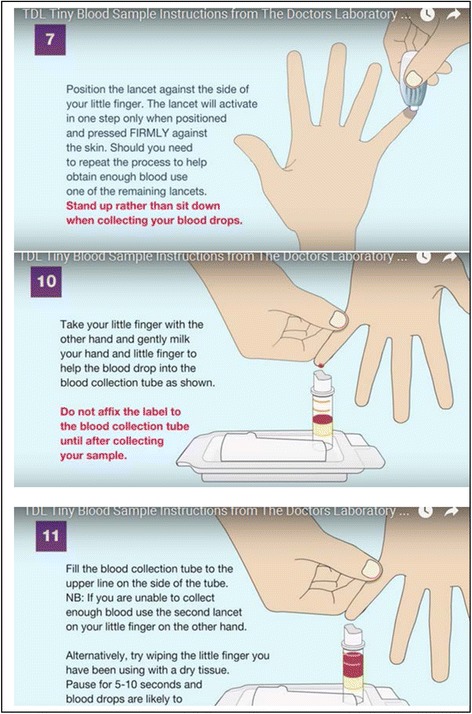
We found three valuable components of targeted SSK interventions for this population: the use of settings and technologies that increase choice and autonomy; targeted offers of HIV testing that preserve privacy and do not exacerbate HIV stigma; and ensuring that the specific kit being used (in this case, the TINY vial) is perceived as simple and reliable.
This unique and rigorous research offers insights into participants' views on SSK interventions, offering key considerations when targeting this population.. Given the plethora of HIV testing options, our work demonstrates that those commissioning and delivering SSK interventions will need to clarify (for users and providers) how each kit type and intervention design adds value. Most significantly, these findings demonstrate that without a strong locus of control over their own circumstances and personal information, black African people are less likely to feel that they can pursue an HIV test that is safe and secure. Thus, where profound social inequalities persist, so will inequalities in HIV testing uptake - by any means.
增加关键人群的常规 HIV 检测是公共卫生的当务之急,因此优先考虑为有需要的人提供可接受的检测选择。尽管在英国,男男性行为者中 HIV 自我采样试剂盒(SSK)的针对性分发和采用有所增加,但对于为什么针对黑人用户的 SSK 干预措施没有那么广泛或广泛使用,知之甚少。本文针对这一关键差距,深入探讨了为什么某些群体在特定情况下可能比其他群体更不愿意采用某些类型的 SSK 干预措施。这些数据是在一项更大规模研究的开发阶段收集的,该研究旨在探索针对黑人非洲人有针对性地分发 SSK 的可行性和可接受性。
我们对自认为是黑人非洲人的公众成员进行了 6 次焦点小组讨论(n=48),对为黑人非洲人提供 HIV 和社会服务的专家进行了 6 次小组讨论(n=53),并对 HIV 专家顾问和政策制定者进行了访谈(n=9)。我们采用了框架分析,使用归纳和演绎分析来开发和检查主题。
我们发现针对该人群的有针对性的 SSK 干预措施有三个有价值的组成部分:使用增加选择和自主权的环境和技术;提供保护隐私且不会加剧 HIV 耻辱感的有针对性的 HIV 检测;并确保所使用的特定试剂盒(在这种情况下,TINY 小瓶)被认为简单可靠。
这项独特而严格的研究提供了参与者对 SSK 干预措施的看法,为针对该人群提供了关键考虑因素。鉴于 HIV 检测选择繁多,我们的工作表明,那些委托和提供 SSK 干预措施的人将需要(向用户和提供者)澄清每种试剂盒类型和干预设计如何增加价值。最重要的是,这些发现表明,在没有对自己的情况和个人信息有强烈控制感的情况下,黑人非洲人不太可能认为他们可以进行安全可靠的 HIV 检测。因此,在社会不平等现象仍然存在的情况下,通过任何手段进行 HIV 检测的不平等现象也将依然存在。