Merchant R C, Clark M A, Liu T, Rosenberger J G, Romanoff J, Bauermeister J, Mayer K H
Department of Emergency Medicine, Alpert Medical School, Brown University, USA; Department of Epidemiology, School of Public Health, Brown University, USA.
Department of Quantitative Health Sciences and Center for Health Policy and Research, University of Massachusetts Medical School, USA.
Public Health. 2017 Apr;145:7-19. doi: 10.1016/j.puhe.2016.12.002. Epub 2017 Jan 16.
We assessed preferences of social media-using young black, Hispanic and white men-who-have-sex-with-men (YMSM) for oral fluid rapid HIV self-testing, as compared to other currently available HIV testing options. We also identified aspects of the oral fluid rapid HIV self-test that might influence preferences for using this test instead of other HIV testing options and determined if consideration of HIV testing costs and the potential future availability of fingerstick rapid HIV self-testing change HIV testing preferences.
Anonymous online survey.
HIV-uninfected YMSM across the United States recruited from multiple social media platforms completed an online survey about willingness to use, opinions about and their preferences for using oral fluid rapid HIV self-testing and five other currently available HIV testing options. In a pre/post questionnaire format design, participants first indicated their preferences for using the six HIV testing options (pre) before answering questions that asked their experience with and opinions about HIV testing. Although not revealed to participants and not apparent in the phrasing of the questions or responses, the opinion questions concerned aspects of oral fluid rapid HIV self-testing (e.g. its possible advantages/disadvantages, merits/demerits, and barriers/facilitators). Afterward, participants were queried again about their HIV testing preferences (post). After completing these questions, participants were asked to re-indicate their HIV testing preferences when considering they had to pay for HIV testing and if fingerstick blood sample rapid HIV self-testing were an additional testing option. Aspects about the oral fluid rapid HIV self-test associated with increased preference for using the test (post-assessment vs pre-assessment of opinion topics) were identified through multivariable regression models that adjusted for participant characteristics.
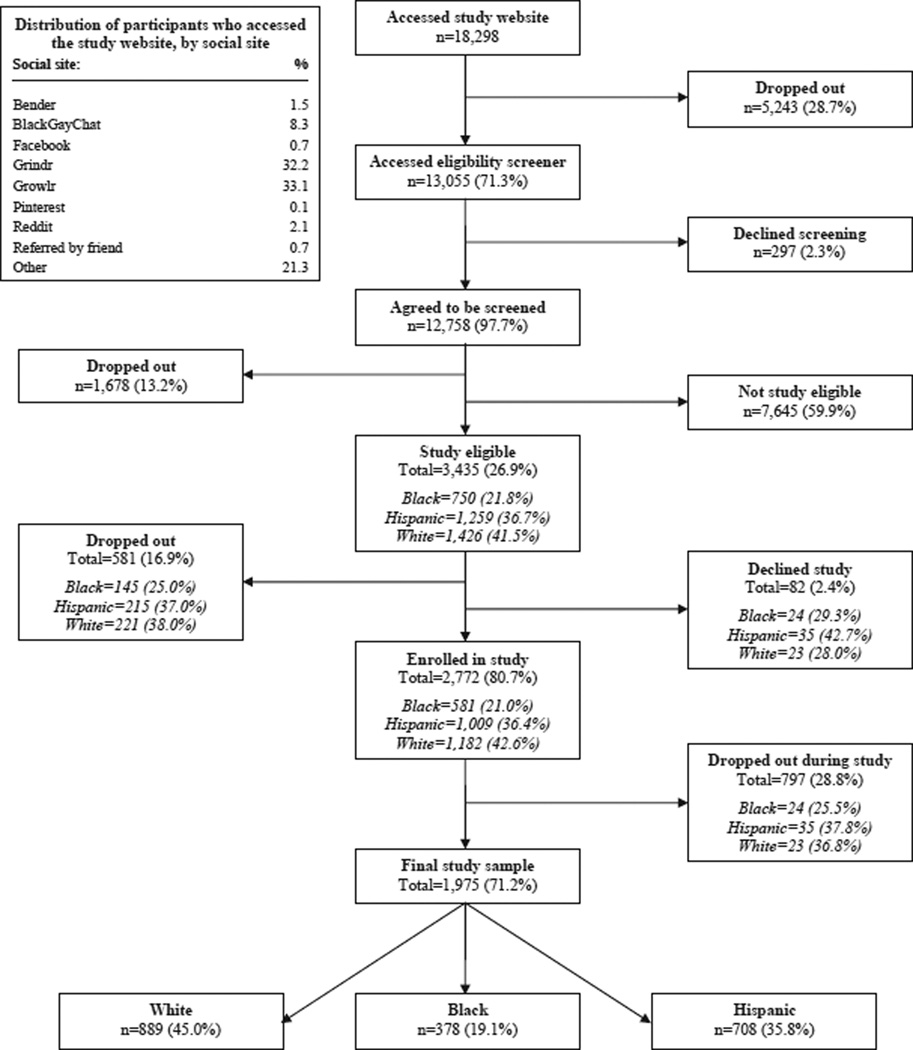
Of the 1975 YMSM participants, the median age was 22 years (IQR 20-23); 19% were black, 36% Hispanic, and 45% white; and 18% previously used an oral fluid rapid HIV self-test. Although views about oral fluid rapid HIV self-testing test were favorable, few intended to use the test. Aspects about the oral fluid rapid HIV self-test associated with an increased preference for using the test were its privacy features, that it motivated getting tested more often or as soon as possible, and that it conferred feelings of more control over one's sexual health. Preferences for the oral fluid rapid HIV self-test were lower when costs were considered, yet these YMSM were much more interested in fingerstick blood sampling than oral fluid sampling rapid HIV self-testing.
Despite the perceived advantages of the oral fluid rapid HIV self-test and favorable views about it by this population, prior use as well as future intention in using the test were low. Aspects about oral fluid rapid HIV self-testing identified as influential in this study might assist in interventions aimed to increase its use among this high HIV risk population as a means of encouraging regular HIV testing, identifying HIV-infected persons, and linking them to care. Although not yet commercially available in the United States, fingerstick rapid HIV self-testing might help motivate YMSM to be tested more than oral fluid rapid HIV self-testing.
我们评估了使用社交媒体的年轻黑人、西班牙裔和白人男男性行为者(YMSM)对口服液体快速艾滋病毒自我检测的偏好,并与其他现有的艾滋病毒检测选项进行比较。我们还确定了口服液体快速艾滋病毒自我检测的哪些方面可能会影响使用该检测而非其他艾滋病毒检测选项的偏好,并确定考虑艾滋病毒检测成本以及未来可能出现的指尖采血快速艾滋病毒自我检测是否会改变艾滋病毒检测偏好。
匿名在线调查。
从多个社交媒体平台招募的美国未感染艾滋病毒的YMSM完成了一项在线调查,内容涉及使用口服液体快速艾滋病毒自我检测的意愿、对其的看法以及偏好,以及其他五种现有的艾滋病毒检测选项。采用问卷前/后格式设计,参与者首先表明他们对六种艾滋病毒检测选项的偏好(前),然后回答关于他们艾滋病毒检测经历和看法的问题。尽管未向参与者透露,且在问题或回答的措辞中也不明显,但意见问题涉及口服液体快速艾滋病毒自我检测的各个方面(例如其可能的优点/缺点、长处/短处以及障碍/促进因素)。之后,再次询问参与者他们的艾滋病毒检测偏好(后)。完成这些问题后,要求参与者在考虑必须支付艾滋病毒检测费用以及指尖采血快速艾滋病毒自我检测是否为额外检测选项的情况下,重新表明他们的艾滋病毒检测偏好。通过对参与者特征进行调整的多变量回归模型,确定与使用该检测的偏好增加相关的口服液体快速艾滋病毒自我检测的各个方面(意见主题的后评估与前评估)。
在1975名YMSM参与者中,年龄中位数为22岁(四分位间距20 - 23岁);19%为黑人,36%为西班牙裔,45%为白人;18%之前使用过口服液体快速艾滋病毒自我检测。尽管对口服液体快速艾滋病毒自我检测的看法良好,但很少有人打算使用该检测。与使用该检测的偏好增加相关的口服液体快速艾滋病毒自我检测的方面包括其隐私特性、促使更频繁或尽快进行检测,以及让人感觉对自身性健康有更多掌控。考虑成本时,对口服液体快速艾滋病毒自我检测的偏好较低,但这些YMSM对指尖采血比口服液体采样快速艾滋病毒自我检测更感兴趣。
尽管口服液体快速艾滋病毒自我检测有明显优势且该人群对其看法良好,但之前的使用情况以及未来使用该检测的意愿都很低。本研究中确定的对口服液体快速艾滋病毒自我检测有影响的方面,可能有助于开展干预措施,以增加其在这一高艾滋病毒风险人群中的使用,作为鼓励定期艾滋病毒检测、识别艾滋病毒感染者并将他们与护理服务联系起来的一种手段。尽管在美国尚未商业化,但指尖采血快速艾滋病毒自我检测可能比口服液体快速艾滋病毒自我检测更能促使YMSM进行检测。
