Department of Neurosurgery, The Second Affiliated Hospital of Zhejiang University School of Medicine, Hangzhou, 310009, China.
Department of Basic Medicine Sciences, School of Medicine, Zhejiang University, Hangzhou, 310058, China.
Stem Cell Res Ther. 2018 Apr 13;9(1):106. doi: 10.1186/s13287-018-0832-2.
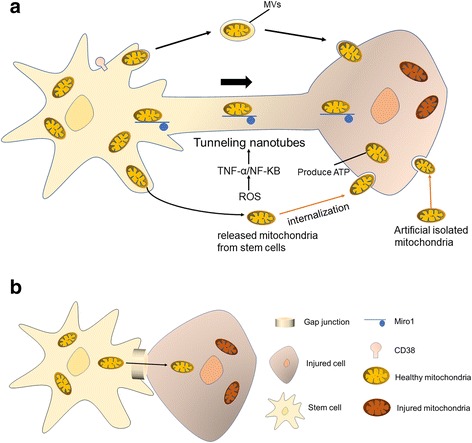
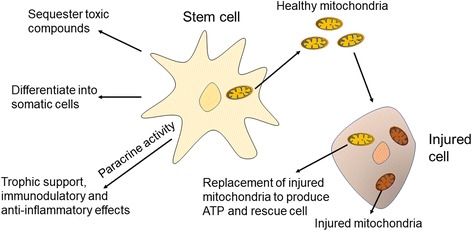
Damage of mitochondria in the initial period of tissue injury aggravates the severity of injury. Restoration of mitochondria dysfunction and mitochondrial-based therapeutics represent a potentially effective therapeutic strategy. Recently, mitochondrial transfer from stem cells has been demonstrated to play a significant role in rescuing injured tissues. The possible mechanisms of mitochondria released from stem cells, the pathways of mitochondria transfer between the donor stem cells and recipient cells, and the internalization of mitochondria into recipient cells are discussed. Moreover, a novel strategy for tissue injury based on the concept of stem cell-derived mitochondrial transplantation is pointed out, and the advantages and challenges are summarized.
在组织损伤的初始阶段,线粒体的损伤会加重损伤的严重程度。恢复线粒体功能障碍和基于线粒体的治疗方法代表了一种潜在有效的治疗策略。最近,已经证明干细胞中的线粒体转移在挽救受损组织方面发挥着重要作用。本文讨论了干细胞释放的线粒体的可能机制、供体细胞与受体细胞之间线粒体转移的途径以及线粒体进入受体细胞的内化。此外,还提出了一种基于干细胞源性线粒体移植概念的组织损伤新策略,并总结了其优缺点。