Department of Biochemistry and Molecular Biology, Theodor-Boveri-Institute, Biocenter, Am Hubland, 97074, Würzburg, Germany.
Comprehensive Cancer Center Mainfranken, Josef-Schneider Strasse 6, 97080, Würzburg, Germany.
Exp Mol Med. 2018 Apr 16;50(4):1-16. doi: 10.1038/s12276-018-0065-6.
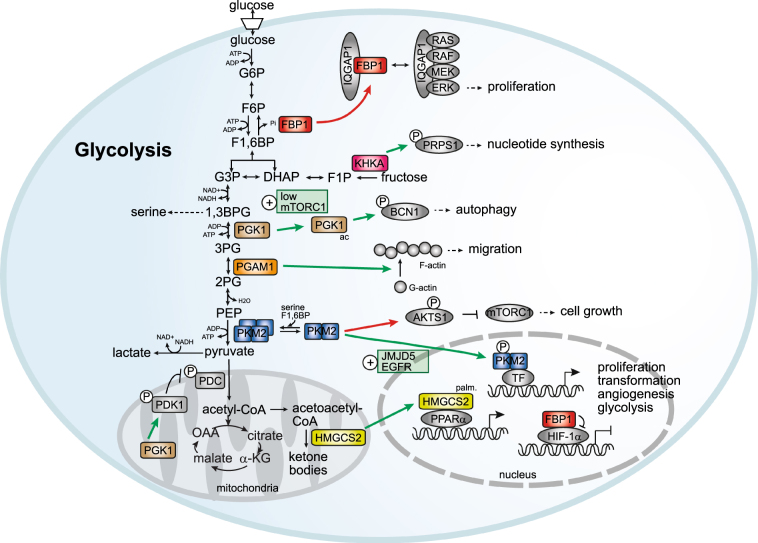
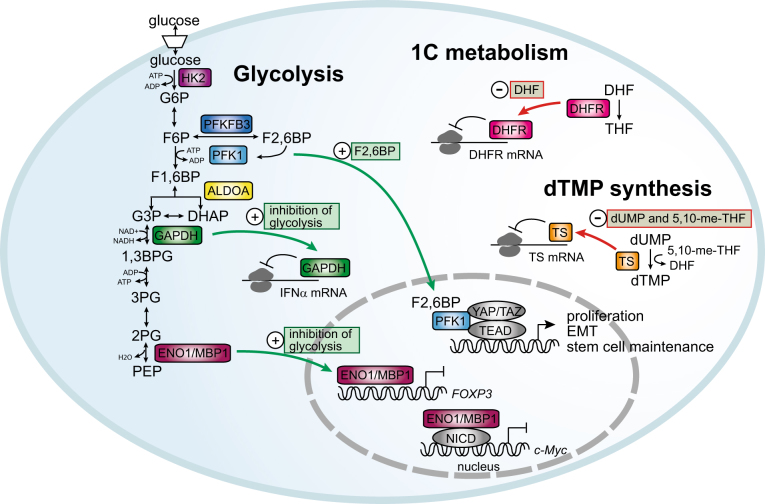
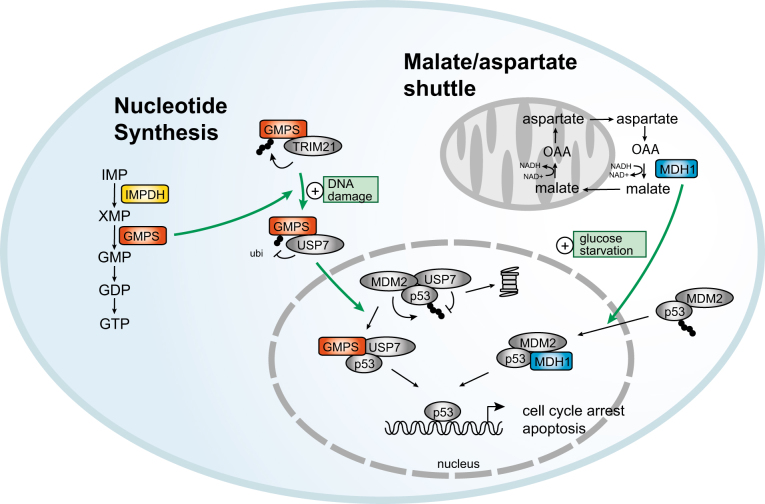
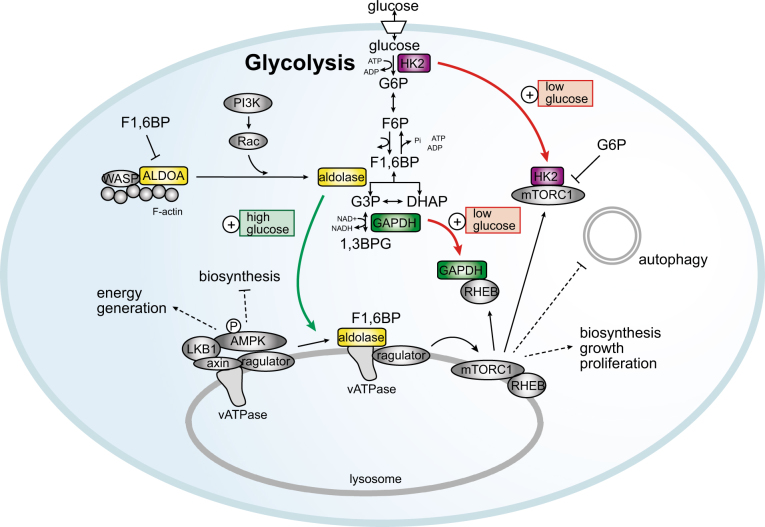
The metabolic rewiring that occurs during cell transformation is a hallmark of cancer. It is diverse in different cancers as it reflects different combinations of oncogenic drivers, tumor suppressors, and the microenvironment. Metabolic rewiring is essential to cancer as it enables uncontrolled proliferation and adaptation to the fluctuating availability of nutrients and oxygen caused by poor access to the vasculature due to tumor growth and a foreign microenvironment encountered during metastasis. Increasing evidence now indicates that the metabolic state in cancer cells also plays a causal role in tumor growth and metastasis, for example through the action of oncometabolites, which modulate cell signaling and epigenetic pathways to promote malignancy. In addition to altering the metabolic state in cancer cells, some multifunctional enzymes possess non-metabolic functions that also contribute to cell transformation. Some multifunctional enzymes that are highly expressed in cancer, such as pyruvate kinase M2 (PKM2), have non-canonical functions that are co-opted by oncogenic signaling to drive proliferation and inhibit apoptosis. Other multifunctional enzymes that are frequently downregulated in cancer, such as fructose-bisphosphatase 1 (FBP1), are tumor suppressors, directly opposing mitogenic signaling via their non-canonical functions. In some cases, the enzymatic and non-canonical roles of these enzymes are functionally linked, making the modulation of non-metabolic cellular processes dependent on the metabolic state of the cell.
细胞转化过程中发生的代谢重编程是癌症的一个标志。由于不同的致癌驱动基因、肿瘤抑制基因和微环境的不同组合,不同癌症中的代谢重编程是多样化的。代谢重编程对癌症至关重要,因为它使癌细胞能够不受控制地增殖,并适应由于肿瘤生长和转移过程中外来微环境导致的血管获取不良而导致的营养物质和氧气供应的波动。越来越多的证据表明,癌细胞的代谢状态也在肿瘤生长和转移中起因果作用,例如通过代谢物的作用,代谢物调节细胞信号和表观遗传途径,促进恶性肿瘤的发生。除了改变癌细胞的代谢状态外,一些多功能酶还具有非代谢功能,也有助于细胞转化。一些在癌症中高度表达的多功能酶,如丙酮酸激酶 M2(PKM2),具有非典型功能,被致癌信号转导所利用,从而促进增殖并抑制细胞凋亡。其他在癌症中经常下调的多功能酶,如果糖二磷酸酶 1(FBP1),是肿瘤抑制因子,通过其非典型功能直接拮抗有丝分裂信号。在某些情况下,这些酶的酶和非典型作用在功能上是相关的,使得非代谢细胞过程的调节依赖于细胞的代谢状态。