Caribou Program, fRI Research, Hinton, Alberta, Canada.
Arctos Ecological Consultants, Edmonton, Alberta, Canada.
PLoS One. 2018 Apr 16;13(4):e0195480. doi: 10.1371/journal.pone.0195480. eCollection 2018.
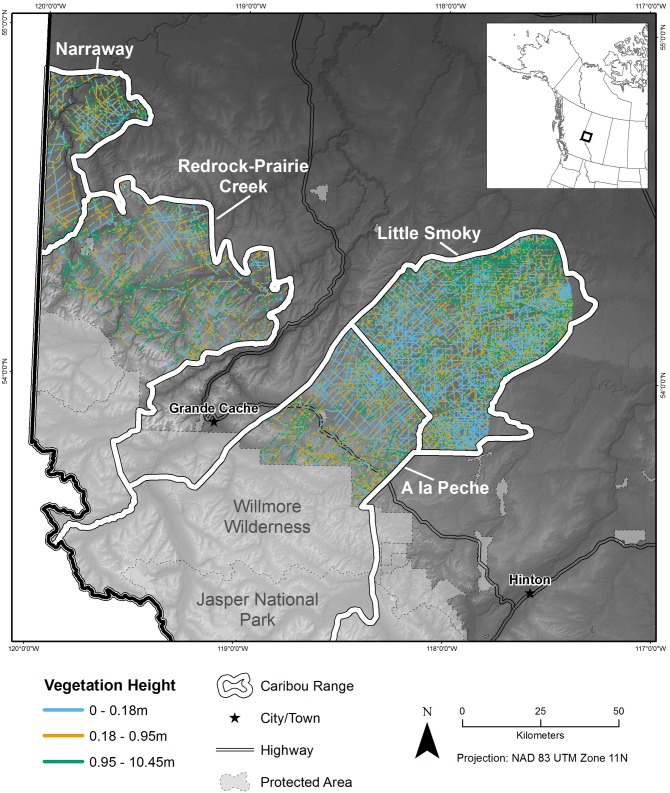
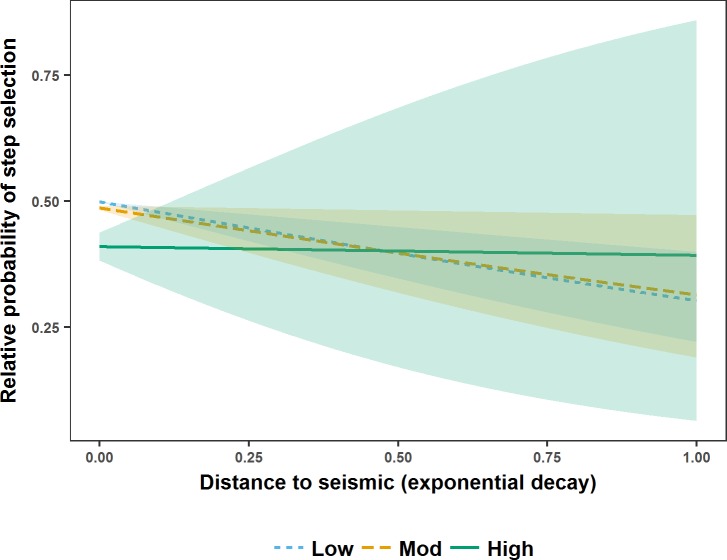
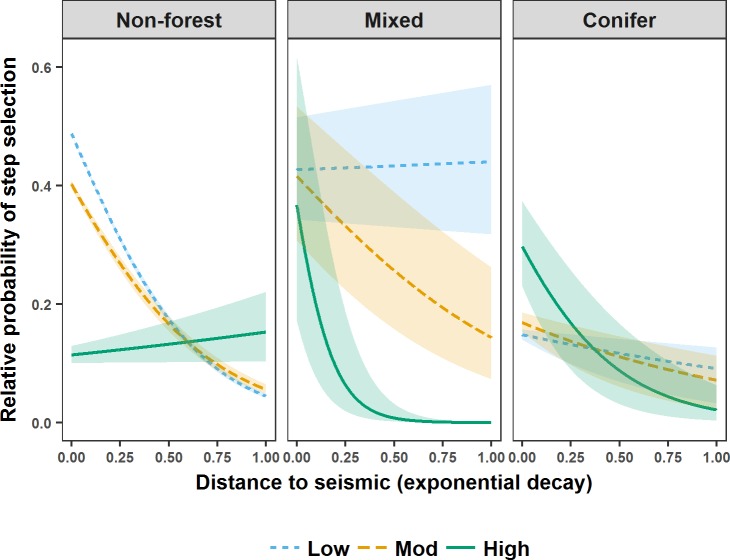
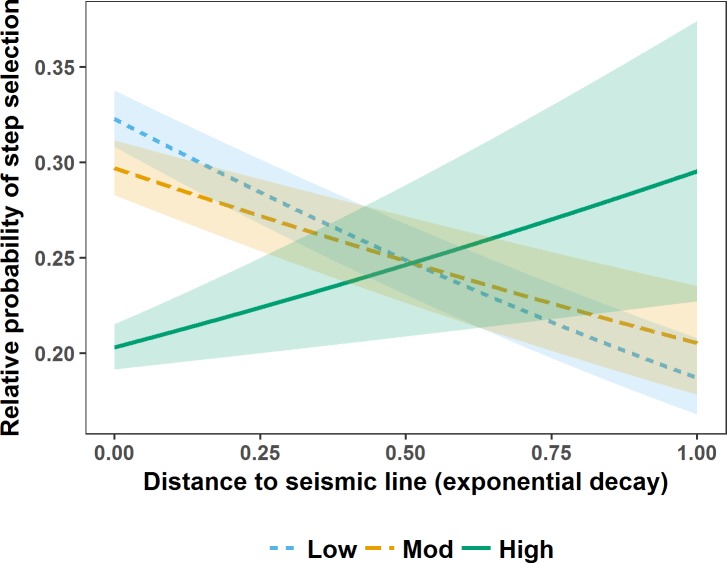
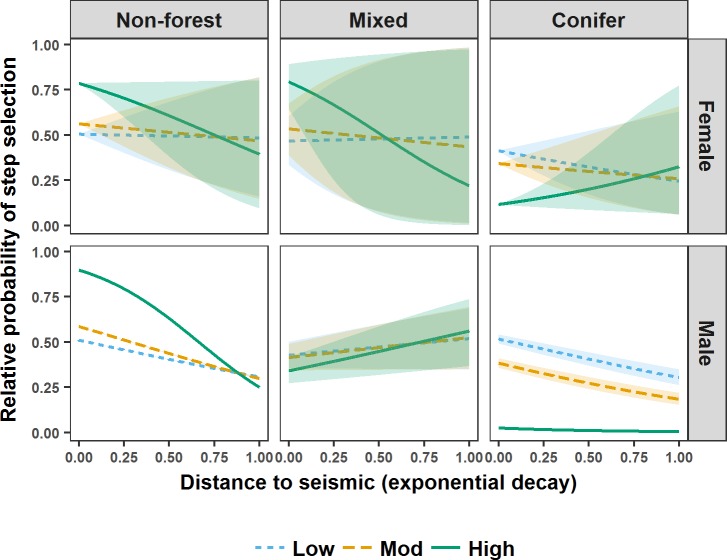
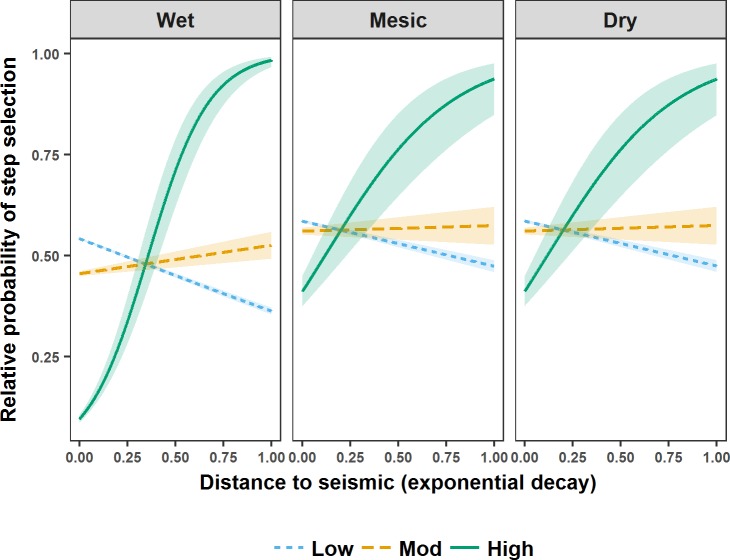
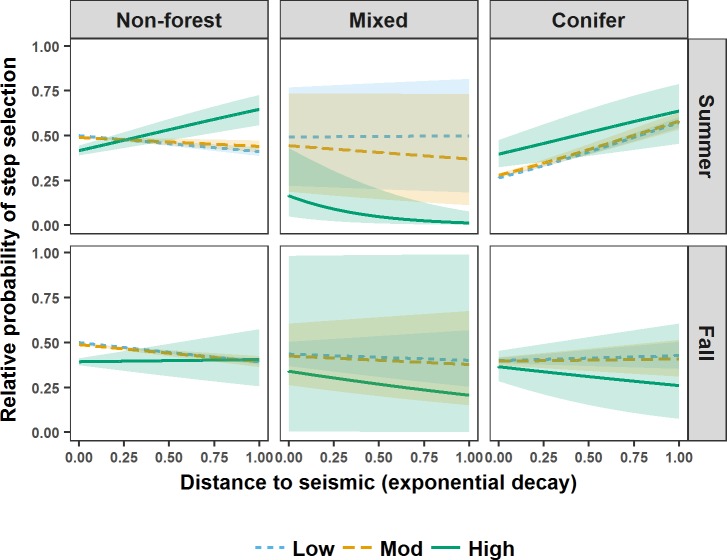
Across the boreal forest of Canada, habitat disturbance is the ultimate cause of caribou (Rangifer tarandus caribou) declines. Habitat restoration is a focus of caribou recovery efforts, with a goal to finding ways to reduce predator use of disturbances, and caribou-predator encounters. One of the most pervasive disturbances within caribou ranges in Alberta, Canada are seismic lines cleared for energy exploration. Seismic lines facilitate predator movement, and although vegetation on some seismic lines is regenerating, it remains unknown whether vegetation regrowth is sufficient to alter predator response. We used Light Detection and Ranging (LiDAR) data, and GPS locations, to understand how vegetation and other attributes of seismic lines influence movements of two predators, wolves (Canis lupus) and grizzly bears (Ursus arctos). During winter, wolves moved towards seismic lines regardless of vegetation height, while during spring wolves moved towards seismic lines with higher vegetation. During summer, wolves moved towards seismic lines with lower vegetation and also moved faster near seismic lines with vegetation <0.7 m. Seismic lines with lower vegetation height were preferred by grizzly bears during spring and summer, but there was no relationship between vegetation height and grizzly bear movement rates. These results suggest that wolves use seismic lines for travel during summer, but during winter wolf movements relative to seismic lines could be influenced by factors additional to movement efficiency; potentially enhanced access to areas frequented by ungulate prey. Grizzly bears may be using seismic lines for movement, but could also be using seismic lines as a source of vegetative food or ungulate prey. To reduce wolf movement rate, restoration could focus on seismic lines with vegetation <1 m in height. However our results revealed that seismic lines continue to influence wolf movement behaviour decades after they were built, and even at later stages of regeneration. Therefore it remains unknown at what stage of natural regeneration, if any, wolves cease to respond to seismic lines. To reduce wolf response to seismic lines, active restoration tactics like blocking seismic lines and tree planting, along with management of alternate prey, could be evaluated.
在加拿大的北方森林中,生境干扰是导致驯鹿(Rangifer tarandus caribou)数量减少的最终原因。生境恢复是驯鹿恢复工作的重点,目标是找到减少捕食者利用干扰和驯鹿-捕食者遭遇的方法。在加拿大阿尔伯塔省的驯鹿栖息地中,最普遍的干扰之一是为能源勘探而清理的地震线。地震线促进了捕食者的移动,尽管一些地震线上的植被正在再生,但仍不清楚植被的再生是否足以改变捕食者的反应。我们使用激光雷达 (LiDAR) 数据和 GPS 位置来了解地震线的植被和其他属性如何影响两种捕食者——狼(Canis lupus)和灰熊(Ursus arctos)的运动。在冬季,无论植被高度如何,狼都朝着地震线移动,而在春季,狼则朝着植被较高的地震线移动。在夏季,狼朝着植被较低的地震线移动,并且在植被<0.7 米的地震线附近移动速度也更快。在春季和夏季,灰熊更喜欢植被高度较低的地震线,但植被高度与灰熊的移动速度之间没有关系。这些结果表明,狼在夏季利用地震线进行旅行,但在冬季,狼相对于地震线的移动可能受到除运动效率以外的因素的影响;可能增强了进入有蹄类猎物出没地区的机会。灰熊可能正在利用地震线进行移动,但也可能将地震线用作植被食物或有蹄类猎物的来源。为了降低狼的移动速度,恢复可以集中在植被高度<1 米的地震线上。然而,我们的结果表明,即使在再生的后期阶段,地震线仍会影响狼的运动行为,而且已经过去了几十年。因此,仍然不清楚狼何时会停止对地震线的反应,如果有的话。为了减少狼对地震线的反应,可以评估主动恢复策略,如封锁地震线和植树造林,以及管理替代猎物。