Ramsøy Thomas Z, Skov Martin, Christensen Maiken K, Stahlhut Carsten
Neurons Inc., Holbæk, Denmark.
Singularity University, Sunnyvale, CA, United States.
Front Neurosci. 2018 Mar 13;12:138. doi: 10.3389/fnins.2018.00138. eCollection 2018.
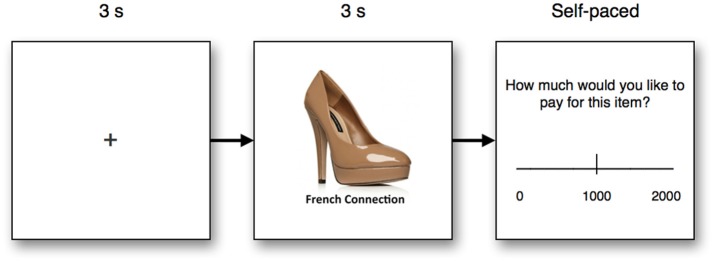
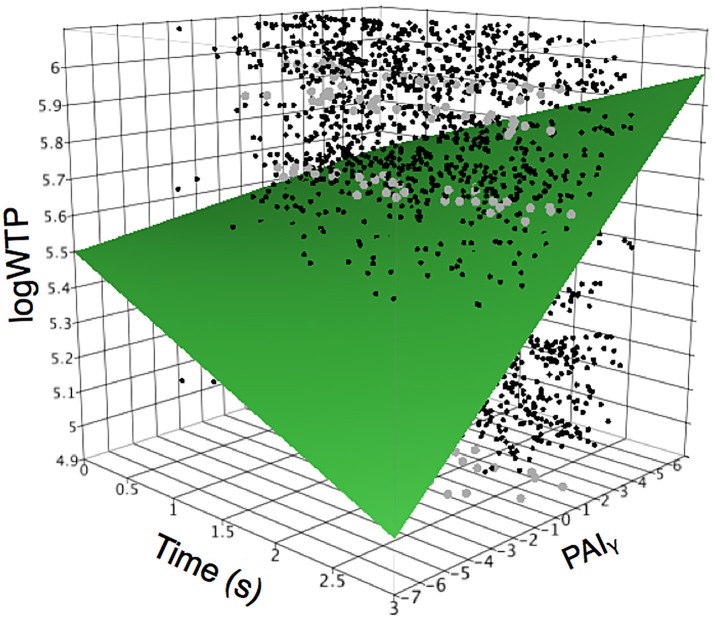
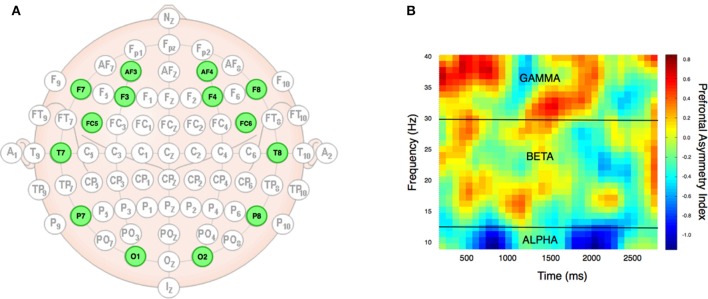
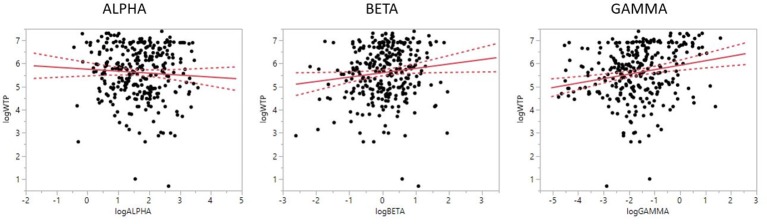
Consumers frequently make decisions about how much they are willing to pay (WTP) for specific products and services, but little is known about the neural mechanisms underlying such calculations. In this study, we were interested in testing whether specific brain activation-the asymmetry in engagement of the prefrontal cortex-would be related to consumer choice. Subjects saw products and subsequently decided how much they were willing to pay for each product, while undergoing neuroimaging using electroencephalography. Our results demonstrate that prefrontal asymmetry in the gamma frequency band, and a trend in the beta frequency band that was recorded during product viewing was significantly related to subsequent WTP responses. Frontal asymmetry in the alpha band was not related to WTP decisions. Besides suggesting separate neuropsychological mechanisms of consumer choice, we find that one specific measure-the prefrontal gamma asymmetry-was most strongly related to WTP responses, and was most coupled to the actual decision phase. These findings are discussed in light of the psychology of WTP calculations, and in relation to the recent emergence of consumer neuroscience and neuromarketing.
消费者经常会做出关于他们愿意为特定产品和服务支付多少钱(WTP)的决定,但对于此类计算背后的神经机制却知之甚少。在本研究中,我们感兴趣的是测试特定的大脑激活——前额叶皮层参与的不对称性——是否与消费者选择有关。受试者观看产品,随后决定他们愿意为每个产品支付多少钱,同时使用脑电图进行神经成像。我们的结果表明,在产品观看期间记录到的伽马频段的前额叶不对称性以及贝塔频段的一种趋势与随后的WTP反应显著相关。阿尔法频段的前额叶不对称性与WTP决定无关。除了表明消费者选择的不同神经心理学机制外,我们发现一种特定的测量方法——前额叶伽马不对称性——与WTP反应最密切相关,并且与实际决策阶段联系最紧密。我们根据WTP计算的心理学以及与最近出现的消费者神经科学和神经营销的关系来讨论这些发现。