Li Yongqin, Yao Mengchao, Zhou Qiulian, Cheng Yan, Che Lin, Xu Jiahong, Xiao Junjie, Shen Zhongming, Bei Yihua
Cardiac Regeneration and Ageing Lab, School of Life Science, Shanghai University, Shanghai, China.
Department of Psychiatry, Tongji Hospital of Tongji University, Shanghai, China.
Front Physiol. 2018 Mar 26;9:282. doi: 10.3389/fphys.2018.00282. eCollection 2018.
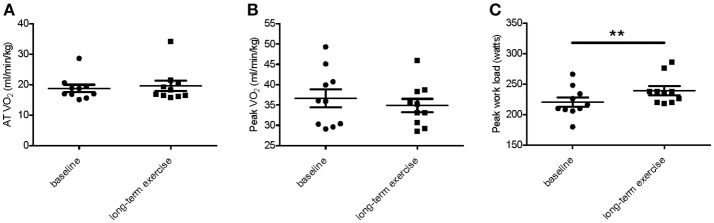
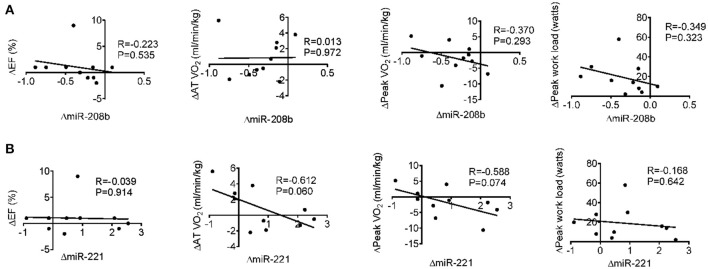
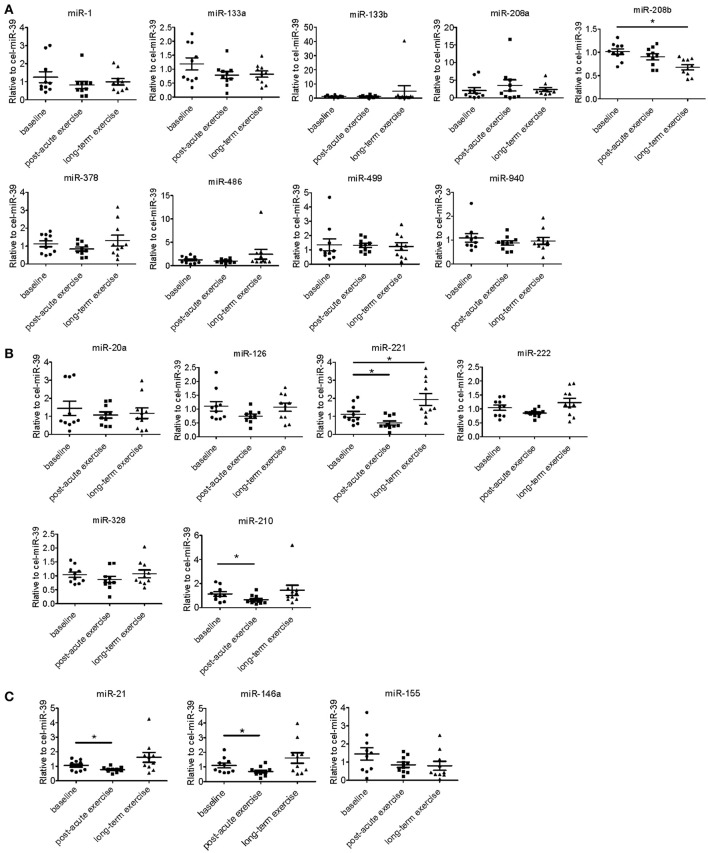
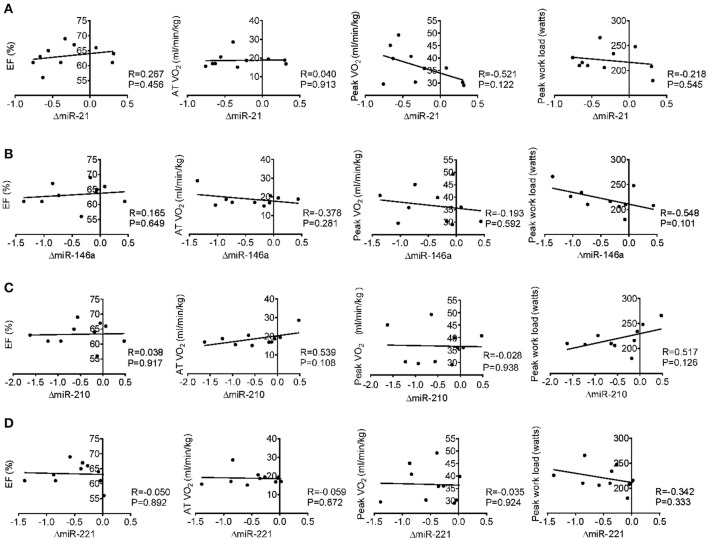
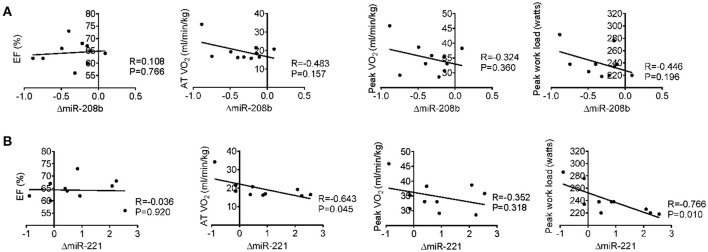
Emerging evidence indicates the beneficial effects of physical exercise on human health, which depends on the intensity, training time, exercise type, environmental factors, and the personal health status. Conventional biomarkers provide limited insight into the exercise-induced adaptive processes. Circulating microRNAs (miRNAs, miRs) are dynamically regulated in response to acute exhaustive exercise and sustained rowing, running and cycling exercises. However, circulating miRNAs in response to long-term basketball exercise remains unknown. Here, we enrolled 10 basketball athletes who will attend a basketball season for 3 months. Specifically, circulating miRNAs which were involved in angiogenesis, inflammation and enriched in muscle and/or cardiac tissues were analyzed at baseline, immediately following acute exhaustive exercise and after 3-month basketball matches in competitive male basketball athletes. Circulating miR-208b was decreased and miR-221 was increased after 3-month basketball exercise, while circulating miR-221, miR-21, miR-146a, and miR-210 were reduced at post-acute exercise. The change of miR-146a (baseline vs. post-acute exercise) showed linear correlations with baseline levels of cardiac marker CKMB and the changes of inflammation marker Hs-CRP (baseline vs. post-acute exercise). Besides, linear correlation was observed between miR-208b changes (baseline vs. after long-term exercise) and AT VO (baseline). The changes of miR-221 (baseline vs. after long-term exercise) were significantly correlated with AT VO, peak work load and CK (after 3-month basketball matches). Although further studies are needed, present findings set the stage for defining circulating miRNAs as biomarkers and suggesting their physiological roles in long-term exercise training induced cardiovascular adaptation.
新出现的证据表明体育锻炼对人类健康有益,这取决于锻炼强度、训练时间、运动类型、环境因素以及个人健康状况。传统生物标志物对运动诱导的适应性过程的了解有限。循环微RNA(miRNA,miRs)在急性力竭运动以及持续的划船、跑步和骑自行车运动后会发生动态调节。然而,长期篮球运动后循环miRNA的情况尚不清楚。在此,我们招募了10名篮球运动员,他们将参加为期3个月的篮球赛季。具体而言,对参与血管生成、炎症且在肌肉和/或心脏组织中富集的循环miRNA,在男性竞技篮球运动员的基线、急性力竭运动后即刻以及3个月篮球比赛后进行了分析。3个月篮球运动后循环miR-208b降低,miR-221升高,而急性运动后循环miR-221、miR-21、miR-146a和miR-210降低。miR-146a的变化(基线与急性运动后)与心脏标志物CKMB的基线水平以及炎症标志物Hs-CRP的变化(基线与急性运动后)呈线性相关。此外,miR-208b的变化(基线与长期运动后)与AT VO(基线)之间存在线性相关性。miR-221的变化(基线与长期运动后)与AT VO、峰值工作量以及3个月篮球比赛后的CK显著相关。尽管还需要进一步研究,但目前的研究结果为将循环miRNA定义为生物标志物以及提示它们在长期运动训练诱导的心血管适应中的生理作用奠定了基础。