Division of Pulmonary, Allergy and Critical Care Medicine, Department of Internal Medicine, College of Medicine, Seoul St. Mary's Hospital, The Catholic University of Korea, Seoul, Korea.
Korean J Intern Med. 2018 Nov;33(6):1210-1223. doi: 10.3904/kjim.2017.207. Epub 2018 Apr 19.
BACKGROUND/AIMS: The co-occurrence of obesity aggravates asthma symptoms. Diet-induced obesity increases helper T cell (TH) 17 cell differentiation in adipose tissue and the spleen. The 3-hydroxy-3-methylglutaryl-coenzyme A reductase inhibitor pravastatin can potentially be used to treat asthma in obese patients by inhibiting interleukin 17 (IL-17) expression. This study investigated the combined effects of pravastatin and anti-IL-17 antibody treatment on allergic inflammation in a mouse model of obesity-related asthma.
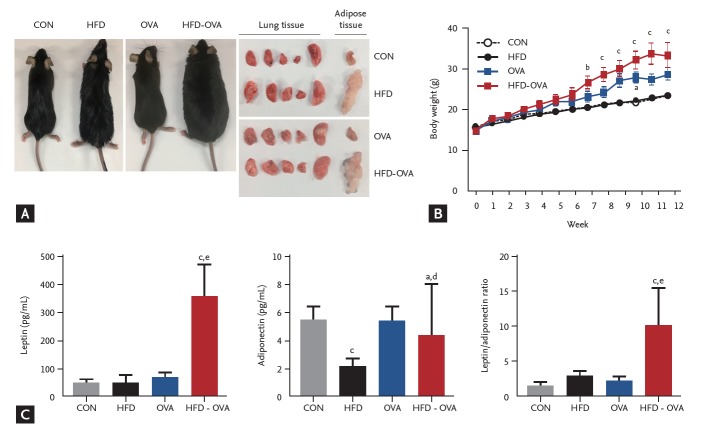
High-fat diet (HFD)-induced obesity was induced in C57BL/6 mice with or without ovalbumin (OVA) sensitization and challenge. Mice were administered the anti-IL-17 antibody, pravastatin, or both, and pathophysiological and immunological responses were analyzed.
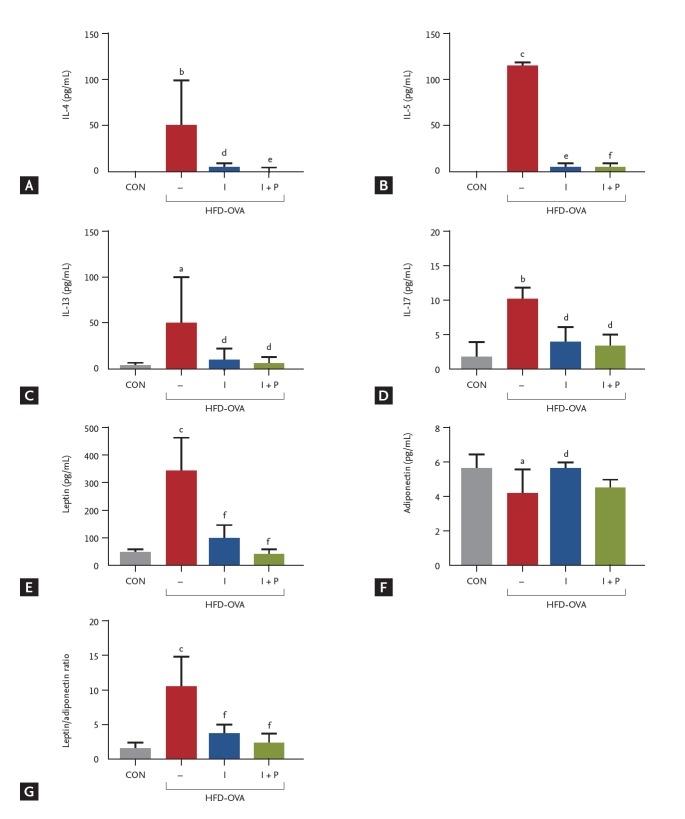
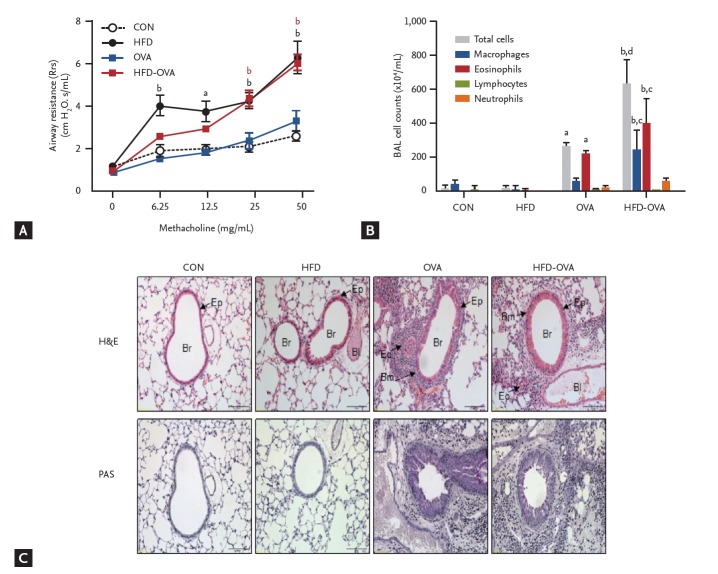
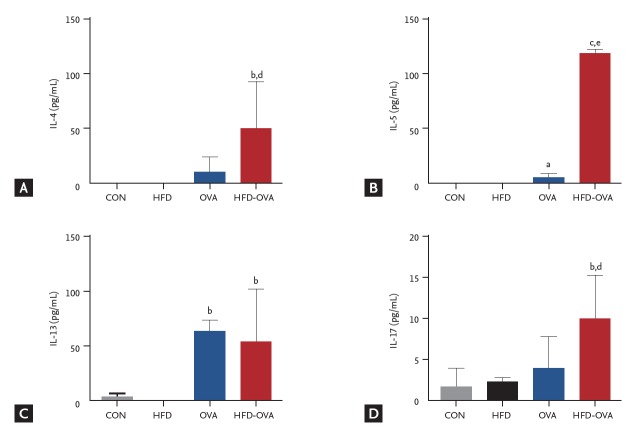
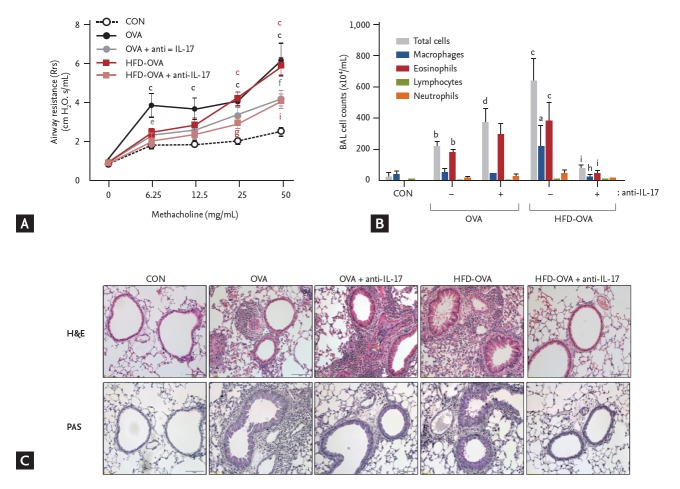
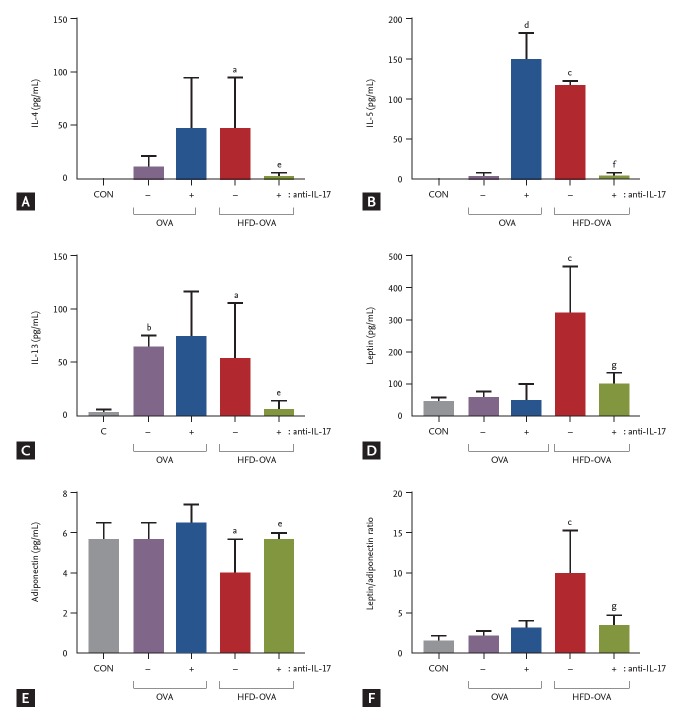
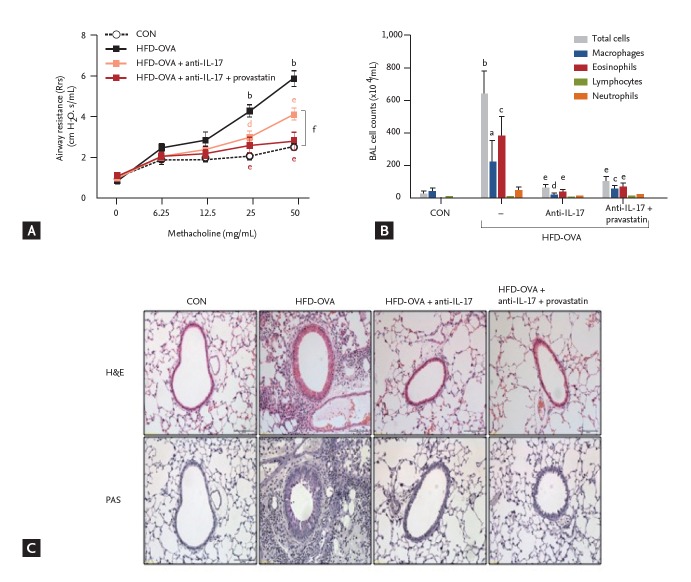
HFD exacerbated allergic airway inflammation in the bronchoalveolar lavage fluid of HFD-OVA mice as compared to OVA mice. Blockading of the IL-17 in the HFD-OVA mice decreased airway hyper-responsiveness (AHR) and airway inflammation compared to the HFD-OVA mice. Moreover, the administration of the anti-IL-17 antibody decreased the leptin/adiponectin ratio in the HFD-OVA but not the OVA mice. Co-administration of pravastatin and anti-IL-17 inhibited airway inflammation and AHR, decreased goblet cell numbers, and increased adipokine levels in obese asthmatic mice.
These results suggest that the IL-17-leptin/adiponectin axis plays a key role in airway inflammation in obesity-related asthma. Our findings suggest a potential new treatment for IL-17 as a target that may benefit obesity-related asthma patients who respond poorly to typical asthma medications.
背景/目的:肥胖的同时发生会加重哮喘症状。饮食诱导的肥胖会增加脂肪组织和脾脏中辅助性 T 细胞(TH)17 细胞的分化。3-羟基-3-甲基戊二酰辅酶 A 还原酶抑制剂普伐他汀通过抑制白细胞介素 17(IL-17)的表达,有可能用于治疗肥胖患者的哮喘。本研究调查了普伐他汀和抗 IL-17 抗体联合治疗对肥胖相关哮喘小鼠模型中过敏炎症的影响。
用高脂肪饮食(HFD)诱导 C57BL/6 小鼠肥胖,同时或不进行卵清蛋白(OVA)致敏和激发。给小鼠施用抗 IL-17 抗体、普伐他汀或两者,并分析病理生理和免疫反应。
与 OVA 组相比,HFD 加剧了 HFD-OVA 小鼠的支气管肺泡灌洗液中的过敏性气道炎症。阻断 HFD-OVA 小鼠中的 IL-17 可降低气道高反应性(AHR)和气道炎症,与 HFD-OVA 组相比。此外,抗 IL-17 抗体的给药降低了 HFD-OVA 小鼠而非 OVA 小鼠的瘦素/脂联素比值。普伐他汀和抗 IL-17 的联合给药抑制了肥胖哮喘小鼠的气道炎症和 AHR,减少了杯状细胞数量,并增加了脂肪因子水平。
这些结果表明,IL-17-瘦素/脂联素轴在肥胖相关哮喘的气道炎症中起关键作用。我们的研究结果表明,IL-17 作为一个潜在的新治疗靶点可能有益于对典型哮喘药物反应不佳的肥胖相关哮喘患者。