Center for Infection and Immunity, Columbia University, New York, New York, USA.
Division of Healthcare Quality Promotion, Centers for Disease Control and Prevention, Atlanta, Georgia, USA.
mBio. 2018 Apr 17;9(2):e00624-18. doi: 10.1128/mBio.00624-18.
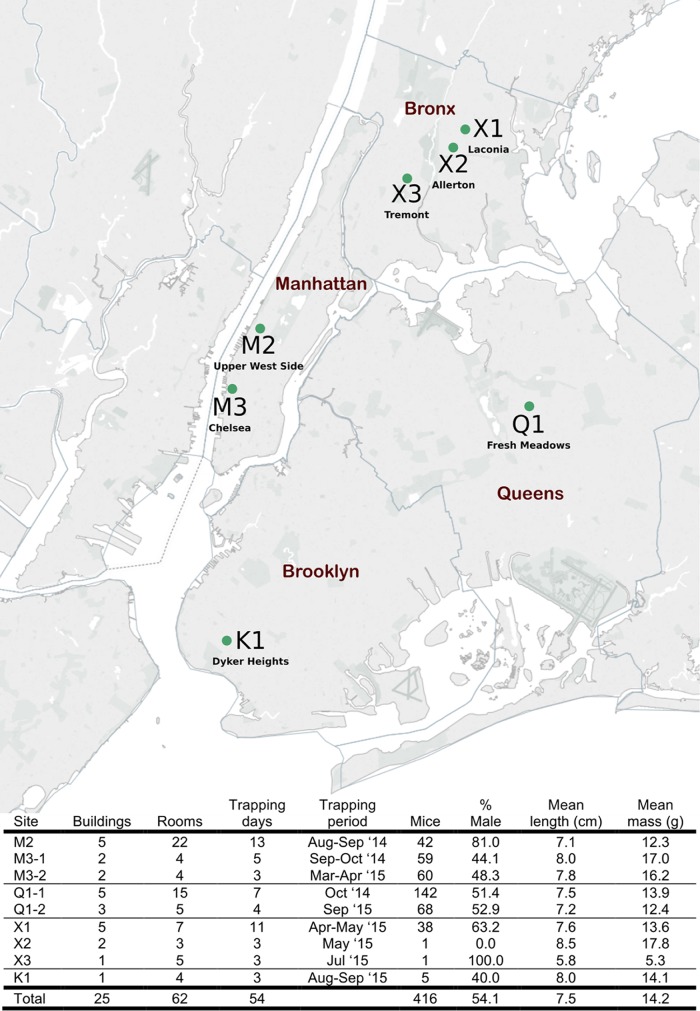
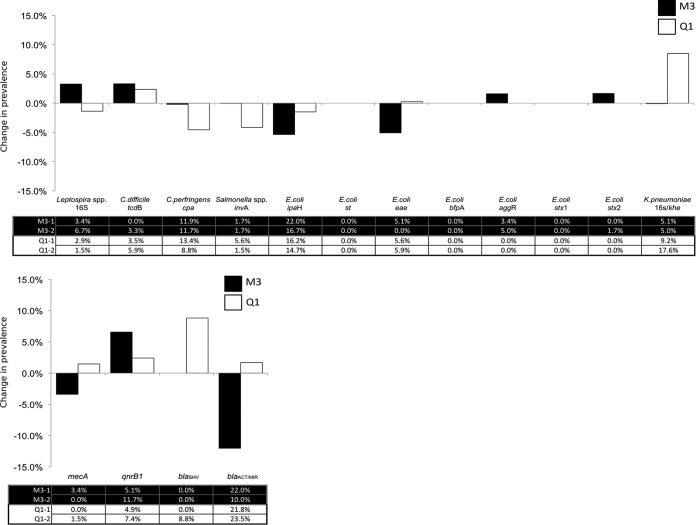
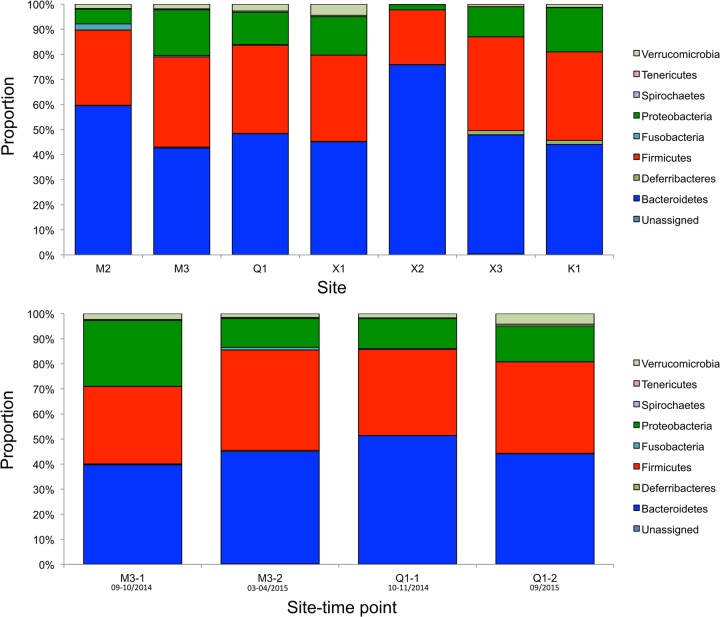
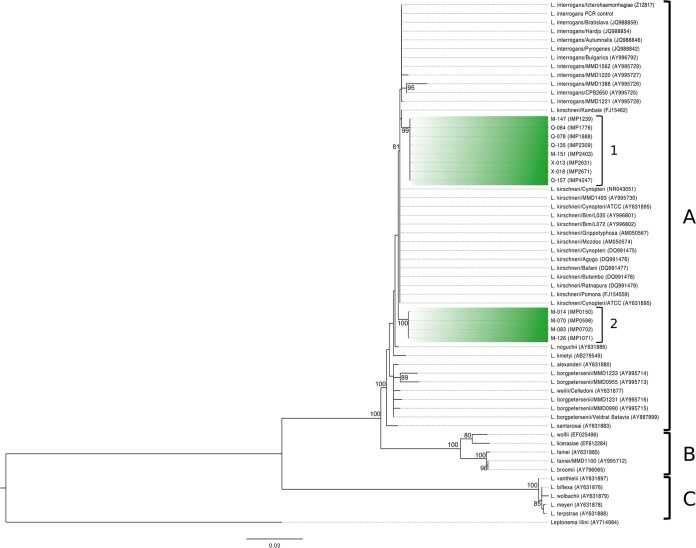
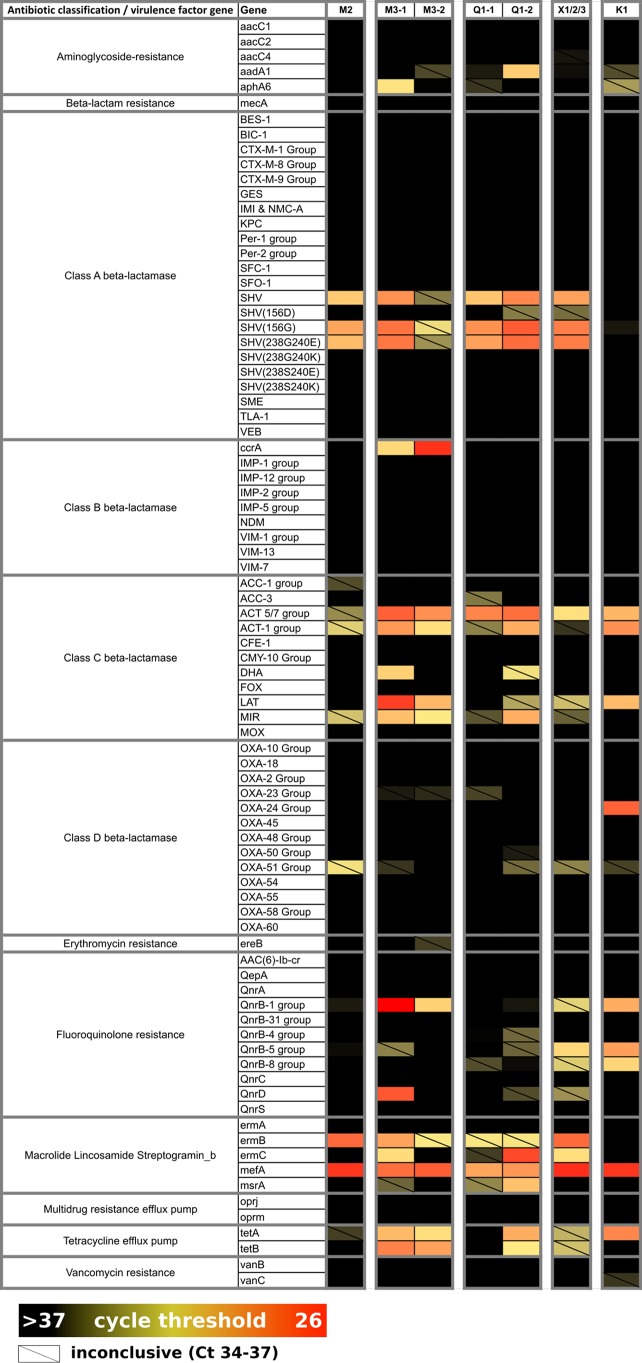
House mice () thrive in large urban centers worldwide. Nonetheless, little is known about the role that they may play in contributing to environmental contamination with potentially pathogenic bacteria. Here, we describe the fecal microbiome of house mice with emphasis on detection of pathogenic bacteria and antimicrobial resistance genes by molecular methods. Four hundred sixteen mice were collected from predominantly residential buildings in seven sites across New York City over a period of 13 months. 16S rRNA sequencing identified as dominant and revealed high levels of A targeted PCR screen of 11 bacteria, as indicated by 16S rRNA analyses, found that mice are carriers of several gastrointestinal disease-causing agents, including , , , and diarrheagenic Furthermore, genes mediating antimicrobial resistance to fluoroquinolones () and β-lactam drugs ( and ) were widely distributed. Culture and molecular strain typing of revealed that mice harbor ribotypes associated with human disease, and screening of kidney samples demonstrated genetic evidence of pathogenic species. In concert, these findings support the need for further research into the role of house mice as potential reservoirs for human pathogens and antimicrobial resistance in the built environment. Mice are commensal pests often found in close proximity to humans, especially in urban centers. We surveyed mice from seven sites across New York City and found multiple pathogenic bacteria associated with febrile and gastrointestinal disease as well as an array of antimicrobial resistance genes.
家鼠在世界范围内的大型城市中心大量繁殖。尽管如此,人们对它们在促成潜在致病细菌对环境的污染方面可能发挥的作用知之甚少。在这里,我们通过分子方法描述了家鼠的粪便微生物组,重点检测了致病菌和抗菌药物耐药基因。在 13 个月的时间里,我们从纽约市 7 个地点的主要住宅建筑中收集了 416 只老鼠。16S rRNA 测序鉴定为优势种,显示高水平的靶向 11 种细菌的 PCR 筛选,如 16S rRNA 分析所示,发现老鼠是几种胃肠道疾病病原体的携带者,包括 、 、 、和 此外,介导对氟喹诺酮()和β-内酰胺类药物(和)的抗菌药物耐药的基因广泛分布。对 进行的培养和分子菌株分型表明,老鼠携带与人类疾病相关的核糖体型,对肾脏样本的筛选显示出致病性 种的遗传证据。这些发现共同支持需要进一步研究家鼠作为人类病原体和建筑环境中抗菌药物耐药性的潜在储存库的作用。老鼠是常见的共生害虫,常与人密切接触,尤其是在城市中心。我们调查了纽约市 7 个地点的老鼠,发现了多种与发热和胃肠道疾病相关的致病菌,以及一系列抗菌药物耐药基因。