Quercia Angelica, Zappasodi Filippo, Committeri Giorgia, Ferrara Michele
Department of Neuroscience, Imaging and Clinical Sciences, G. d'Annunzio University of Chieti-Pescara, Chieti, Italy.
Institute for Advanced Biomedical Technologies (ITAB), G. d'Annunzio University of Chieti-Pescara, Chieti, Italy.
Front Hum Neurosci. 2018 Apr 3;12:122. doi: 10.3389/fnhum.2018.00122. eCollection 2018.
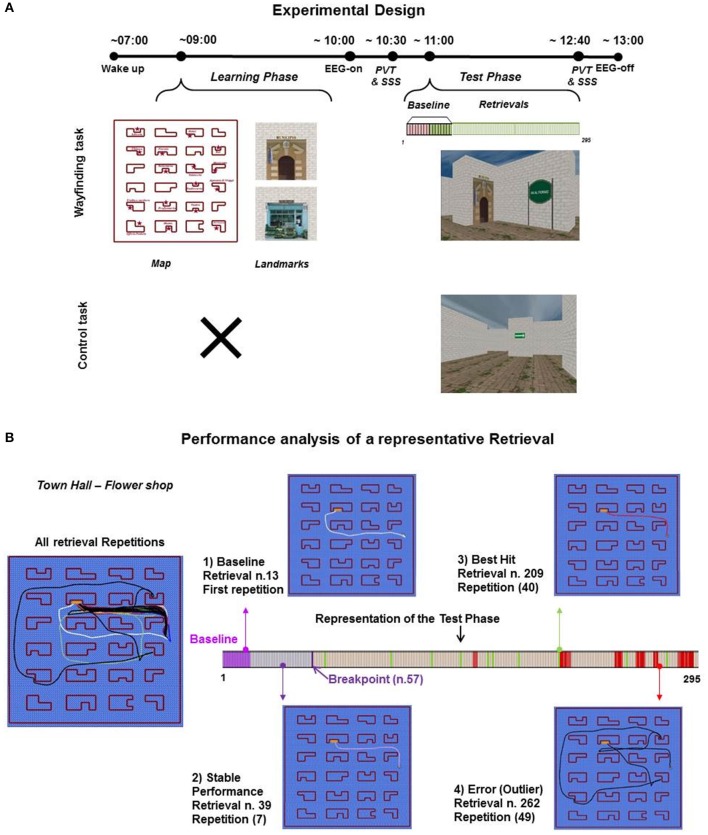
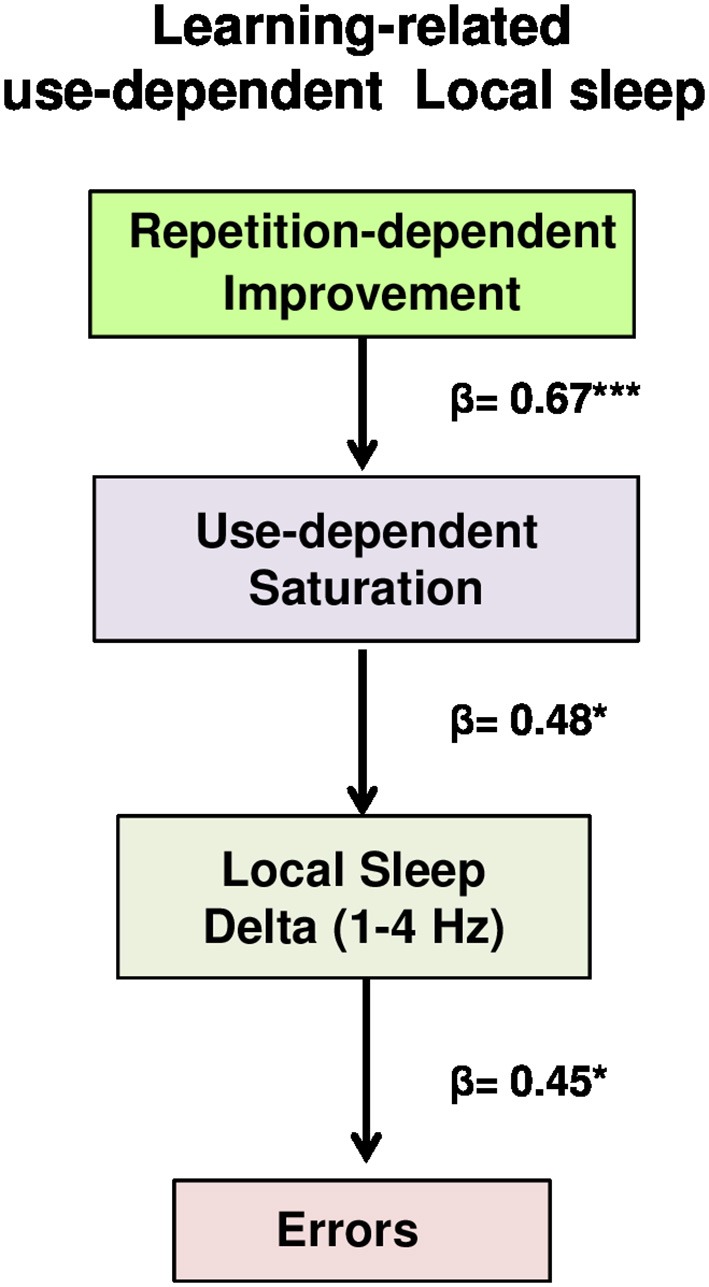
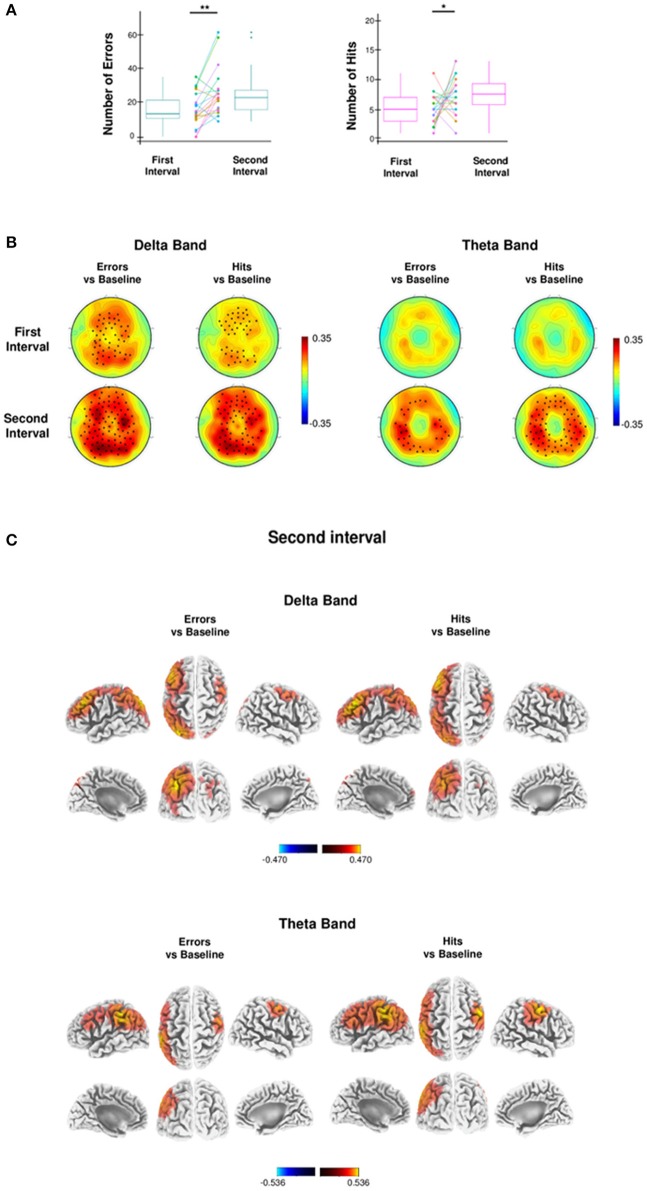
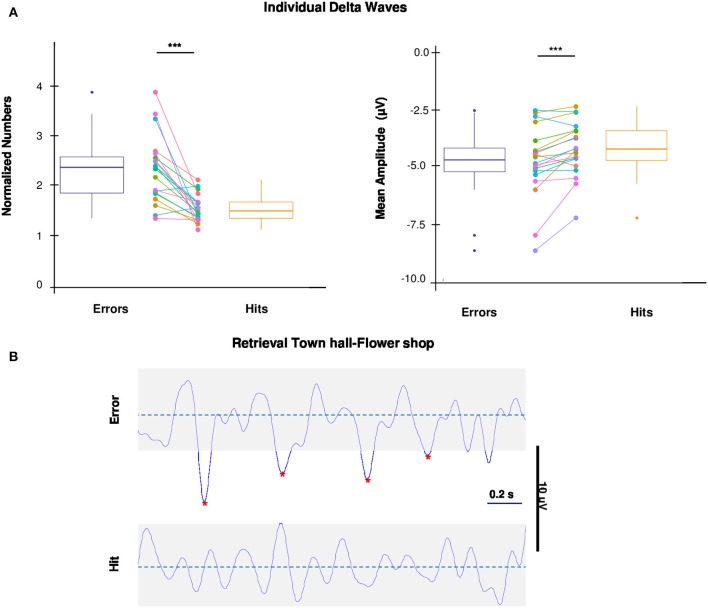
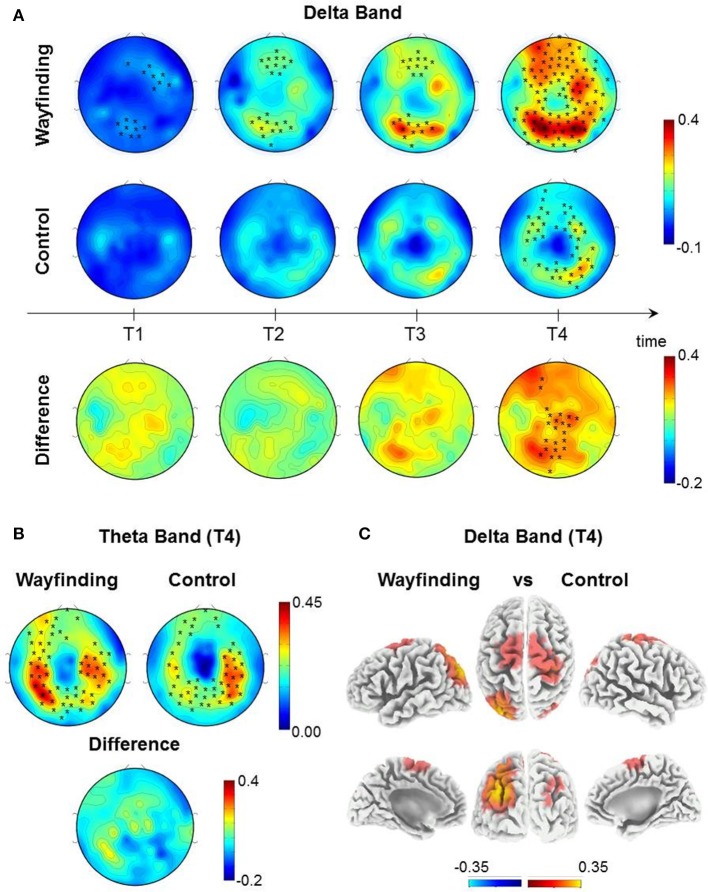
Sleep and wakefulness are no longer to be considered as discrete states. During wakefulness brain regions can enter a sleep-like state (off-periods) in response to a prolonged period of activity (local use-dependent sleep). Similarly, during nonREM sleep the slow-wave activity, the hallmark of sleep plasticity, increases locally in brain regions previously involved in a learning task. Recent studies have demonstrated that behavioral performance may be impaired by off-periods in wake in task-related regions. However, the relation between off-periods in wake, related performance errors and learning is still untested in humans. Here, by employing high density electroencephalographic (hd-EEG) recordings, we investigated local use-dependent sleep in wake, asking participants to repeat continuously two intensive spatial navigation tasks. Critically, one task relied on previous map learning (Wayfinding) while the other did not (Control). Behaviorally awake participants, who were not sleep deprived, showed progressive increments of delta activity only during the learning-based spatial navigation task. As shown by source localization, delta activity was mainly localized in the left parietal and bilateral frontal cortices, all regions known to be engaged in spatial navigation tasks. Moreover, during the Wayfinding task, these increments of delta power were specifically associated with errors, whose probability of occurrence was significantly higher compared to the Control task. Unlike the Wayfinding task, during the Control task neither delta activity nor the number of errors increased progressively. Furthermore, during the Wayfinding task, both the number and the amplitude of individual delta waves, as indexes of neuronal silence in wake (off-periods), were significantly higher during errors than hits. Finally, a path analysis linked the use of the spatial navigation circuits undergone to learning plasticity to off periods in wake. In conclusion, local sleep regulation in wakefulness, associated with performance failures, could be functionally linked to learning-related cortical plasticity.
睡眠和清醒不再被视为离散状态。在清醒状态下,大脑区域会因长时间的活动(局部使用依赖性睡眠)而进入类似睡眠的状态(非活动期)。同样,在非快速眼动睡眠期间,睡眠可塑性的标志——慢波活动,会在先前参与学习任务的大脑区域局部增加。最近的研究表明,任务相关区域在清醒时的非活动期可能会损害行为表现。然而,清醒时的非活动期、相关的表现错误与学习之间的关系在人类中仍未得到检验。在这里,我们通过使用高密度脑电图(hd - EEG)记录,研究了清醒时的局部使用依赖性睡眠,要求参与者连续重复两项密集的空间导航任务。关键的是,一项任务依赖于先前的地图学习(寻路),而另一项任务则不依赖(对照)。行为上清醒且未被剥夺睡眠的参与者,仅在基于学习的空间导航任务中表现出δ波活动的逐渐增加。源定位显示,δ波活动主要位于左顶叶和双侧额叶皮质,这些区域都已知参与空间导航任务。此外,在寻路任务中,这些δ波功率的增加与错误特别相关,与对照任务相比,错误发生的概率显著更高。与寻路任务不同,在对照任务中,δ波活动和错误数量均未逐渐增加。此外,在寻路任务中,作为清醒时神经元沉默指标(非活动期)的单个δ波的数量和幅度,在错误期间均显著高于命中期间。最后,路径分析将经历学习可塑性的空间导航回路的使用与清醒时的非活动期联系起来。总之,与表现失败相关的清醒时局部睡眠调节可能在功能上与学习相关的皮质可塑性相关联。