Department of Urology, Minimally Invasive Surgery Center, The First Affiliated Hospital of Guangzhou Medical University, Guangdong Key Laboratory of Urology, Guangzhou, Guangdong, PR China.
The State Key Lab of Respiratory Disease, The Institute for Chemical Carcinogenesis, Guangzhou Medical University, Guangzhou, Guangdong, PR China.
PLoS One. 2018 Apr 18;13(4):e0196012. doi: 10.1371/journal.pone.0196012. eCollection 2018.
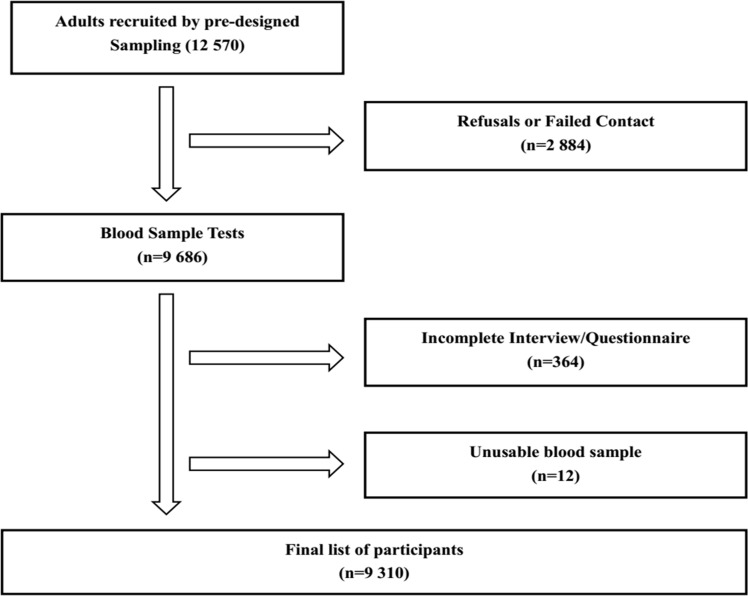
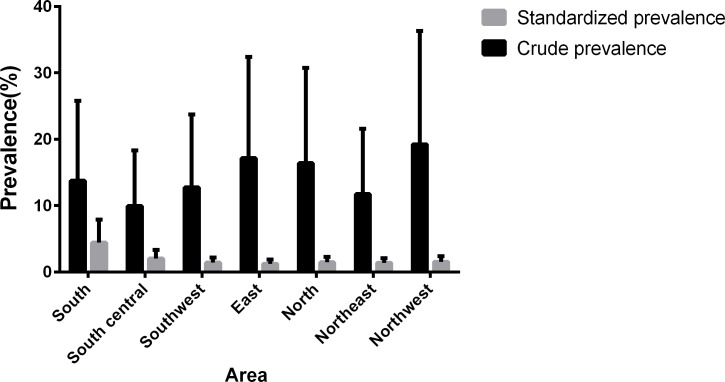
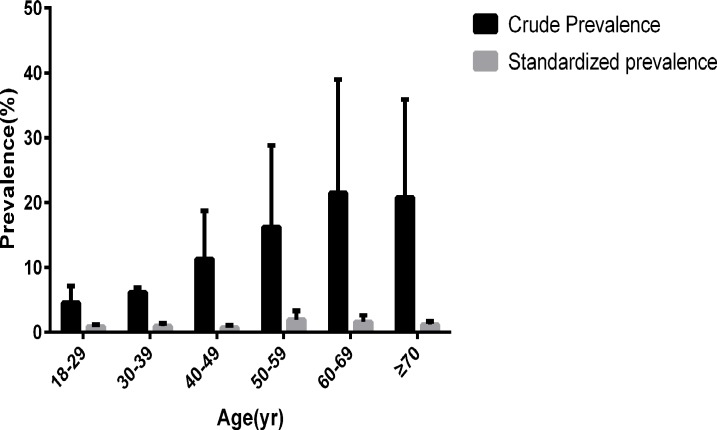
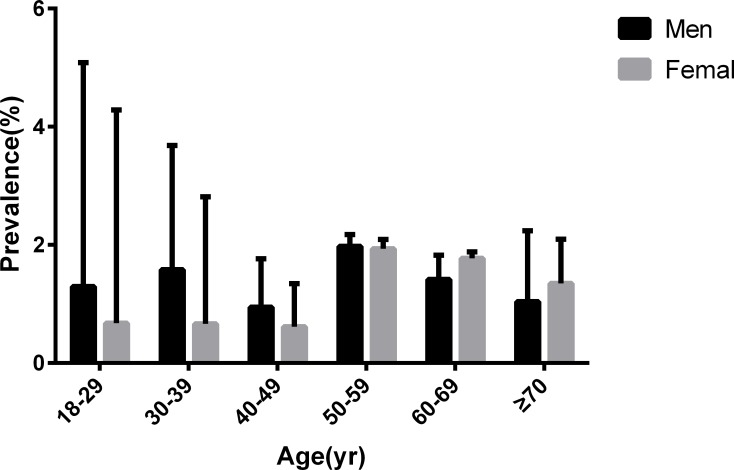
Metabolic syndrome (MS) is an increasing public health concern because of rapid lifestyle changes. Although there have been previous studies on the prevalence of MS in China, the prevalence may have changed with lifestyle changes over the last decade. To update this prevalence, we performed a cross-sectional survey among adults over 18 years old across China from May 2013 to July 2014. Participants underwent questionnaires and provided blood and urine samples for analysis. MS was defined according to the criteria of the China Diabetes Society. A total of 12570 individuals (45.2% men) with an average age of 48.8±15.3 (18-96) years were selected and invited to participate in the study. In total, 9310 (40.7% men) individuals completed the investigation, with a response rate of 74.1%. The prevalence of MS in China was 14.39% [95% confidence interval (CI): -3.75-32.53%], and the age-adjusted prevalence was 9.82% (95% CI: 9.03-10.61%; 7.78% in men and 6.76% in women; 7.39% in rural residents and 6.98% in urban residents). The highest prevalence occurred among adults aged 50-59 years (1.95%, 95% CI: 1.40-2.50%), and the lowest prevalence occurred among adults aged 40-49 years (0.74%, 95% CI: 0.38-1.10%); the prevalence was the highest in the south region and lowest in the east region (4.46% and 1.23%, respectively). The results of logistic regression analyses showed that age, urolithiasis, hyperuricemia, coronary artery disease, thiazide drugs intake, family history of diabetes and hypertension were all significantly associated with an increased risk of metabolic syndrome (OR>1). In addition, education, vitamin D intake and family history of urolithiasis are all protective factors (OR<1). Our results indicate that there was a high prevalence of MS in Chinese adults. Compared to the previous study 10 years ago, some preventive strategies have worked; however, further work on the prevention and treatment of MS remains necessary.
代谢综合征(MS)是一个日益受到关注的公共卫生问题,这是由于生活方式的快速改变。尽管之前已经有关于中国代谢综合征患病率的研究,但在过去十年中,随着生活方式的改变,患病率可能已经发生了变化。为了更新这一患病率,我们于 2013 年 5 月至 2014 年 7 月在中国成年人中进行了一项横断面调查。参与者接受了问卷调查,并提供了血液和尿液样本进行分析。MS 根据中国糖尿病学会的标准进行定义。共选择了 12570 名 18 岁以上的个体(45.2%为男性),平均年龄为 48.8±15.3(18-96)岁,并邀请他们参加研究。共有 9310 名(40.7%为男性)个体完成了调查,应答率为 74.1%。中国 MS 的患病率为 14.39%[95%置信区间(CI):-3.75-32.53%],年龄调整后的患病率为 9.82%(95%CI:9.03-10.61%;男性为 7.78%,女性为 6.76%;农村居民为 7.39%,城镇居民为 6.98%)。患病率最高的是 50-59 岁年龄段的成年人(1.95%,95%CI:1.40-2.50%),患病率最低的是 40-49 岁年龄段的成年人(0.74%,95%CI:0.38-1.10%);南部地区的患病率最高,东部地区的患病率最低(分别为 4.46%和 1.23%)。逻辑回归分析的结果表明,年龄、尿路结石、高尿酸血症、冠心病、噻嗪类药物摄入、糖尿病和高血压家族史均与代谢综合征风险增加显著相关(OR>1)。此外,教育、维生素 D 摄入和尿路结石家族史都是保护因素(OR<1)。我们的研究结果表明,中国成年人中 MS 的患病率较高。与 10 年前的先前研究相比,一些预防策略已经发挥了作用;然而,仍然需要进一步开展 MS 的预防和治疗工作。