Department of Dementia and Higher Brain Function, Tokyo Metropolitan Institute of Medical Science, 2-1-6 Kamikitazawa, Setagaya-ku, Tokyo, 156-8506, Japan.
Department of Biological Science, Tokyo Metropolitan University, Minami-osawa, Hachioji, Tokyo, 192-0397, Japan.
Acta Neuropathol Commun. 2018 Apr 18;6(1):29. doi: 10.1186/s40478-018-0532-2.
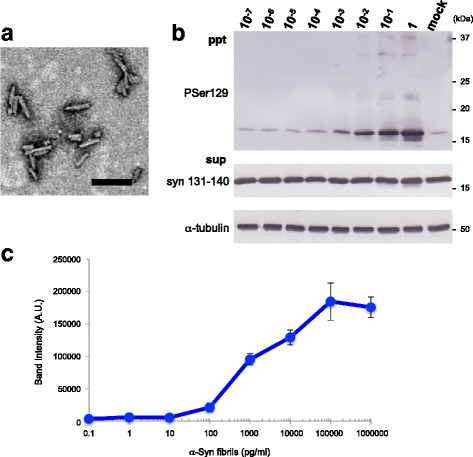
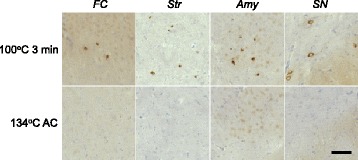
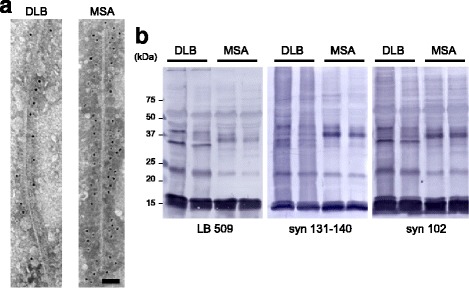
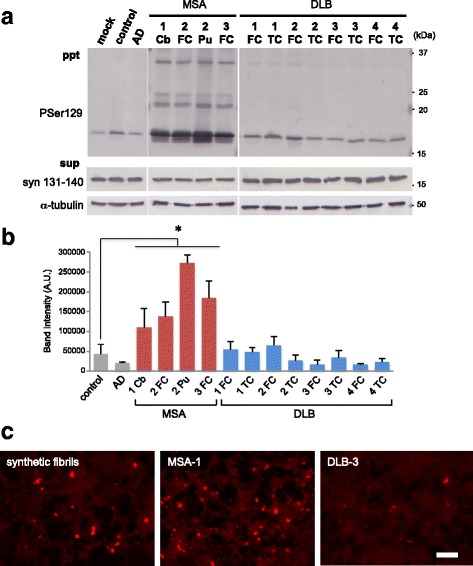
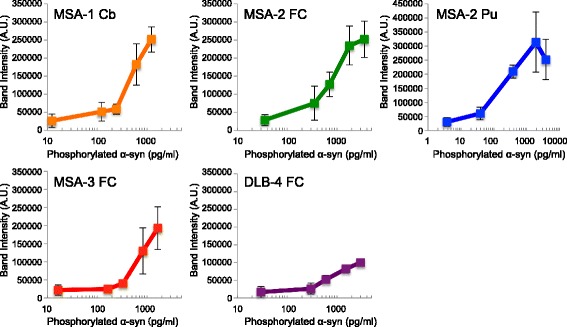
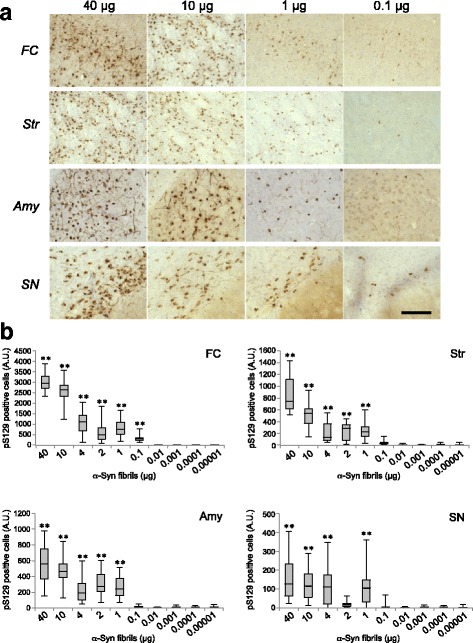
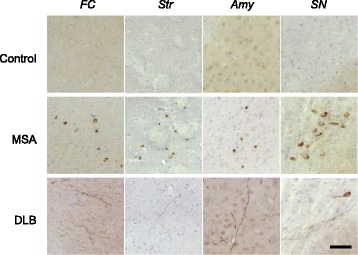
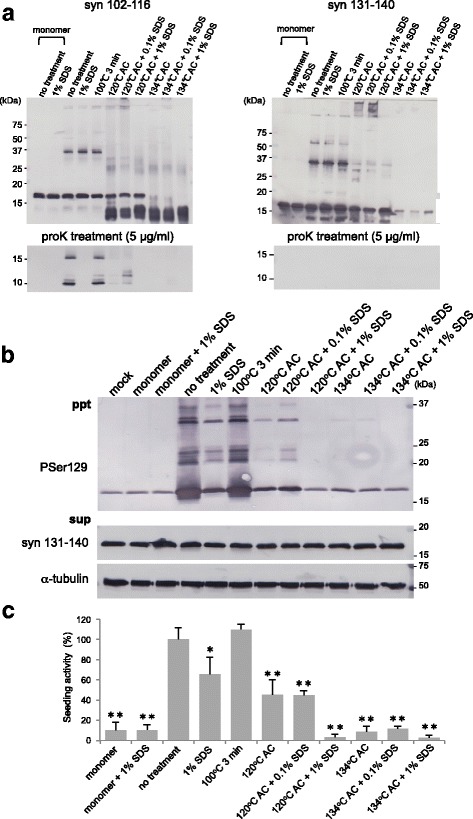
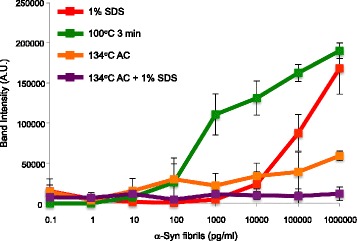
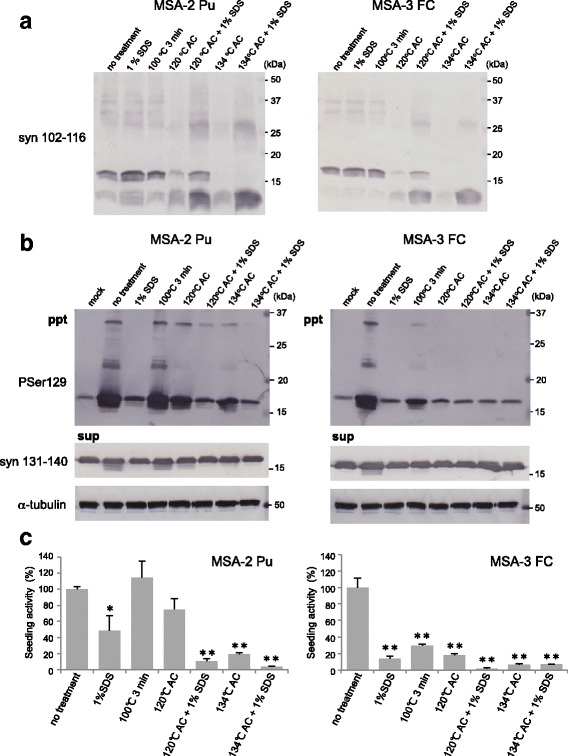
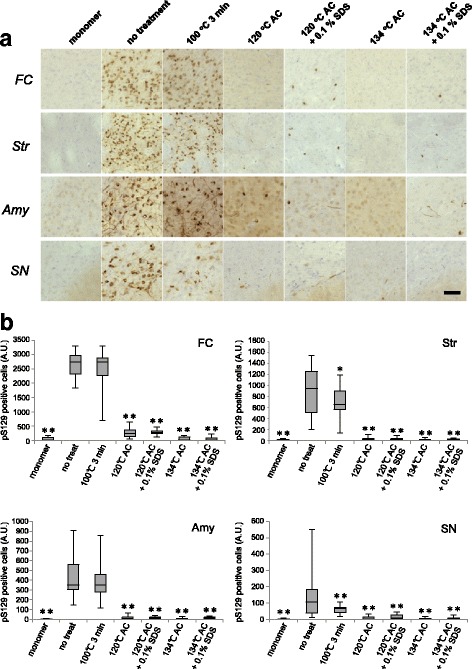
The concept that abnormal protein aggregates show prion-like propagation between cells has been considered to explain the onset and progression of many neurodegenerative diseases. Indeed, both synthetic amyloid-like fibrils and pathogenic proteins extracted from patients' brains induce self-templated amplification and cell-to-cell transmission in vitro and in vivo. However, it is unclear whether exposure to exogenous prion-like proteins can potentially cause these diseases in humans. Here, we investigated in detail the prion-like seeding activities of several kinds of pathogenic α-synuclein (α-syn), including synthetic fibrils and detergent-insoluble fractions extracted from brains of patients with α-synucleinopathies. Exposure to synthetic α-syn fibrils at concentrations above 100 pg/mL caused seeded aggregation of α-syn in SH-SY5Y cells, and seeded aggregation was also observed in C57BL/6 J mice after intracerebral inoculation of at least 0.1 μg/animal. α-Syn aggregates extracted from brains of multiple system atrophy (MSA) patients showed higher seeding activity than those extracted from patients with dementia with Lewy bodies (DLB), and their potency was similar to that of synthetic α-syn fibrils. We also examined the effects of various methods that have been reported to inactivate abnormal prion proteins (PrP), including autoclaving at various temperatures, exposure to sodium dodecyl sulfate (SDS), and combined treatments. The combination of autoclaving and 1% SDS substantially reduced the seeding activities of synthetic α-syn fibrils and α-syn aggregates extracted from MSA brains. However, single treatment with 1% SDS or generally used sterilization conditions proved insufficient to prevent accumulation of pathological α-syn. In conclusion, α-syn aggregates derived from MSA patients showed a potent prion-like seeding activity, which could be efficiently reduced by combined use of SDS and autoclaving.
异常蛋白质聚集体在细胞间表现出类似朊病毒的传播,这一概念被认为可以解释许多神经退行性疾病的发病和进展。事实上,合成的类淀粉样纤维和从患者大脑中提取的致病性蛋白都可以在体外和体内诱导自我模板扩增和细胞间传递。然而,目前尚不清楚接触外源性类朊病毒样蛋白是否会在人类中引发这些疾病。在这里,我们详细研究了几种致病性α-突触核蛋白(α-syn)的类朊病毒样接种活性,包括合成纤维和从α-突触核蛋白病患者大脑中提取的去污剂不溶性部分。在浓度高于 100pg/mL 的情况下,合成的α-syn 纤维会引起 SH-SY5Y 细胞中α-syn 的接种聚集,而在向 C57BL/6J 小鼠脑内接种至少 0.1μg/动物后,也观察到了接种聚集。从多系统萎缩(MSA)患者大脑中提取的α-syn 聚集体比从路易体痴呆(DLB)患者中提取的聚集体具有更高的接种活性,其效力与合成的α-syn 纤维相似。我们还研究了各种已报道的失活异常朊病毒蛋白(PrP)的方法的效果,包括在不同温度下高压灭菌、暴露于十二烷基硫酸钠(SDS)以及联合处理。高压灭菌和 1% SDS 的联合处理显著降低了合成的α-syn 纤维和从 MSA 大脑中提取的α-syn 聚集体的接种活性。然而,单独使用 1% SDS 或通常使用的灭菌条件被证明不足以防止病理性α-syn 的积累。总之,从 MSA 患者中提取的α-syn 聚集体表现出强烈的类朊病毒样接种活性,通过 SDS 和高压灭菌的联合使用可以有效地降低这种活性。