Department of Neuroscience, University of Pennsylvania Perelman School of Medicine, Philadelphia, PA, 19104, USA.
Department of Pharmacology and Department of Psychiatry and Behavioral Sciences, University of Washington, Seattle, WA, 98115, USA.
Nat Commun. 2018 Apr 18;9(1):1528. doi: 10.1038/s41467-018-03988-1.
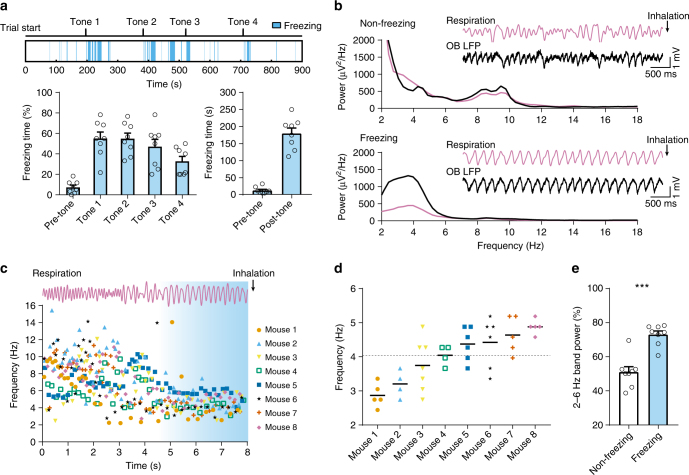
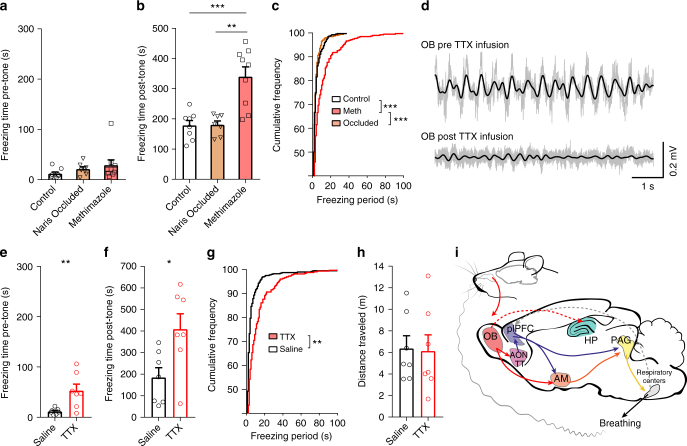
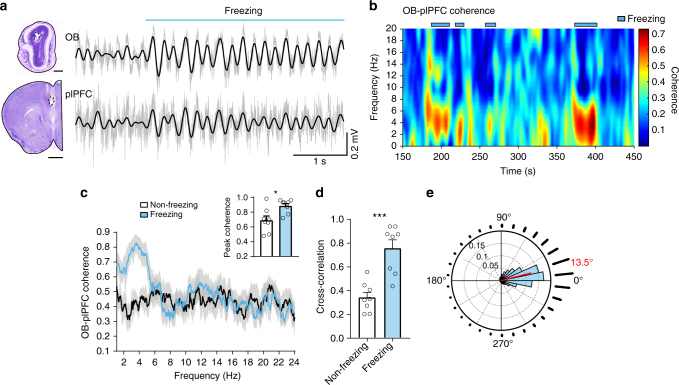
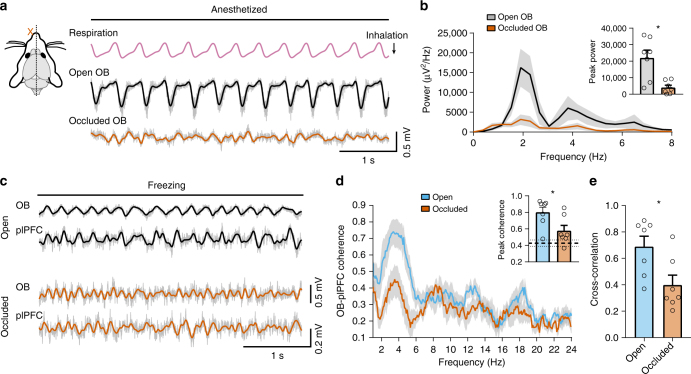
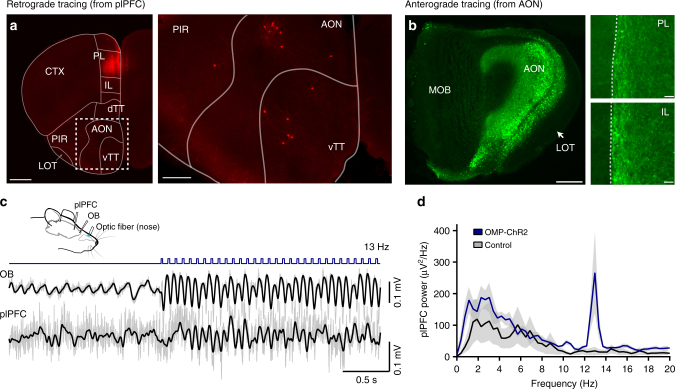
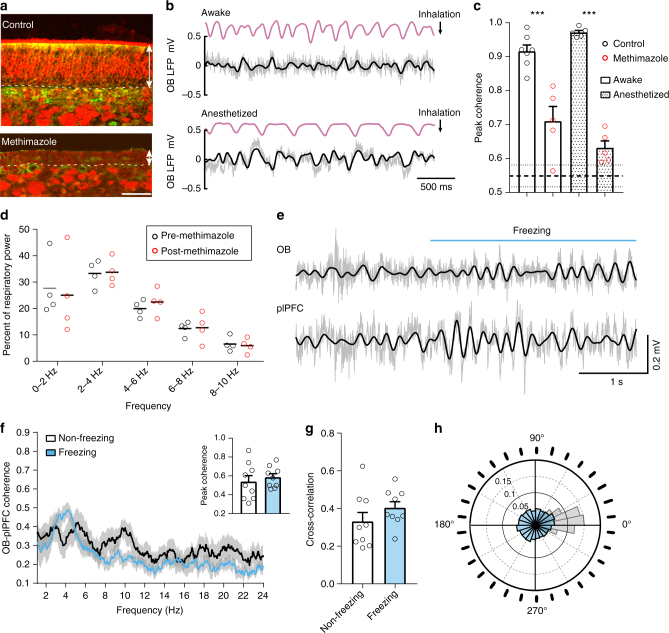
Respiration and airflow through the nasal cavity are known to be correlated with rhythmic neural activity in the central nervous system. Here we show in rodents that during conditioned fear-induced freezing behavior, mice breathe at a steady rate (~4 Hz), which is correlated with a predominant 4-Hz oscillation in the prelimbic prefrontal cortex (plPFC), a structure critical for expression of conditioned fear behaviors. We demonstrate anatomical and functional connections between the olfactory pathway and plPFC via circuit tracing and optogenetics. Disruption of olfactory inputs significantly reduces the 4-Hz oscillation in the plPFC, but leads to prolonged freezing periods. Our results indicate that olfactory inputs can modulate rhythmic activity in plPFC and freezing behavior.
鼻腔中的呼吸和气流与中枢神经系统中的节律性神经活动有关。在这里,我们在啮齿动物中表明,在条件性恐惧引起的冻结行为期间,小鼠以稳定的速度呼吸(~4 Hz),这与内侧前额叶皮层(plPFC)中的主要 4-Hz 振荡相关,该结构对于表达条件性恐惧行为至关重要。我们通过电路追踪和光遗传学证明了嗅觉途径和 plPFC 之间的解剖和功能连接。嗅觉输入的中断显着降低了 plPFC 中的 4-Hz 振荡,但导致冻结期延长。我们的结果表明,嗅觉输入可以调节 plPFC 中的节律活动和冻结行为。