Mortazavi Hamed, Tabatabaeichehr Mahbubeh, Golestani Ali, Armat Mohammad Reza, Yousefi Mohammad Reza
Gerontological Care Research Center, Department of Geriatric Nursing, School of Nursing and Midwifery, North Khorasan University of Medical Sciences, Bojnurd, Iran.
Gerontological Care Research Center, Department of Midwifery, School of Nursing and Midwifery, North Khorasan University of Medical Sciences, Bojnurd, Iran.
Mater Sociomed. 2018 Mar;30(1):38-42. doi: 10.5455/msm.2018.30.38-42.
Falling and fear of falling are among the most common problems of the elderly, which can cause illness, isolation, dependency and reduced quality of life in elderly. Exercise is recommended to prevent falling injuries in the elderly.
This study aimed to examine the effect of Tai Chi exercise on the risk and fear of falling in older adults.
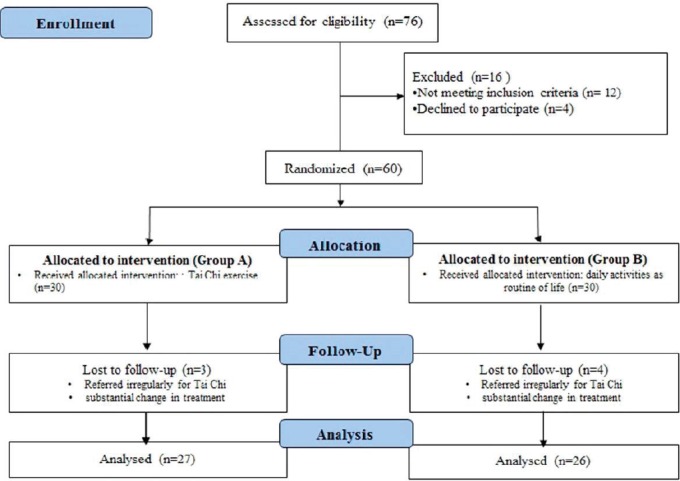
In this randomized clinical trial, a total of 60 male and female elderly were randomly divided into two groups: Tai Chi exercise and control (daily activities) groups. Tai Chi exercise protocol in the intervention group consisted of 3 sessions per week for 10 weeks. The risk and fear of falling were assessed in subjects by using standardized questionnaires, including Berg's Balance Scale and Fall Efficacy Scale-International (FES-I) before initiating the protocol, at the end of 4, 8 weeks and at the end of exercise period.
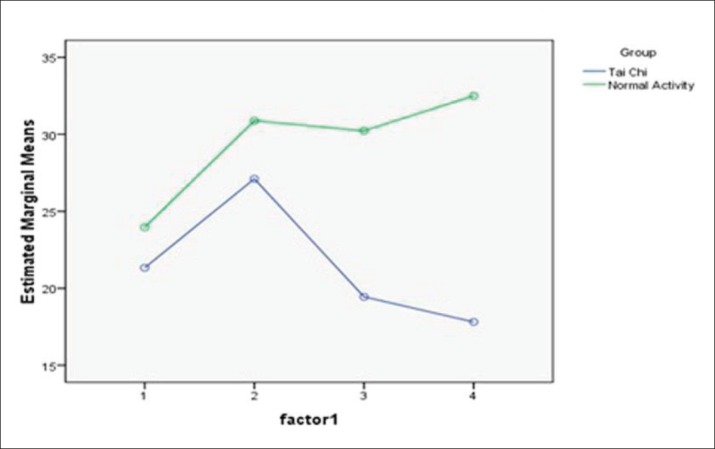
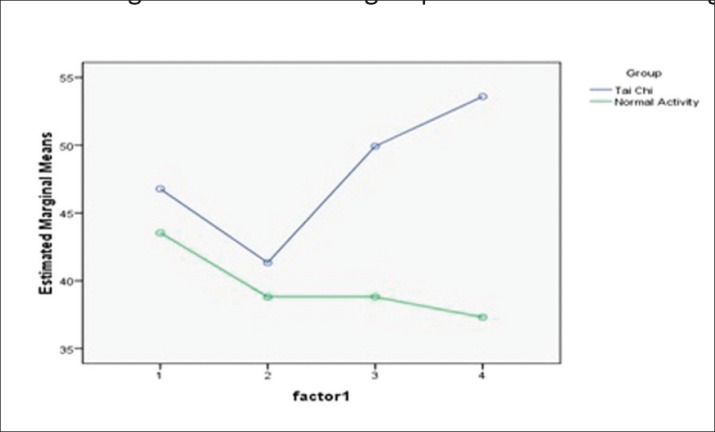
Two groups were matched in terms of age, gender, education, and body mass index. Baseline values of risk of falling and fear of falling were not significantly different between the two groups (P>0.05). The score of fear of falling at the end of 4, 8 weeks and at the end of exercise period was significantly different between the two groups (P<0.05) and it decreased in the intervention group, but the risk of falling reduced after 8 and 10 weeks in the intervention group (P<0.001).
Performing Tai Chi exercises for at least four weeks could reduce fear of falling and reduce the risk of falls in older adults after 8 weeks.
跌倒和跌倒恐惧是老年人最常见的问题之一,可导致老年人患病、孤立、依赖和生活质量下降。建议通过锻炼预防老年人跌倒受伤。
本研究旨在探讨太极拳锻炼对老年人跌倒风险和跌倒恐惧的影响。
在这项随机临床试验中,共60名老年男性和女性被随机分为两组:太极拳锻炼组和对照组(日常活动组)。干预组的太极拳锻炼方案为每周3次,共10周。在开始锻炼方案前、4周和8周结束时以及锻炼期结束时,使用标准化问卷(包括伯格平衡量表和国际跌倒效能量表 - FES - I)对受试者的跌倒风险和跌倒恐惧进行评估。
两组在年龄、性别、教育程度和体重指数方面相匹配。两组之间跌倒风险和跌倒恐惧的基线值无显著差异(P>0.05)。两组在4周、8周结束时以及锻炼期结束时的跌倒恐惧得分有显著差异(P<0.05),干预组得分下降,但干预组在8周和10周后跌倒风险降低(P<0.001)。
进行至少四周的太极拳锻炼可降低老年人的跌倒恐惧,并在8周后降低跌倒风险。