Institute of Molecular Biology and Biotechnology, Foundation for Research and Technology-Hellas, 73100 Heraklion, Greece.
Department of Crop Science, Agricultural University of Athens, GR-11855 Athens, Greece.
Proc Natl Acad Sci U S A. 2018 May 1;115(18):4619-4624. doi: 10.1073/pnas.1719663115. Epub 2018 Apr 19.
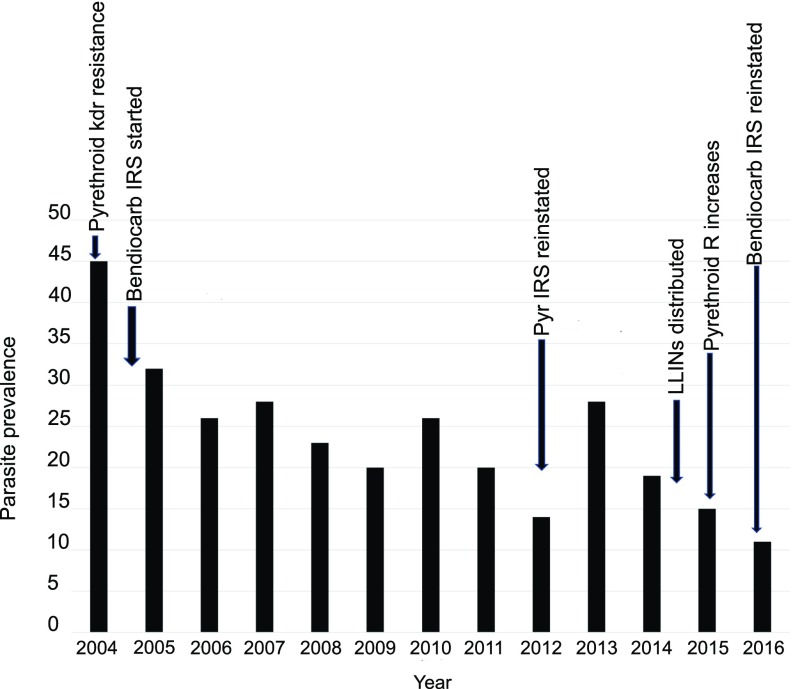
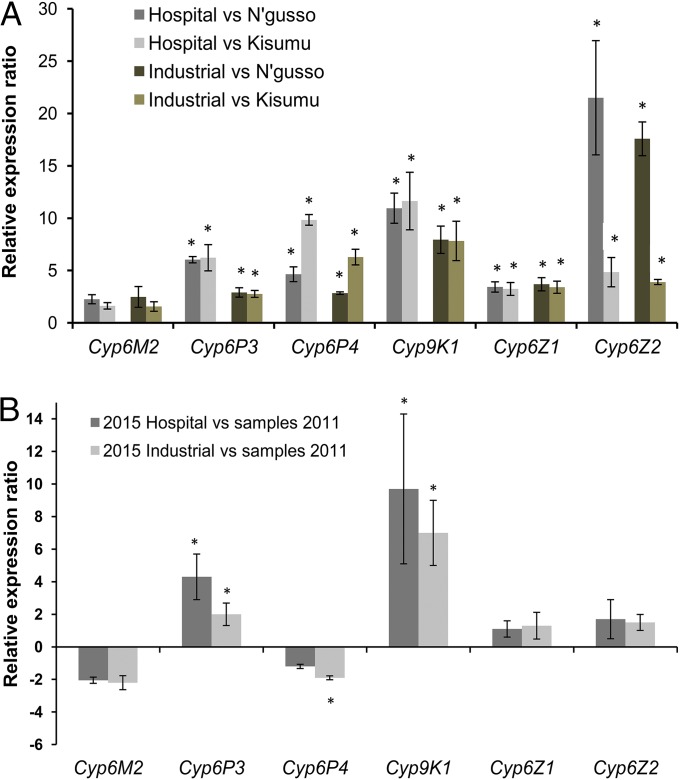
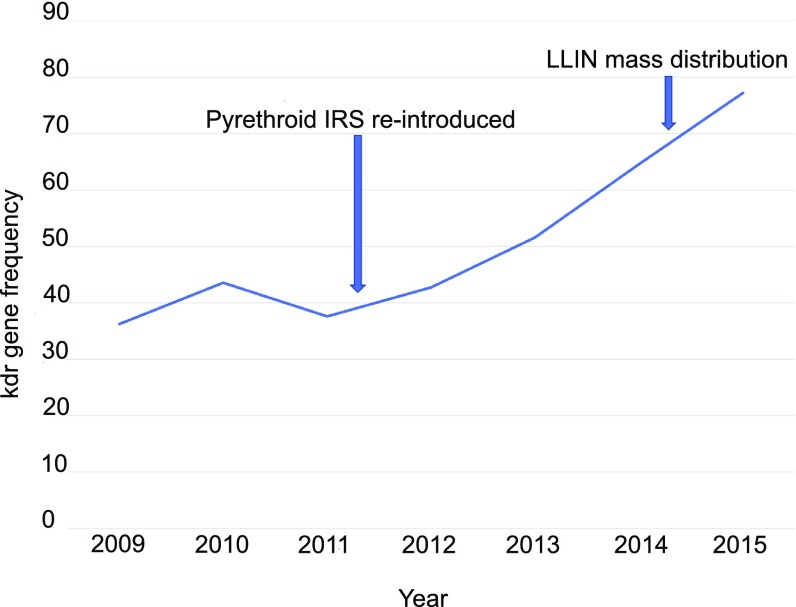
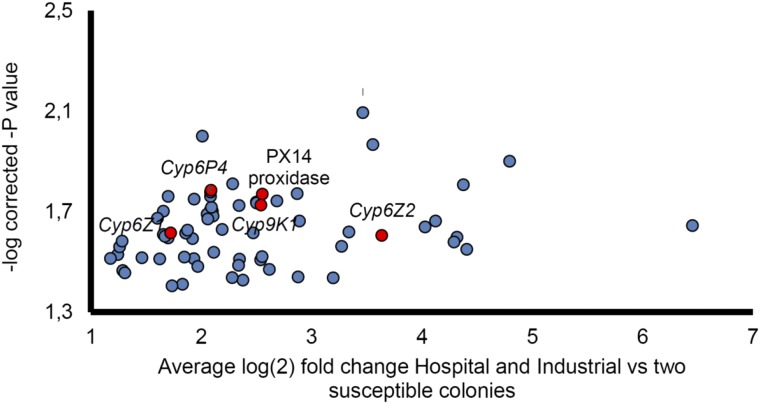
Since 2004, indoor residual spraying (IRS) and long-lasting insecticide-impregnated bednets (LLINs) have reduced the malaria parasite prevalence in children on Bioko Island, Equatorial Guinea, from 45% to 12%. After target site-based (knockdown resistance; ) pyrethroid resistance was detected in 2004 in (formerly known as the M form of the complex), the carbamate bendiocarb was introduced. Subsequent analysis showed that alone was not operationally significant, so pyrethroid-based IRS was successfully reintroduced in 2012. In 2007 and 2014-2015, mass distribution of new pyrethroid LLINs was undertaken to increase the net coverage levels. The combined selection pressure of IRS and LLINs resulted in an increase in the frequency of pyrethroid resistance in 2015. In addition to a significant increase in r frequency, an additional metabolic pyrethroid resistance mechanism had been selected. Increased metabolism of the pyrethroid deltamethrin was linked with up-regulation of the cytochrome P450 CYP9K1. The increase in resistance prompted a reversion to bendiocarb IRS in 2016 to avoid a resurgence of malaria, in line with the national Malaria Control Program plan.
自 2004 年以来,室内残留喷洒(IRS)和长效驱虫蚊帐(LLIN)已将赤道几内亚比奥科岛上儿童疟原虫感染率从 45%降低至 12%。2004 年,在(先前被称为复杂形式 M)中检测到基于靶标的(击倒抗性;)拟除虫菊酯抗性后,引入了氨基甲酸酯类杀虫剂苯氧威。随后的分析表明,苯氧威单独使用并不具有显著的效果,因此,2012 年成功重新引入了基于拟除虫菊酯的 IRS。2007 年和 2014-2015 年,大规模分发了新的拟除虫菊酯 LLIN,以提高蚊帐覆盖率。IRS 和 LLIN 的联合选择压力导致 2015 年拟除虫菊酯抗性的频率增加。除了 r 频率的显著增加外,还选择了另外一种代谢性拟除虫菊酯抗性机制。拟除虫菊酯溴氰菊酯的代谢增加与细胞色素 P450 CYP9K1 的上调有关。抗性的增加促使 2016 年重新使用苯氧威 IRS,以避免疟疾的再次爆发,这符合国家疟疾控制计划的计划。