• 文献检索
  • 文档翻译
  • 深度研究
  • 学术资讯
  • Suppr Zotero 插件Zotero 插件
  • 邀请有礼
  • 套餐&价格
  • 历史记录
应用&插件
Suppr Zotero 插件Zotero 插件浏览器插件Mac 客户端Windows 客户端微信小程序
定价
高级版会员购买积分包购买API积分包
服务
文献检索文档翻译深度研究API 文档MCP 服务
关于我们
关于 Suppr公司介绍联系我们用户协议隐私条款
关注我们

Suppr 超能文献

核心技术专利:CN118964589B侵权必究
粤ICP备2023148730 号-1Suppr @ 2026

文献检索

告别复杂PubMed语法,用中文像聊天一样搜索,搜遍4000万医学文献。AI智能推荐,让科研检索更轻松。

立即免费搜索

文件翻译

保留排版,准确专业,支持PDF/Word/PPT等文件格式,支持 12+语言互译。

免费翻译文档

深度研究

AI帮你快速写综述,25分钟生成高质量综述,智能提取关键信息,辅助科研写作。

立即免费体验

一项针对产后焦虑女性的基于网络并辅以电话支持的治疗的可行性与可接受性:随机对照试验

Feasibility and Acceptability of a Web-Based Treatment with Telephone Support for Postpartum Women With Anxiety: Randomized Controlled Trial.

作者信息

Ashford Miriam T, Olander Ellinor K, Rowe Heather, Fisher Jane Rw, Ayers Susan

机构信息

Centre for Maternal and Child Health Research, School of Health Sciences, City, University of London, London, United Kingdom.

Jean Hailes Research Unit, School of Public Health and Preventive Medicine, Monash University, Melbourne, Australia.

出版信息

JMIR Ment Health. 2018 Apr 20;5(2):e19. doi: 10.2196/mental.9106.

DOI:10.2196/mental.9106
PMID:29678804
原文链接:https://pmc.ncbi.nlm.nih.gov/articles/PMC5938691/
Abstract

BACKGROUND

Postpartum anxiety can have adverse effects on the mother and child if left untreated. Time constraints and stigma are common barriers to postpartum treatment. Web-based treatments offer potential flexibility and anonymity. What Am I Worried About (WaWa) is a self-guided treatment based on cognitive-behavioral and mindfulness principles for women experiencing postpartum anxiety. WaWa was developed in Australia and consists of 9 modules with optional weekly telephone support. WaWa was adapted to a Web-based version for use in England (Internet-based What Am I Worried About, iWaWa).

OBJECTIVE

This study aimed to investigate the feasibility (engagement and usability) and acceptability (usefulness, satisfaction, and helpfulness) of iWaWa among English postpartum women with anxiety.

METHODS

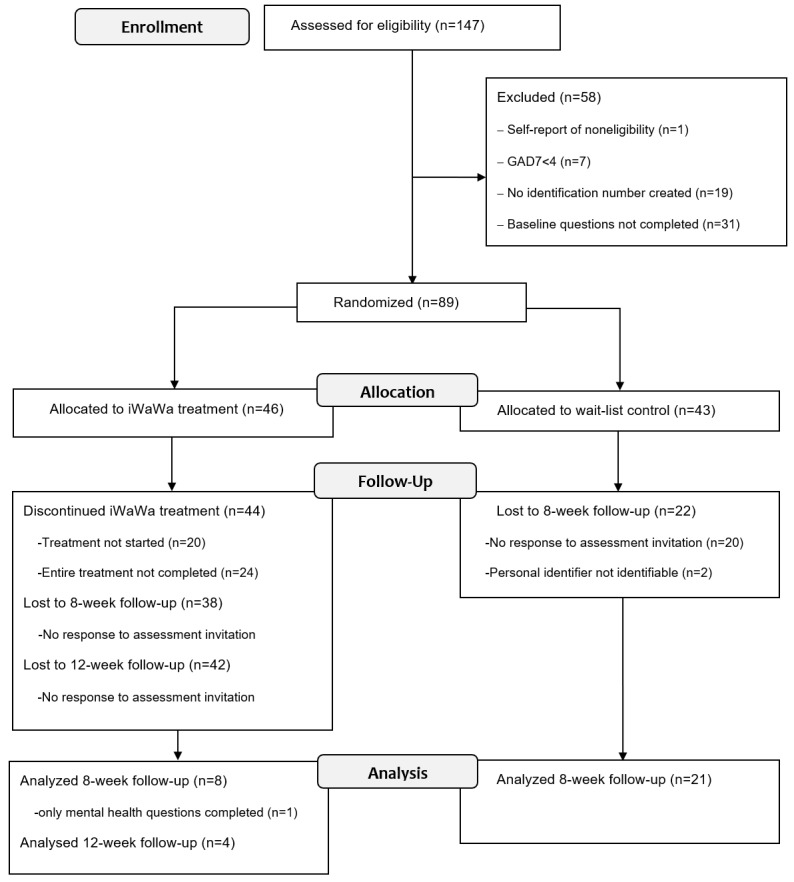
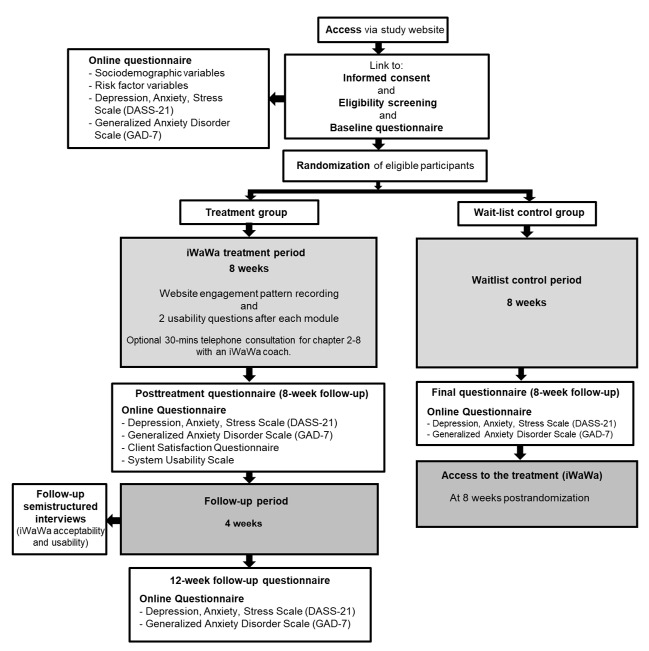
Postpartum (<12 months) women with mild-to-severe anxiety were recruited anonymously via social media during an 8-week period. Participants were randomized to the iWaWa treatment (8 weeks) or wait-list control group. Treatment and study feasibility and acceptability were assessed after the treatment, and anxiety symptoms were assessed at baseline, 8 weeks postrandomization, and 12 weeks postrandomization (treatment group only) using Web-based questionnaires. Semistructured telephone interviews were carried out after the treatment period for a more in-depth exploration of treatment acceptability and feasibility.

RESULTS

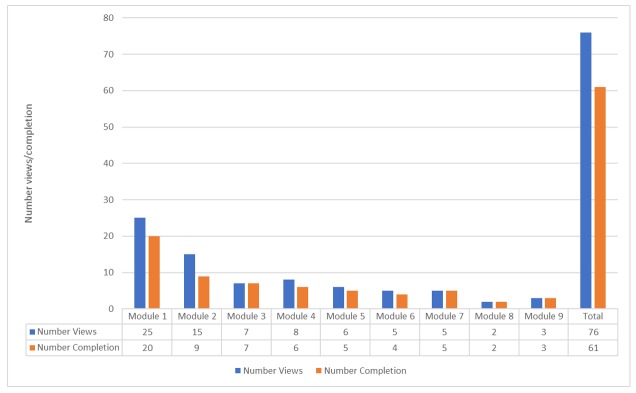
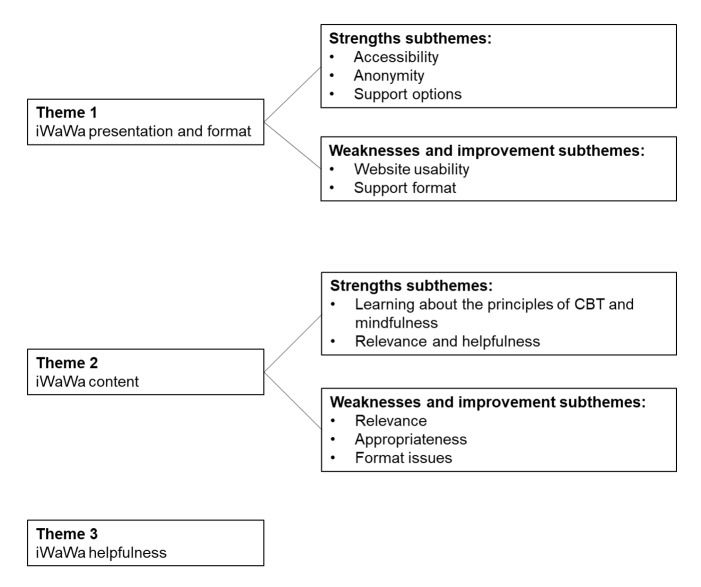
A total of 89 eligible women were recruited through social media and randomized into the treatment (n=46) or wait-list control group (n=43). Women were predominantly Caucasian, well-educated, married, on maternity leave, first-time mothers and reported moderate levels of anxiety. Dropout rates were high, especially in the treatment group (treatment: 82%, 38/46; wait-list control: 51%, 22/43). A total of 26 women started iWaWa with only 2 women completing all 9 modules. Quantitative and qualitative data suggest iWaWa was experienced as generally useful and helpful. Participants enjoyed iWaWa's accessibility, anonymity, and weekly reminders, as well as the introduction to the principles of cognitive-behavioral therapy (CBT) and mindfulness. However, iWaWa was also experienced as not user-friendly enough, too long, and not smartphone-friendly. Parts of the content were experienced as not always relevant and appropriate. Participants felt that iWaWa could be improved by having it in a smartphone app format and by making the content more concise and inclusive of different parenting styles.

CONCLUSIONS

Despite interest in iWaWa, the results suggest that both the study and iWaWa were not feasible in the current format. However, this first trial provides useful evidence about treatment format and content preferences that can inform iWaWa's future development, as well as research and development of Web-based postpartum anxiety treatments, in general, to optimize adherence.

TRIAL REGISTRATION

ClinicalTrials.gov NCT02434406; https://clinicaltrials.gov/ct2/show/NCT02434406 (Archived by WebCite at http://www.webcitation.org/6xTq7Bwmd).
https://cdn.ncbi.nlm.nih.gov/pmc/blobs/a33b/5938691/8fe6a998e877/mental_v5i2e19_fig4.jpg
https://cdn.ncbi.nlm.nih.gov/pmc/blobs/a33b/5938691/a6d8ac06b4cf/mental_v5i2e19_fig1.jpg
https://cdn.ncbi.nlm.nih.gov/pmc/blobs/a33b/5938691/c3e4478c6f6b/mental_v5i2e19_fig2.jpg
https://cdn.ncbi.nlm.nih.gov/pmc/blobs/a33b/5938691/f792bf04e24d/mental_v5i2e19_fig3.jpg
https://cdn.ncbi.nlm.nih.gov/pmc/blobs/a33b/5938691/8fe6a998e877/mental_v5i2e19_fig4.jpg
https://cdn.ncbi.nlm.nih.gov/pmc/blobs/a33b/5938691/a6d8ac06b4cf/mental_v5i2e19_fig1.jpg
https://cdn.ncbi.nlm.nih.gov/pmc/blobs/a33b/5938691/c3e4478c6f6b/mental_v5i2e19_fig2.jpg
https://cdn.ncbi.nlm.nih.gov/pmc/blobs/a33b/5938691/f792bf04e24d/mental_v5i2e19_fig3.jpg
https://cdn.ncbi.nlm.nih.gov/pmc/blobs/a33b/5938691/8fe6a998e877/mental_v5i2e19_fig4.jpg
摘要

背景

产后焦虑若不治疗,会对母婴产生不良影响。时间限制和污名化是产后治疗常见的障碍。基于网络的治疗提供了潜在的灵活性和匿名性。“我担心什么”(WaWa)是一种基于认知行为和正念原则的自我引导式治疗方法,用于治疗产后焦虑的女性。WaWa在澳大利亚开发,由9个模块组成,并提供每周一次的电话支持(可选择)。WaWa被改编为网络版,用于英国(基于互联网的“我担心什么”,即iWaWa)。

目的

本研究旨在调查iWaWa在患有焦虑症的英国产后女性中的可行性(参与度和可用性)和可接受性(有用性、满意度和帮助程度)。

方法

在8周内通过社交媒体匿名招募产后(<12个月)轻度至重度焦虑的女性。参与者被随机分为iWaWa治疗组(8周)或等待列表对照组。治疗结束后评估治疗及研究的可行性和可接受性,并在基线、随机分组后8周和随机分组后12周(仅治疗组)使用基于网络的问卷评估焦虑症状。治疗期结束后进行半结构化电话访谈,以更深入地探讨治疗的可接受性和可行性。

结果

通过社交媒体共招募了89名符合条件的女性,并随机分为治疗组(n = 46)或等待列表对照组(n = 43)。女性主要为白种人,受过良好教育,已婚,休产假,初为人母,且报告焦虑程度为中度。退出率很高,尤其是在治疗组(治疗组:82%,38/46;等待列表对照组:51%,22/43)。共有26名女性开始使用iWaWa,只有2名女性完成了所有9个模块。定量和定性数据表明,iWaWa总体上被认为是有用和有帮助的。参与者喜欢iWaWa的可及性、匿名性和每周提醒,以及对认知行为疗法(CBT)和正念原则的介绍。然而,iWaWa也被认为不够用户友好、时间过长且对智能手机不友好。部分内容被认为并非总是相关和合适。参与者认为,将iWaWa以智能手机应用程序的形式呈现,并使内容更简洁且涵盖不同的育儿方式,可能会有所改进。

结论

尽管对iWaWa感兴趣,但结果表明,以当前形式开展的研究和iWaWa均不可行。然而,这项首次试验提供了关于治疗形式和内容偏好的有用证据,可为iWaWa的未来发展以及一般基于网络的产后焦虑治疗的研发提供参考,以优化依从性。

试验注册

ClinicalTrials.gov NCT02434406;https://clinicaltrials.gov/ct2/show/NCT02434406(由WebCite存档于http://www.webcitation.org/6xTq7Bwmd)

相似文献

1
Feasibility and Acceptability of a Web-Based Treatment with Telephone Support for Postpartum Women With Anxiety: Randomized Controlled Trial.一项针对产后焦虑女性的基于网络并辅以电话支持的治疗的可行性与可接受性:随机对照试验
JMIR Ment Health. 2018 Apr 20;5(2):e19. doi: 10.2196/mental.9106.
2
Web-Based Intervention Using Behavioral Activation and Physical Activity for Adults With Depression (The eMotion Study): Pilot Randomized Controlled Trial.基于网络的行为激活和体育活动干预对成人抑郁症患者的影响(eMotion研究):初步随机对照试验
J Med Internet Res. 2018 Jul 16;20(7):e10112. doi: 10.2196/10112.
3
Internet Cognitive Behavioral Therapy for Women With Postnatal Depression: A Randomized Controlled Trial of MumMoodBooster.针对产后抑郁症女性的互联网认知行为疗法:MumMoodBooster的随机对照试验
J Med Internet Res. 2016 Mar 7;18(3):e54. doi: 10.2196/jmir.4993.
4
Healthy Beyond Pregnancy, a Web-Based Intervention to Improve Adherence to Postpartum Care: Randomized Controlled Feasibility Trial.“孕期后健康”,一项基于网络的改善产后护理依从性的干预措施:随机对照可行性试验。
JMIR Hum Factors. 2017 Oct 10;4(4):e26. doi: 10.2196/humanfactors.7964.
5
Evaluating a Web-Based Social Anxiety Intervention Among University Students: Randomized Controlled Trial.评估一项针对大学生的基于网络的社交焦虑干预措施:随机对照试验。
J Med Internet Res. 2018 Mar 21;20(3):e91. doi: 10.2196/jmir.8630.
6
Pregnant Women's Views on the Feasibility and Acceptability of Web-Based Mental Health E-Screening Versus Paper-Based Screening: A Randomized Controlled Trial.孕妇对基于网络的心理健康电子筛查与纸质筛查的可行性和可接受性的看法:一项随机对照试验。
J Med Internet Res. 2017 Apr 7;19(4):e88. doi: 10.2196/jmir.6866.
7
Effectiveness of a Web- and Mobile-Guided Psychological Intervention for Depressive Symptoms in Turkey: Protocol for a Randomized Controlled Trial.土耳其一项针对抑郁症状的网络和移动引导心理干预的有效性:一项随机对照试验方案
JMIR Res Protoc. 2019 Apr 5;8(4):e13239. doi: 10.2196/13239.
8
Interest in web-based treatments for postpartum anxiety: an exploratory survey.产后焦虑的网络治疗方法的兴趣:探索性调查。
J Reprod Infant Psychol. 2017 Sep;35(4):394-409. doi: 10.1080/02646838.2017.1320364. Epub 2017 May 2.
9
Internet Mindfulness Meditation Intervention for the General Public: Pilot Randomized Controlled Trial.面向公众的互联网正念冥想干预:初步随机对照试验。
JMIR Ment Health. 2016 Aug 8;3(3):e37. doi: 10.2196/mental.5900.
10
Smartphone-Based Meditation for Myeloproliferative Neoplasm Patients: Feasibility Study to Inform Future Trials.基于智能手机的骨髓增殖性肿瘤患者冥想:为未来试验提供信息的可行性研究。
JMIR Form Res. 2019 Apr 29;3(2):e12662. doi: 10.2196/12662.

引用本文的文献

1
The evolving field of digital mental health: current evidence and implementation issues for smartphone apps, generative artificial intelligence, and virtual reality.数字心理健康的发展领域:智能手机应用程序、生成式人工智能和虚拟现实的当前证据及实施问题
World Psychiatry. 2025 Jun;24(2):156-174. doi: 10.1002/wps.21299.
2
Effectiveness of Smart Mama application on postpartum depression, anxiety, and maternal-infant bonding among women during the postnatal period: a randomized controlled trial.智能妈妈应用程序对产后女性产后抑郁、焦虑及母婴依恋的有效性:一项随机对照试验
BMC Nurs. 2025 Apr 23;24(1):452. doi: 10.1186/s12912-025-03072-2.
3

本文引用的文献

1
Interest in web-based treatments for postpartum anxiety: an exploratory survey.产后焦虑的网络治疗方法的兴趣:探索性调查。
J Reprod Infant Psychol. 2017 Sep;35(4):394-409. doi: 10.1080/02646838.2017.1320364. Epub 2017 May 2.
2
Internet-based interventions for postpartum anxiety: exploring health visitors' views.基于互联网的产后焦虑干预措施:探索健康访视员的观点。
J Reprod Infant Psychol. 2017 Jul;35(3):298-308. doi: 10.1080/02646838.2017.1313966. Epub 2017 Apr 13.
3
Seeking help for perinatal psychological distress: a meta-synthesis of women's experiences.
A qualitative exploration of factors that influence engagement with a digital mental health intervention for women with metastatic breast cancer: Finding My Way-Advanced.
对影响转移性乳腺癌女性参与数字心理健康干预“找到我的路-进阶版”的因素进行质性探索
Support Care Cancer. 2025 Mar 31;33(4):333. doi: 10.1007/s00520-025-09379-9.
4
Developing personas to inform the design of digital interventions for perinatal mental health.开发人物角色以指导围产期心理健康数字干预措施的设计。
JAMIA Open. 2024 Nov 1;7(4):ooae112. doi: 10.1093/jamiaopen/ooae112. eCollection 2024 Dec.
5
User Engagement With mHealth Interventions to Promote Treatment Adherence and Self-Management in People With Chronic Health Conditions: Systematic Review.用户对移动医疗干预措施的参与度,以促进慢性病患者的治疗依从性和自我管理:系统评价。
J Med Internet Res. 2024 Sep 24;26:e50508. doi: 10.2196/50508.
6
PandaMom - Feasibility and acceptability of an internet- and mobile-based intervention to enhance peripartum mental well-being and to prevent postpartum depression.熊猫妈妈——一种基于互联网和移动设备的干预措施对增强围产期心理健康及预防产后抑郁的可行性和可接受性
Internet Interv. 2024 Aug 12;37:100765. doi: 10.1016/j.invent.2024.100765. eCollection 2024 Sep.
7
Effectiveness of interpersonal psychotherapy in comparison to other psychological and pharmacological interventions for reducing depressive symptoms in women diagnosed with postpartum depression in low- and middle-income countries: A systematic review.在低收入和中等收入国家,人际心理治疗与其他心理和药物干预措施相比,对减轻被诊断为产后抑郁症的女性抑郁症状的有效性:一项系统评价。
Campbell Syst Rev. 2024 Apr 21;20(2):e1399. doi: 10.1002/cl2.1399. eCollection 2024 Jun.
8
Can psychological interventions prevent or reduce risk for perinatal anxiety disorders? A systematic review and meta-analysis.心理干预能否预防或降低围产期焦虑障碍的风险?系统评价和荟萃分析。
Gen Hosp Psychiatry. 2023 Sep-Oct;84:203-214. doi: 10.1016/j.genhosppsych.2023.08.005. Epub 2023 Aug 16.
9
Investigating perspectives on e-health interventions to enhance maternal mental well-being: Results of a stakeholder interview.调查关于增强孕产妇心理健康的电子健康干预措施的观点:利益相关者访谈结果
PLOS Digit Health. 2023 Aug 23;2(8):e0000326. doi: 10.1371/journal.pdig.0000326. eCollection 2023 Aug.
10
The effect of digital health interventions on postpartum depression or anxiety: a systematic review and meta-analysis of randomized controlled trials.数字健康干预对产后抑郁或焦虑的影响:随机对照试验的系统评价和荟萃分析。
Am J Obstet Gynecol. 2024 Jan;230(1):12-43. doi: 10.1016/j.ajog.2023.06.028. Epub 2023 Jun 15.
寻求围产期心理困扰的帮助:女性体验的元综合分析。
Br J Gen Pract. 2017 Oct;67(663):e692-e699. doi: 10.3399/bjgp17X692549. Epub 2017 Aug 28.
4
Facilitators and Barriers to Disclosure of Postpartum Mood Disorder Symptoms to a Healthcare Provider.向医疗服务提供者披露产后情绪障碍症状的促进因素和障碍
Matern Child Health J. 2018 Jan;22(1):120-129. doi: 10.1007/s10995-017-2361-5.
5
Preferences for Internet-Based Mental Health Interventions in an Adult Online Sample: Findings From an Online Community Survey.成人在线样本中基于互联网的心理健康干预偏好:在线社区调查结果
JMIR Ment Health. 2017 Jun 30;4(2):e26. doi: 10.2196/mental.7722.
6
Therapist-Supported Internet-Based Cognitive Behavior Therapy for Stress, Anxiety, and Depressive Symptoms Among Postpartum Women: A Systematic Review and Meta-Analysis.治疗师支持的基于互联网的认知行为疗法对产后女性压力、焦虑和抑郁症状的影响:一项系统评价和荟萃分析
J Med Internet Res. 2017 Apr 28;19(4):e138. doi: 10.2196/jmir.6712.
7
Prevalence of antenatal and postnatal anxiety: systematic review and meta-analysis.产前和产后焦虑的患病率:系统评价和荟萃分析。
Br J Psychiatry. 2017 May;210(5):315-323. doi: 10.1192/bjp.bp.116.187179. Epub 2017 Mar 16.
8
Psychometric properties of the Generalized Anxiety Disorder Questionnaire - IV (GAD-Q-IV) in postpartum mothers.产后母亲中广泛性焦虑障碍问卷 - IV(GAD-Q-IV)的心理测量特性。
Psychol Assess. 2017 Nov;29(11):1391-1399. doi: 10.1037/pas0000443. Epub 2017 Feb 20.
9
Postpartum Anxiety and Infant-Feeding Outcomes.产后焦虑与婴儿喂养结局
J Hum Lact. 2016 Nov;32(4):740-758. doi: 10.1177/0890334416662241. Epub 2016 Sep 26.
10
Computer- or web-based interventions for perinatal mental health: A systematic review.基于计算机或网络的围产期心理健康干预措施:一项系统综述。
J Affect Disord. 2016 Jun;197:134-46. doi: 10.1016/j.jad.2016.02.057. Epub 2016 Mar 9.