Key Laboratory of Pathobiology, Ministry of Education, Jilin University, Changchun, China.
Department of Pathology, Shanxi Medical University, Taiyuan, China.
Oxid Med Cell Longev. 2018 Feb 28;2018:5942916. doi: 10.1155/2018/5942916. eCollection 2018.
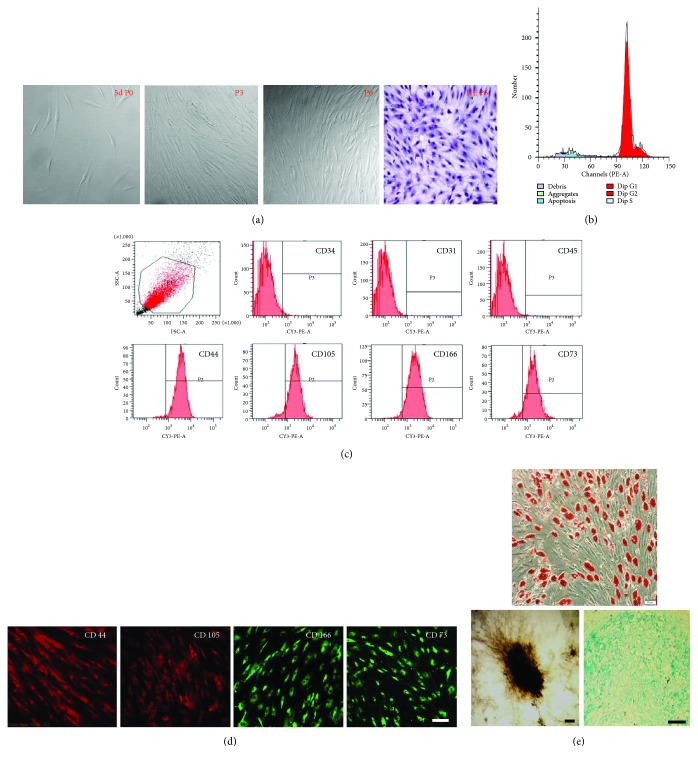
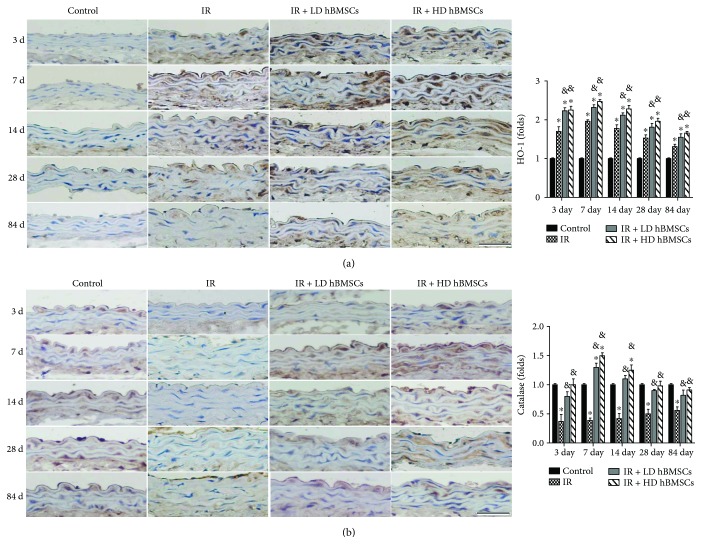
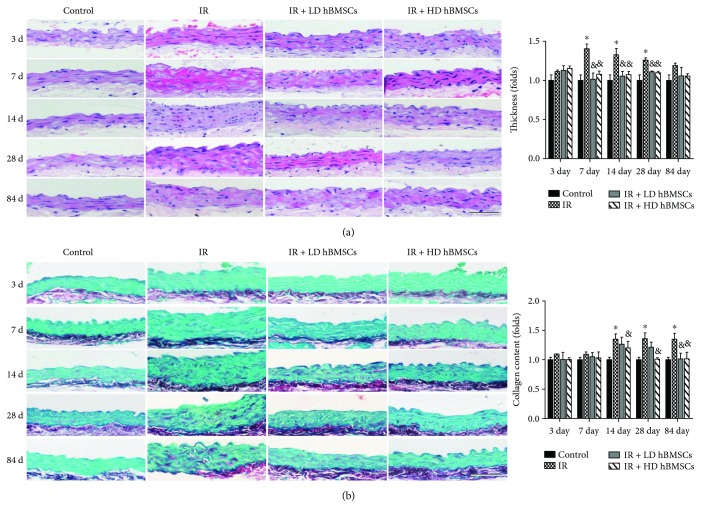
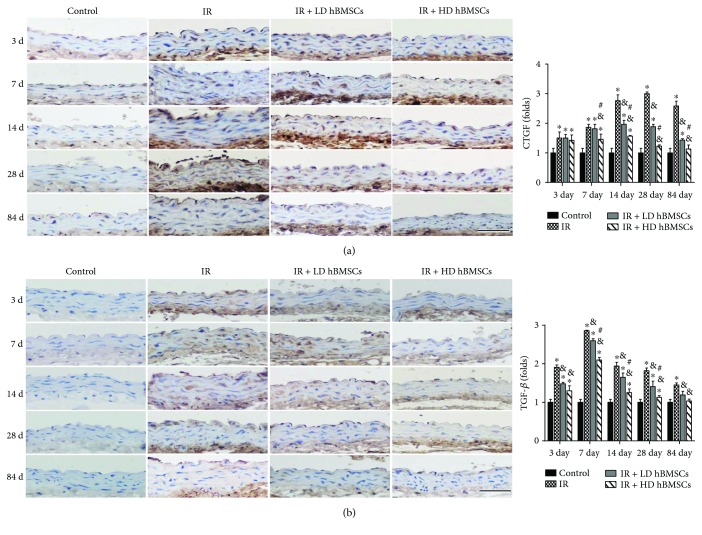
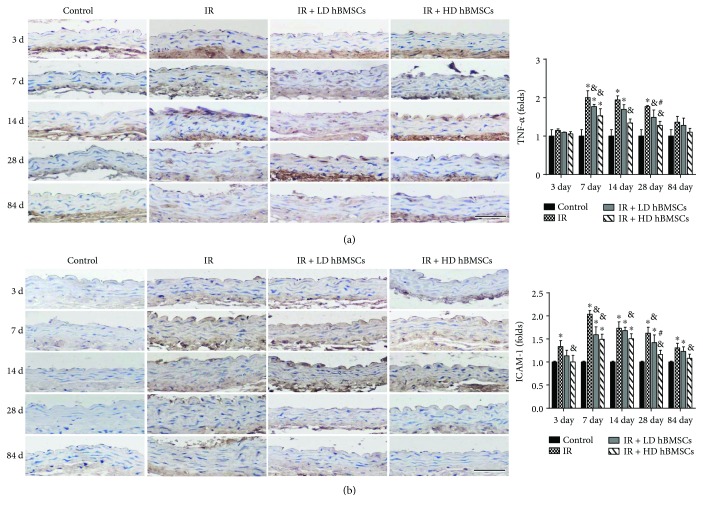
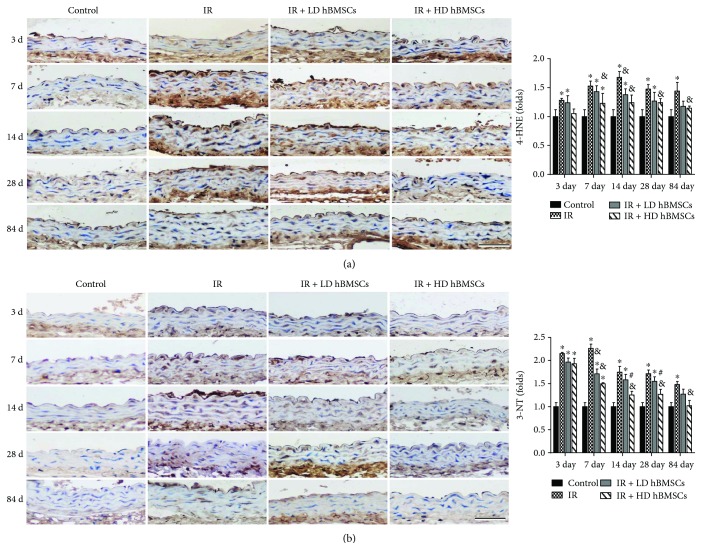
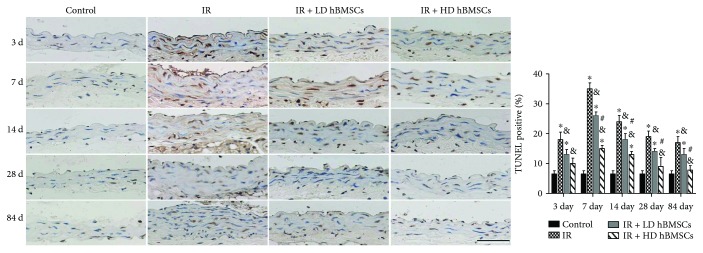
The present study aims to explore the protective effect of human bone marrow mesenchymal stem cells (hBMSCs) on radiation-induced aortic injury (RIAI). hBMSCs were isolated and cultured from human bone marrow. Male C57/BL mice were irradiated with a dose of 18-Gy 6MV X-ray and randomly treated with either vehicle or hBMSCs through tail vein injection with a dose of 10 or 10 cells/g of body weight (low or high dose of hBMSCs) within 24 h. Aortic inflammation, oxidative stress, and vascular remodeling were assessed by immunohistochemical staining at 3, 7, 14, 28, and 84 days after irradiation. The results revealed irradiation caused aortic cell apoptosis and fibrotic remodeling indicated by aortic thickening, collagen accumulation, and increased expression of profibrotic cytokines (CTGF and TGF-). Further investigation showed that irradiation resulted in elevated expression of inflammation-related molecules (TNF- and ICAM-1) and oxidative stress indicators (4-HNE and 3-NT). Both of the low and high doses of hBMSCs alleviated the above irradiation-induced pathological changes and elevated the antioxidant enzyme expression of HO-1 and catalase in the aorta. The high dose even showed a better protective effect. In conclusion, hBMSCs provide significant protection against RIAI possibly through inhibition of aortic oxidative stress and inflammation. Therefore, hBMSCs can be used as a potential therapy to treat RIAI.
本研究旨在探讨人骨髓间充质干细胞(hBMSCs)对放射诱导的主动脉损伤(RIAI)的保护作用。hBMSCs 从人骨髓中分离培养。雄性 C57/BL 小鼠接受 18-Gy 6MV X 射线照射,并在 24 小时内通过尾静脉注射给予载体或 hBMSCs(剂量为 10 或 10 细胞/g 体重[低或高剂量 hBMSCs])。通过免疫组织化学染色在照射后 3、7、14、28 和 84 天评估主动脉炎症、氧化应激和血管重塑。结果显示,照射导致主动脉细胞凋亡和纤维化重塑,表现为主动脉增厚、胶原积累和促纤维化细胞因子(CTGF 和 TGF-β)表达增加。进一步研究表明,照射导致炎症相关分子(TNF-α 和 ICAM-1)和氧化应激标志物(4-HNE 和 3-NT)的表达升高。低剂量和高剂量的 hBMSCs 均减轻了上述照射引起的病理变化,并提高了主动脉中 HO-1 和过氧化氢酶的抗氧化酶表达。高剂量甚至显示出更好的保护作用。总之,hBMSCs 对 RIAI 提供了显著的保护作用,可能通过抑制主动脉氧化应激和炎症。因此,hBMSCs 可作为治疗 RIAI 的潜在疗法。